
How to actually use these kits.
Fifteen guides, one per pack
AI and automation for one-person businesses: the complete guide
What a small business should automate first, how to write prompts that hold up, when a chatbot helps, and how to stay findable when machines answer.
Read more
Brand building when nobody has heard of you: the complete guide
Positioning, story, voice, visual identity and reputation, in the order they actually depend on each other, and what to do first with no budget.
Read moreCareer confidence for people who hate self-help
A working map of career confidence (attention, self-coaching, skill choice, presence, and spotting manipulation) and the order to fix them in.
Read more
Content marketing for a team of one: the complete guide
How one person builds a content practice that lasts: message, production, distribution, search, proof and revenue, in the order they depend on each other.
Read moreDigital safety when you are the whole IT department: the complete guide
How to secure your accounts, recognise phishing, look after customer data under GDPR, and keep running when things break, in dependency order.
Read moreEmail and SMS marketing for a small list: the complete guide
How email and SMS work for a small list: permission, segmentation, sequence, channel choice, and the numbers actually worth tracking.
Read more
Home and relationships: the complete guide
How to buy a home, negotiate the deal, run the household afterwards, and handle the relationships inside it, plus the six kits that go deeper.
Read moreMarketing for a business of one: the complete guide
How marketing works when nobody is doing it but you: positioning, buyer psychology, content, local search, measurement and retention, in dependency order.
Read more
Money and pricing for a business of one: the complete guide
Pricing, cash flow and money psychology for a one-person business, what to fix first, why the model comes before the number, and how to start this week.
Read more
Paid ads and landing pages: the complete guide for small budgets
How to run paid ads on a small budget: pick one platform, write the ad, fix the landing page, and read the numbers before you spend more.
Read moreProductivity for people who have already tried the systems: the complete guide
How focus actually works when you already own a task manager: priorities, task size, attention, environment and subtraction, in dependency order.
Read more
Running an online store on margin, not revenue: the complete guide
What decides whether a small online store makes money: product research, store clarity, pricing and margin, and the five numbers worth tracking.
Read moreSelling for people who never wanted to be in sales: the complete guide
How selling actually works for freelancers and consultants: nerve, offer, proof, the conversation, pipeline and retention, in dependency order.
Read more
Starting a business, in the order the work actually happens
The order small-business work really happens: testing the idea, building the smallest version, the website, the numbers, and stepping out of the middle.
Read moreStress, sleep and energy for people who work too much: the complete guide
How stress, sleep, food, movement, attention and boundaries stack up for busy people, in dependency order, and what to fix before anything else works.
Read moreEvery bundle post, by pack
The Sales & Closing Pack
An objection is information, not a no
The 3R method for handling sales objections, and the small language shift that tells you a prospect is ready to close.
Direct selling: which model actually pays
A comparison of the three direct-selling business models (single-level, multi-level, and party plan) and their real commission math.
Escaping the feast-or-famine sales cycle
The data on systematic versus sporadic selling, and the weekly review habit that turns one good month into a repeatable one.

How to respond when a customer is furious
The HEART method for turning a customer complaint into a resolved, even loyal, relationship: five steps, one script.
How to tell a real high-ticket affiliate program from a trap
A six-factor scoring method for evaluating high-ticket affiliate programs before you build months of content around one.
Making an offer feel worth its price
Why value-stacking and honest urgency convert better than a lower number, with a real before-and-after rewrite of a weak deadline.

The five things every loyalty program needs to actually work
Why most loyalty programs fail to change buying behavior, and the five components the ones that succeed all share.

The follow-up schedule for people who hate following up
A day-by-day follow-up sequence for people who find "just checking in" emails as uncomfortable to send as sales pitches.

The PAUSE method for when a negotiation turns tense
A five-step framework for the moment a negotiation turns defensive, with a worked example from a procurement director.

The star rating that converts best
Why a 4.2 to 4.5 star average converts better than a perfect five, and the six types of proof that build online trust.

What happens in the first three seconds
The trust triangle a visitor checks before reading a word, and the 60-30-10 color rule behind a real 6.3% conversion lift.

What to say when a sales call stalls
A cold-calling framework for opening lines, objection responses, and reading when a prospect is ready to close.

Which customer story is worth telling
A scorecard for choosing which client success is worth turning into a case study, with the scoring math and cutoffs.

Why hourly billing punishes you for getting better at your job
The math showing why charging by the hour pays experts less over time, and what to charge for instead.
The AI & Automation Pack

AI for small business: a 90-day plan instead of a shopping list
A 90-day framework for adopting AI in a small business, one tool at a time, with the ROI math that decides whether to keep paying for it.

Blockchain, for people who tuned out after 2021
What blockchain actually does, stripped of the get-rich-quick pitch, built around the three properties the technology depends on to work.

Does your business actually need a chatbot, or just better hours
A scored framework for deciding whether a chatbot is worth building for your business, before you spend on a platform you may not need yet.
Finding a niche without guessing at what the market wants
A framework for choosing and proving a business niche, built around a value-matrix example that turns a generic offer into one clients actually remember.

How to write an SOP people actually use
The six sections a usable SOP needs, and why a documented procedure works even when the person who wrote it is out.

Making AI copy sound less like a robot
Why AI drafts default to bland prose, and the rhythm, sensory-detail, and opinion edits that make them sound human.
Prompt engineering, for people whose AI tool works until it doesn't
A framework for writing AI prompts that hold up in production, built around a real case where a chatbot's confident answer cost a company in court.

Structuring a page to win the AI answer
How to structure a page so an AI search assistant reads it back as the answer, using a 40-60 word direct-answer block.
The five-minute rule for sales chatbots
Why leads go cold within thirty minutes, and the Hook-Value-Ask script structure that keeps a chatbot from feeling like a form.
What to build before you hire a VA
The task inventory and documentation a business needs before hiring a virtual assistant, so the relationship doesn't fail on day one.
Where to start using AI as a teacher
A one-tool, one-pain-point onboarding sequence for using AI to cut lesson-planning and grading time without the overwhelm.
Why your team won't touch the AI tool you paid for
A readiness framework for AI rollouts that stall after launch, built around why staff resistance to AI runs deeper than resistance to ordinary software.
The Paid Ads & Landing Pages Pack

A/B testing for ads: deciding what to test first
A scoring method for ranking which ad element to test first, so testing time goes to headlines and targeting instead of button colors.

Ad copy that gets read past the headline
The AIDA structure and a headline test for writing ad copy that earns a click instead of getting scrolled past on the way to something else.
Google Search ads: what actually earns the click
A keyword worked example and a match-type framework for spending a Google Search Ads budget on searches that convert, not just searches that appear.

LinkedIn ads for leads: the targeting layer that matters
LinkedIn lead ads work best with layered targeting, job function and seniority first, skills and engagement second.

Paid marketing strategy: the plan most campaigns skip
A paid marketing strategy needs a specific goal, a flexible budget, and a way to connect daily metrics to revenue, not more platforms.

Performance Max, without losing track of what it's spending
The budget formula and six-week learning timeline for running a Google Performance Max campaign without panicking at week two.

Picking one ad platform instead of testing all four at once
A framework for choosing between Meta, Google, TikTok, and LinkedIn based on your actual resources, then splitting budget once you commit.

Running Meta ads on $200 a month, without guessing
How to split a small Meta Ads budget across testing, proven campaigns, and reserve, with the worked numbers behind the split.

The ad funnel diagram everyone draws, and why real customers ignore it
Why a linear ad funnel diagram misreads how people actually buy, and a reusable technique for turning a feature into a reason to care.

The headline formula behind landing pages that convert
A landing page headline needs clarity, relevance, urgency, uniqueness, and a promise, and most only manage one or two.

What a landing page has to earn before it asks for anything
A four-layer trust framework for landing pages, with a worked testimonial example showing why specific proof outperforms vague enthusiasm.
What your ROAS doesn't tell you when you scale spend
Scaling ad spend from $10,000 to $50,000 a month usually cuts your ROAS in half, and the metrics book shows exactly why.

YouTube ads: what happens in the first three seconds
Viewers decide whether to skip a YouTube ad within two to three seconds, so the opening shot carries most of the weight.
The Content & Creator Pack

Branding without a founder's face
How to build customer trust for a business with no public founder, using a mission statement, a value proposition, and a documented voice.

Building a content funnel backward from the sale
A six-step method for mapping content to TOFU, MOFU, and BOFU by working backward from a revenue target.
Finding the story your brand already has
A twelve-beat framework for turning a founder's actual history into a brand story, distilled to the five elements worth actually writing down.
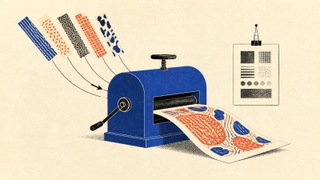
Getting AI to draft content that still sounds like you
A five-part prompt structure for AI content drafts that keep your brand's voice instead of defaulting to generic copy.

SEO content that doesn't read like SEO content
An empathy map with four quadrants decides both the keyword and the angle. How to build one, and the cluster architecture it feeds into.

The one sentence your content is missing
The magnetic message formula for writing a one-sentence brand statement people can repeat back after hearing it once.

The prompt problem: why "share your experience" gets ignored
A vague call for user-generated content gets a handful of replies. Here's the five-part prompt structure that gets customers to actually post.
The three-part story structure that sells without a pitch
The harder content tries to sell, the less it converts. Here's the three-part story structure the reader's guard doesn't go up against.
TikTok Shop: the three seconds that decide whether anyone buys
TikTok Shop rewards a different skill than running a store: stopping a scroll. Here's the three-second framework that decides who buys.

Turning one piece of content into a week of posts
The 5-Beat Repurposing Framework for extracting a week of platform-ready posts from a single piece of content.

Why 847 followers can out-earn 47,000
Follower count predicts almost nothing about revenue. The signals that actually do, and the profile template that turns five real fans into an offer.
Why almost every blog post gets zero traffic
Length doesn't make a post rank. Validation does. The keyword scorecard and the domain-authority rule that decide before you write a word.

Why fewer platforms grow faster than more
A wellness brand cut six social platforms to two and got 300% more leads. The four-pillar framework behind why concentration beats coverage.
The Email & SMS Pack

Cold email follow-ups that get replies
A four-message follow-up sequence for cold email, plus the break-up email that gets a reply even from prospects who went quiet.

Email segmentation that goes past a first name
A scoring system that segments an email list by behavior instead of demographics, plus the three mistakes that undo it.

Four email metrics worth checking weekly
The four core email formulas, and a before-and-after case study showing what changed when a retailer actually tracked them.
Matching email strategy to the customer lifecycle
A stage-by-stage table for aligning email content with where a subscriber actually is, plus a formula for winning back dormant ones.

Nurture emails written for one specific reader
A persona-building method for nurture emails, matched to the four stages a subscriber actually moves through before buying.

SMS segmentation that earned back its opt-outs
A case study on SMS audience segmentation, with the personalization techniques that turned a generic blast into targeted messages.
The Marketing Foundations Pack

A content plan a small business can actually keep
A SMART-goal template for one-person marketing, and why tracking likes instead of redemptions is the fastest way to waste a week.

Force, friction, and mass: the flywheel model for repeat customers
Why a sales funnel has no mechanism for customers who already bought, and the force, friction, and mass framework that replaces it.

How to respond to a bad Google review
A four-step process for answering a negative Google review without getting defensive, plus the scripts the book itself uses.

The one-page marketing plan that actually gets reopened
Why most marketing plans get written once and shelved, and the value proposition test and journey map that make a one-page version worth reopening.

The psychology of why people buy
The four-stage psychology framework behind why someone buys, mapped from first notice to repeat purchase, with a worked example.
The serve score, or how to decide which content is worth making
A formula for rejecting most of your content ideas before you spend an hour on any of them, built from a persona and an empathy map, not a guess.

Which content is actually driving revenue
The six attribution models content teams use, when each one lies to you, and how to pick the right one at your conversion volume.
The Brand & Story Pack
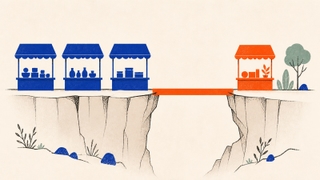
A brand is a system, not a logo
A one-sentence positioning template and a three-step process for finding what actually separates you from competitors, worked through with a real example.

Brand evolution without losing the audience you already have
A nine-step framework for changing your content or niche without the audience-loss creators fear, built around what stays fixed and what's allowed to move.
Brand voice consistency: why your company sounds like three businesses
How to translate your core values into one recognizable brand voice, so your Instagram and your invoices don't sound like different companies.

Mining your founder story from a life that doesn't feel dramatic
A three-step process for finding the founding moment worth telling, when your business origin feels too ordinary to be a story.

Pick your adjectives before your colors
Choosing fonts and colors before you can name your brand's personality in plain English is why most DIY visual identities end up generic or wrong.
The five-stage story every launch skips
Most launches arrive as one email that dumps every feature and every proof point at once. A five-stage narrative arc, mapped to the reader at each stage.

Voice doesn't change. Tone does.
A brand voice should stay fixed while tone moves with the moment: the book's tone-playbook method, with a market-downturn message as the worked example.

What makes you different, in one sentence
Most personal bios list credentials instead of making a claim. A formula for the sentence that actually says why someone should hire you over anyone else.
Why customers actually leave 5-star Google reviews
The psychological principle behind memorable service, and why asking for reviews right after checkout misses the moment that made someone loyal.
Writing that sticks starts with a purpose you can state in one sentence
The 5 Whys method for finding your writing's real purpose, before you touch headlines, hooks, or sentence rhythm.

Your first hour in an online crisis
A small brand has no reputation buffer to absorb a bad moment gone public. The book's golden-hour response plan, with a ready holding statement to adapt.
The Business Foundations Pack

Choosing a website builder, and the five numbers that mean it's ready
How to pick a website builder for your business, plus the five performance numbers that mean your site is ready to launch.
Do you actually need a business plan?
Four questions that decide whether your business needs a formal plan or a lighter framework, plus the deadline trick for avoiding analysis paralysis.
How much of your product you actually need to build first
What a minimum viable product should include, using the LinkedIn, Buffer, and Instagram examples that show essential features from nice-to-have ones.

How to know a micro product will sell before you build it
A three-filter test and a 7-day checklist for validating a micro product idea before you spend a weekend building it.

Minimum viable product: the sentence that decides what to build first
The value-proposition formula and the MoSCoW method for deciding which MVP features are essential before you write a line of code.
Podcast niches: the four-question test before you buy a microphone
A four-question test for validating a podcast niche and a one-sentence formula for positioning it, before spending anything on equipment.
Safety leadership: what your team notices you skip
Workplace safety culture comes from what leaders do daily, not policy binders: the checklist for building accountability without blame.
SWOT analysis, minus the two-day retreat and the dusty binder
The Challenge Question and Control Test that turn a SWOT brainstorm into an actual decision instead of a binder nobody reopens.

The 12-point audit that says if your business is ready to franchise
A 12-point readiness audit for deciding whether your business can actually be franchised, not just copied.

The 50 milliseconds that decide whether your website is trusted
Why a website works as a trust signal before it works as a sales tool, and the credibility elements that prove you are real.

The one-line rewrite that beats "save $50"
The loss-aversion rewrite and the classic jam study behind why fewer choices and the right framing convert better than more of either.

The operator-to-owner audit: how to tell you're the bottleneck
A condensed version of the operator-to-owner audit, the warning signs that show you are the bottleneck in your own agency.

Validating a business idea before you build anything
Three ways to test whether people want what you're planning to build (A/B tests, pilot programs, and smoke tests) with a worked example of each.
Validating a microSaaS idea before you write any code
A validation ladder, landing page, ads, survey, manual MVP, for testing a microSaaS idea before you build the software.
Which business metrics to track, and how often
A four-category framework for business metrics, plus the daily, weekly, and monthly review rhythm that keeps tracking from turning into busywork.

Why a 3-minute video did what Dropbox's business plan couldn't
How Dropbox validated demand with a video prototype instead of a finished product, and the fidelity levels that make prototyping work for any idea.
The E-commerce Pack
Testing a product idea before you spend a dollar building it
A cheap-to-expensive ladder for validating a product idea (conversations, a landing page, a prototype, a pre-sale) before committing real budget.
The five numbers that tell you if your store is profitable
The five e-commerce metrics worth tracking daily to weekly: gross margin, cash conversion cycle, marketing ROI, turnover, net profit per order.

The four-question test for merchandise people actually keep
Before ordering branded merchandise, run it through utility, quality, uniqueness, and brand alignment: the framework behind items people keep.

Why adding a pricier option sells more of the cheaper one
How price anchoring and tiered pricing menus work, with the underlying margin math that determines whether the psychology actually pays off.

Why your checkout is losing sales you already won
The checkout friction that causes cart abandonment (forced account creation, unnecessary form fields, and hidden shipping costs) and the fixes.
The Money & Pricing Pack

A five-step model for money decisions made under pressure
The CLEAR decision model for catching loss aversion, anchoring and temporal bias before they make a business financial decision for you.
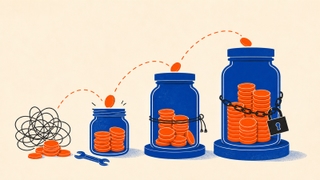
An emergency fund with three tiers, not one number
A three-tier emergency fund system for splitting one savings goal into three, so a $2,000 repair and a layoff aren't funded from the same account.

The money habits that survive a bad month
The money-script idea and a three-part mindset framework for why financial habits collapse under pressure even when the plan itself is sound.
Turning followers into revenue without the sleaze
Why a Hook-Story-Monetize structure matched to your follower count converts an audience into income, and why posting more doesn't add a paid step.
Twenty minutes in, the phones come out: that's a structure problem
The four-phase framework behind workshops that hold a room past the twenty-minute mark, and the specific mistakes that cause phones to come out early.
Unit economics, the number that decides if a business model works
The three pillars a business model needs to survive, the definition of unit economics, and the warning signs a model is broken before revenue shows it.

Why "the client pays on Fridays" is the riskiest line in a cash forecast
A six-week cash forecast works only if inflow assumptions are honest. The safe-estimation rule and traffic-light system that catch the gap before payday.

Why investing $200 a month at 25 beats $800 a month at 45
The math behind why an early investor who contributes less ends up wealthier than a late investor who contributes four times as much, plus the Rule of 72.

Why three pricing tiers work better than two
The decoy effect and value anchoring, explained through a three-tier pricing example, and why neither technique can save an underpriced offer.
The Focus & Productivity Pack

Breaking a stalled project into tasks you'll actually start
The four-level breakdown and the four-part test that turn "write book" into a task you can finish in five minutes tonight.
Building a schedule that survives a brain that doesn't run on rigid time blocks
Anchor points and three-tier habit scaffolding, for when an hour-by-hour schedule breaks the first time something goes off-plan.

The Eisenhower matrix, for people whose "urgent" column is always full
The two sorting questions everyone already knows, plus the delegation test that decides what actually belongs in the urgent-but-unimportant box.
The four stages of flow, and why struggle is stage one
The struggle-release-flow-recovery cycle, and the release technique that stops a stuck work session from turning into a wasted afternoon.
The red tag system that turns decluttering into a deadline
The four usage bands and the 48-hour, two-week, 30-day deadlines that remove the "just in case I need it later" argument from decluttering.

The three questions that find what to cut from your week
A three-question test for finding which tasks are actually worth automating or delegating, plus the audit that has to come before it.

Turning a vague sense of priorities into a goal system that connects
The four-level goal hierarchy that stops a 20-year vision and a Tuesday to-do list from operating as two unrelated documents.
The Confidence & Career Pack
Answering interview questions without sounding rehearsed
The STAR method for interview answers, shown as a before-and-after rewrite, plus where structured answers usually go wrong.

Confidence that shows before you say a word
A six-part checklist for looking put together in five minutes, plus what the research on first impressions actually supports.

Manifestation, minus the mysticism, is just goal clarity
The useful half of a manifestation book: a method for telling a real want from a borrowed one, and turning it into a first step you can take today.

Picking the right skill to spend a month learning
A three-part filter for choosing which skill to learn next, illustrated with two professionals who picked differently and got different results.

Recognizing manipulation before it changes your mind
How to name gaslighting and moving goalposts at work, plus a five-part defense system for protecting your own judgment.

The 3pm crash is a fuel and rhythm problem, not a willpower one
The real fix for afternoon brain fog: meal timing, a 90-minute work cycle, and sleep math, not more coffee or more discipline.

The ad-testing discipline that works just as well on your own decisions
A hypothesis-writing framework built for ad campaigns, and why the same discipline catches bad decisions long before advertising ever comes up.
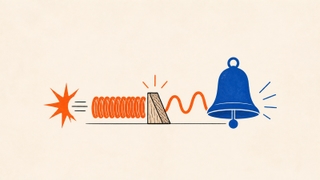
The five seconds before you react
The PAUSE method for regulating a reaction before it happens, plus the three failure modes that make emotional intelligence advice useless.

The self-coaching framework that doesn't rely on borrowed motivation
A five-minute daily self-coaching routine built on one question swap, borrowed from professional coaching standards instead of affirmations.

Why it takes 23 minutes to refocus after every interruption
The three attention networks behind your focus, and the deep work session checklist that removes the interruptions before they happen.
The Calm & Energy Pack

A structured way to argue with an anxious thought
A four-step method for testing an anxious thought against evidence, plus a plain note on when the problem needs more than a method.

A wellness routine sized to fifteen minutes, on purpose
A wellness routine sized to fifteen minutes, using a three-component meal formula and a two-minute habit rule.

Falling asleep starts with light, not the mattress
Falling asleep faster starts with morning light and room temperature, not a new mattress or more hours in bed.
Mindful mornings without the 5am club
A six-stage checklist for the first 90 minutes after waking, built from the book's own routine: no 4am alarm required.

Mindfulness for the minutes you already have
Mindfulness that works inside a full day, using the book's RAIN framework for the moment a difficult feeling won't move.
Saying no at work, with an actual script
The Sandwich Method for declining a request without damaging the relationship, and the boundary checklist it comes from.

STOP and RAIN, two techniques for a scattered workday
One technique for a task-level interruption, one for something with more emotional weight, and why using either at the wrong moment doesn't work.

The 20-minute fitness framework
A framework built around three short sessions a day instead of one long one, plus why a workout can drain you and leave you energized depending on timing.
The hormone chain behind chronic stress
How the HPA axis actually works, plus the book's six-part sleep reset checklist for interrupting a stress cycle that won't reset on its own.
The real reason energy crashes hit around 3pm
The 3pm energy crash is a blood sugar mechanism, not a willpower problem: here is what actually breaks the cycle.

The three stages of cortisol burnout
Cortisol doesn't rise and fall randomly: it moves through three measurable stages as stress turns chronic, and the fix depends on which stage you're in.
The three-day attention audit
Before you can fix where your focus is leaking, you need to see it. A three-day tracking method for mapping exactly what pulls your attention, and why.

What your creative block is signaling
A block isn't a discipline failure. It's information about whether the problem is a thought pattern or an empty energy tank, and the fix depends on which.
The Digital Safety Pack
Locking down your online business in the next 30 days
Three real breach stories and the week-by-week plan that would have stopped each one, from password managers to a tested incident response plan.

The 7-second check that catches most phishing before you click
A seven-question checklist for the moment before you click, plus why the smartest people you know are still exactly the right target for it.

The GDPR consent test most cookie banners quietly fail
The five-part test that decides whether a cookie banner or signup form actually counts as consent under GDPR, plus the three mistakes that fail it.
The public Wi-Fi habit that quietly exposes your accounts
How an "evil twin" hotspot works, three tiers of protection for coffee shops and airports, and why the padlock icon stopped being proof of anything.

The survival mindset that matters more than your gear
Why two neighbors who saw the same hurricane warning had completely different outcomes, and the risk-informed thinking pattern that explains it.
The Home & Relationships Pack

Attract Love: dating with a filter, not a lightning strike
A three-tier filtering method for figuring out what you actually need in a partner, instead of a vague wish list that quietly rules out good matches.
Boundaries as the actual source of personal power
A set of scripted phrases for setting boundaries at work, with family, and with friends, and why vague limits get ignored while specific ones hold.

Home deal negotiation: decisions, not vibes
How to calculate a real walk-away number before you make an offer, so a counteroffer that crosses it gets a clean no instead of a rationalization.

The Modern Estate Manager: a clear-headed guide
A 90-day plan for taking over household operations without breaking anything trust depends on, built around observation before you change a thing.

What "The Connection Code" covers before you sign anything
Why a calm, neutral question can land as an accusation to a teenager, and the specific shift in role that gets conversation back instead of silence.
What "The Smart Homebuyer's Playbook" covers before you sign anything
How to read the words and photos in a listing before you tour it, plus the dollar ranges that turn an inspection finding into a real price reduction.