
The five seconds before you react
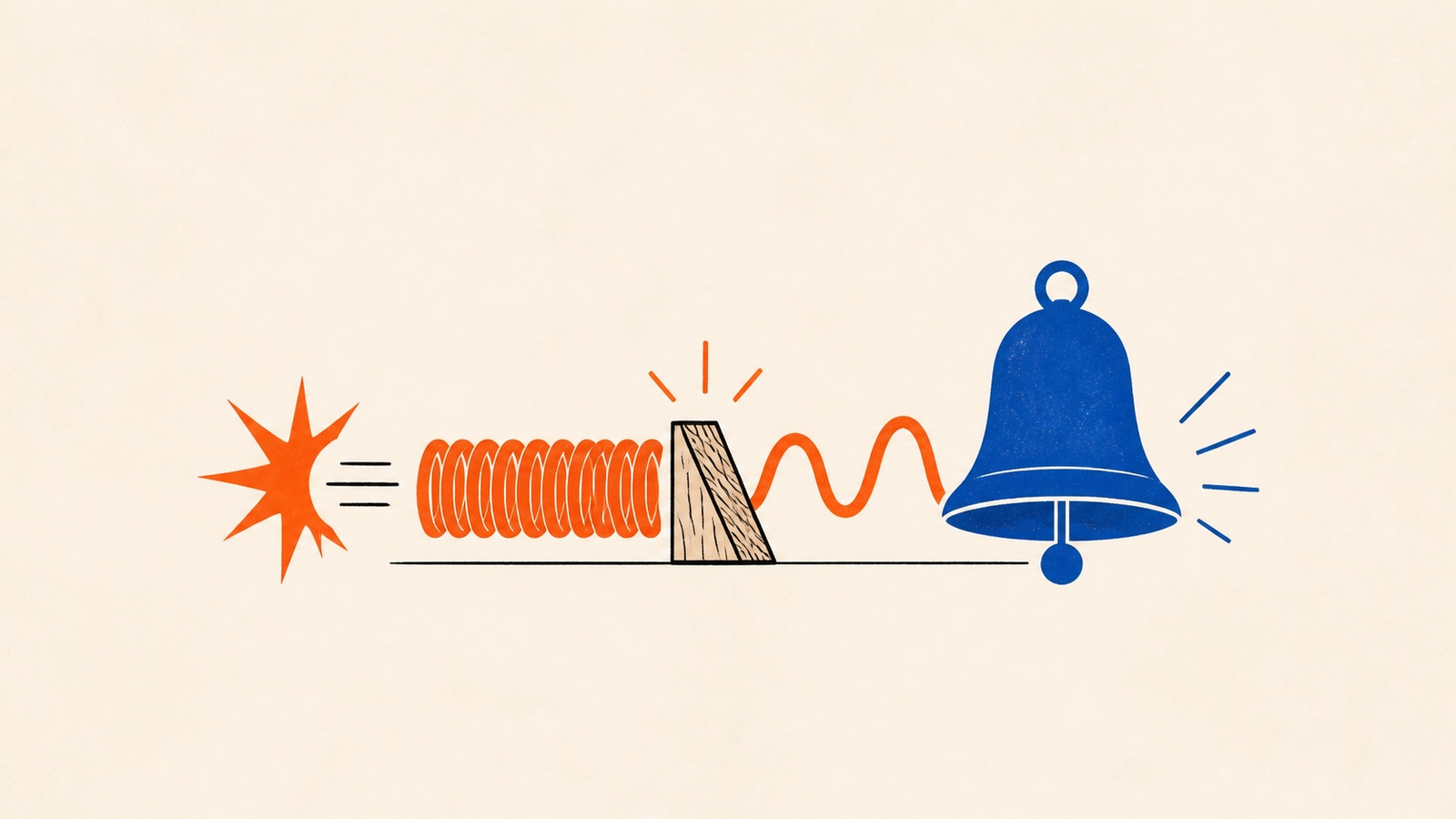
Someone says something in a meeting that lands wrong, and your body reacts before your brain has finished processing the sentence. Your jaw tightens, or your face goes hot, or you hear yourself start a sentence you already know you'll regret the shape of. Most emotional intelligence advice arrives after that moment, telling you to "stay calm" or "respond, don't react," which is true and roughly as useful as being told to relax during a fire drill.
What actually helps is something to do in the five seconds between the trigger and the response, because that's the entire window where you have a choice.
Part of the problem is that most emotional intelligence content treats the skill as a personality trait: you either have it or you're working on becoming a calmer person in general. That framing is too broad to act on in the actual moment. What you need isn't a calmer personality by next quarter. You need a specific move for the next thirty seconds, repeatable enough that it's still available to you when your heart rate is already up.
The PAUSE method, and what happens in the gap
The book behind this bundle, Level Up Your Emotional Intelligence, gives that five-second window a five-step structure. Pause: create literal space between the trigger and whatever comes next, even half a second of silence before you speak. Acknowledge the emotion without criticizing yourself for having it; naming "I'm irritated" costs nothing and skipping it doesn't make the irritation go away, it just makes it harder to see. Understand what actually caused it and what you need in this specific moment, which is often different from what the surface trigger suggests. Select a response deliberately instead of letting the first impulse run the show. Engage with the situation on purpose, rather than either exploding or going quiet and hoping it passes.
The book grounds this in a specific piece of physiology worth taking with a grain of salt on the exact numbers but useful as a mental model: your amygdala reacts to a perceived threat before your prefrontal cortex (the part doing the actual thinking) has caught up. That gap is real and it's fast. The five steps above exist specifically to insert a decision point into a process that would otherwise run on autopilot.
One detail from the book is worth keeping on its own: physical signals usually arrive before you consciously register the emotion. A tightening jaw, shallow breathing, a racing thought pattern: these show up first, and the book's suggestion is to track them the way you'd track any early-warning system. One example it gives is a chief financial officer who noticed her presentation anxiety always started as a slight hand tremor, then moved to shallow breathing, then to racing thoughts. Noticing it at stage one gave her a much wider window to intervene than waiting until stage three.
The PAUSE method works better in low-stakes moments first. Practicing it during a mildly annoying email gives you the rehearsal you need before you're relying on it in a room where the stakes are actually high.
Where people go wrong
The most common mistake is trying to skip straight to "select a response" without doing the pause and acknowledge steps first, which usually produces a response that's calmer-sounding but not actually more considered: the reaction is still running the show underneath a flatter tone.
A second mistake is treating emotional regulation as suppression: pushing the feeling down instead of naming it. That tends to backfire, since an unacknowledged emotion doesn't disappear, it leaks into the next several interactions in ways that are harder to trace back to the original trigger.
A third is only practicing this under real pressure, which is the worst possible time to learn a new habit. The book's own suggestion (rehearsing the sequence during ordinary, low-stakes friction) is the difference between a technique you can actually access under stress and one you can only describe afterward.
A fourth mistake is skipping the physical layer entirely and trying to work purely on the thought level. If your jaw is already tight and your breathing has gone shallow, reasoning your way to a calmer conclusion is fighting your own body at the same time. Noticing the physical signal first (the tightening, the shallow breath) and addressing that before trying to think more clearly tends to work faster than trying to out-argue the reaction. The Confidence & Career guide walks through how this connects to the rest of how professional presence gets built.
Inside Level Up Your Emotional Intelligence
Going deeper
- AudioThe EQ Growth Engine
- BookLevel Up Your Emotional Intelligence
- ChecklistBuilding Your Empathy Skills
- GuideEmotional Self-Awareness Compass
- GuideThe PAUSE Method for High-Pressure Situations
- Mini-CourseDevelop Your Emotional Intelligence
Level Up Your Emotional Intelligence is one of 10 bundles in The Confidence & Career Pack, or take the whole pack for $29.
Related reading
Career confidence for people who hate self-help
A working map of career confidence (attention, self-coaching, skill choice, presence, and spotting manipulation) and the order to fix them in.
Read more
The self-coaching framework that doesn't rely on borrowed motivation
A five-minute daily self-coaching routine built on one question swap, borrowed from professional coaching standards instead of affirmations.
Read more
Why it takes 23 minutes to refocus after every interruption
The three attention networks behind your focus, and the deep work session checklist that removes the interruptions before they happen.
Read more