
The one-line rewrite that beats "save $50"
A visitor lands on your page and, according to a 2024 Nielsen Norman Group study, decides whether to stay or leave in under 15 seconds. Most of what happens in that window isn't a rational weighing of your offer against the competition. It's an instinct, and the instinct usually isn't paying attention to the price at all.
That's the uncomfortable part of conversion copywriting: the difference between a page that converts and one that doesn't is often a handful of words, not a better product underneath them.
Most advice on this topic stops at "use psychology to persuade," which is vague enough to be useless and vague enough to feel a little manipulative besides. The more honest version of that advice names the specific instinct you're working with, shows the actual rewrite, and admits where it stops working, which is the version worth reproducing.
The rewrite that costs nothing to make
The Psychology of Conversions builds its central example around loss aversion: the well-documented tendency for people to feel the pain of losing something roughly twice as strongly as the pleasure of gaining something of equal value. The book's demonstration is a single line of copy, rewritten two ways:
- "Save $50 when you buy now." Frames the offer as a gain. Accurate, but it asks the reader to feel good about something they don't have yet.
- "Don't miss out on $50 in savings." Same offer, same number, framed as an avoidable loss instead. A 2024 survey by the American Marketing Association found loss-framed messages were 21% more effective at driving action than gain-framed ones making the identical offer.
Nothing about the underlying deal changed between those two lines. What changed was which instinct the sentence is talking to. The book is careful to flag the ceiling on this: overused loss framing reads as pressure rather than persuasion, and audiences that feel manipulated stop responding to it at all. The tactic works because it's occasional, not because it's constant.
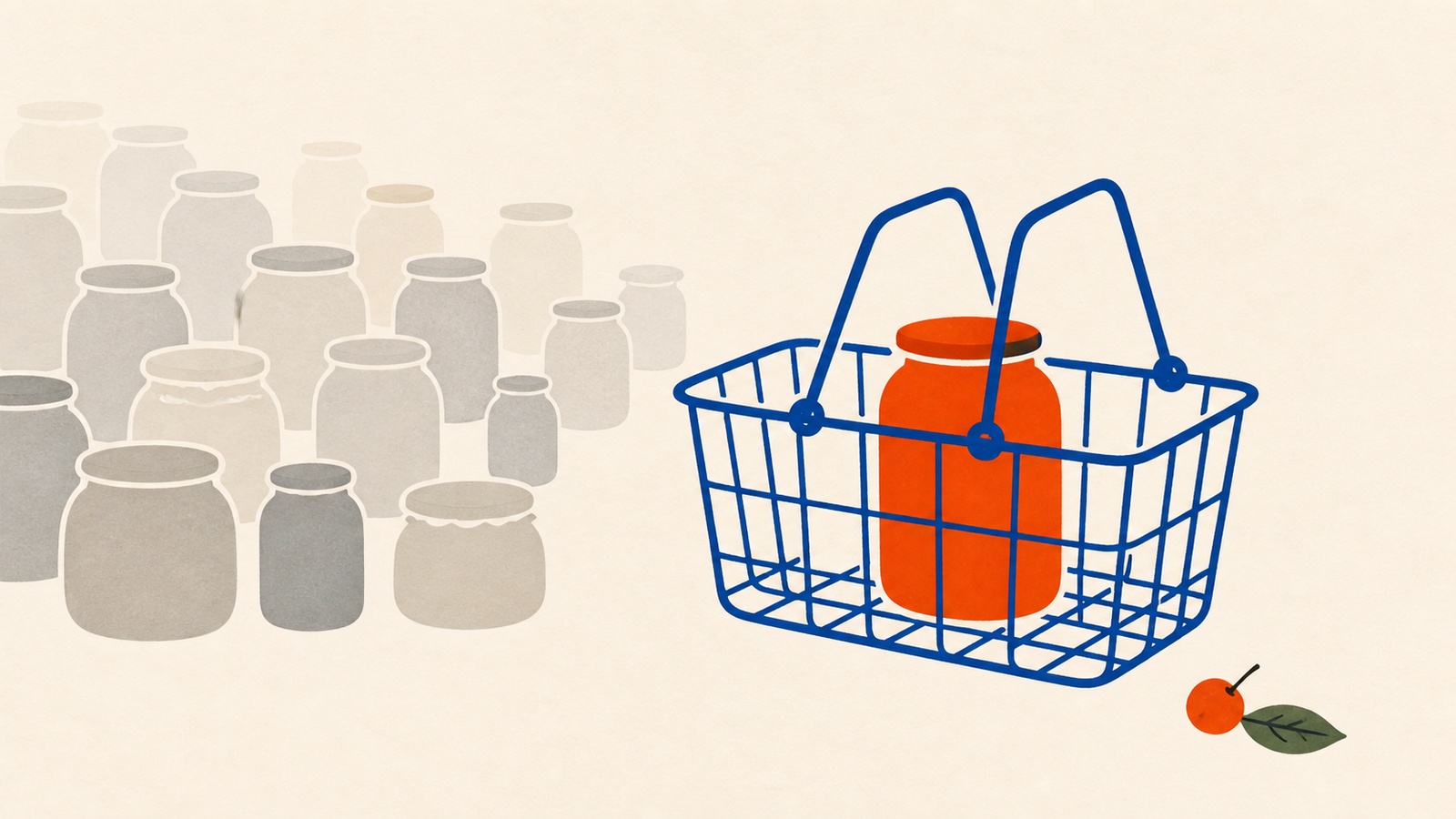
The book pairs this with a second principle that pulls in the same direction from a different angle: cognitive load, the mental effort required to process a decision. It points to the well-known "jam study" by psychologists Sheena Iyengar and Mark Lepper, in which shoppers presented with a smaller selection of jams bought more than shoppers presented with a large one: more options produced more looking and less buying. The book's application is direct: every extra form field, every extra pricing tier, every extra choice on a page is a small tax on the decision you're trying to get someone to make. Reducing the number of things a visitor has to think about does more for conversion than adding one more persuasive argument would.
The book treats these as a matched pair rather than separate tactics. A loss-framed offer buried in a page with twelve competing options undercuts itself: the reader has to find the offer before the framing can do anything. Simplify the page first, then get the framing on the one offer that's left exactly right.
Where people go wrong
The most common mistake is treating loss aversion and urgency as tools to run constantly rather than sparingly. The book is explicit that the tactic backfires the moment it starts to feel like pressure instead of an accurate description of a real deadline or real scarcity.
A second is adding options instead of removing them, on the theory that more choice signals more value. The jam study runs directly against that instinct: a shorter, clearer set of options usually outsells a longer one, because the longer list is what causes the hesitation in the first place. This shows up constantly in pricing pages carrying five tiers when three would resolve the decision faster, and in checkout forms asking for information that isn't needed until later.
The third shows up constantly across the Business Foundations guide: reaching for fabricated or inflated social proof to speed up trust instead of earning it. Fake reviews or invented numbers tend to get noticed, and once they are, the damage to trust outlasts whatever short-term lift they produced: the book's own line on this is that authenticity is the actual mechanism behind social proof, not the number attached to it.
Inside The Psychology Of Conversions Ebook
Going deeper
- BookThe Psychology of Conversions - Ebook
- ChecklistThe Psychology of Conversions - Checklist
- GuideThe Psychology of Conversions - Guide
- Prompt PackThe Psychology of Conversions - Prompts
- ToolstackThe Psychology of Conversions - Toolstack
- WorkbookThe Psychology of Conversions - Workbook
The Psychology Of Conversions Ebook is one of 16 bundles in The Business Foundations Pack, or take the whole pack for $29.
Related reading
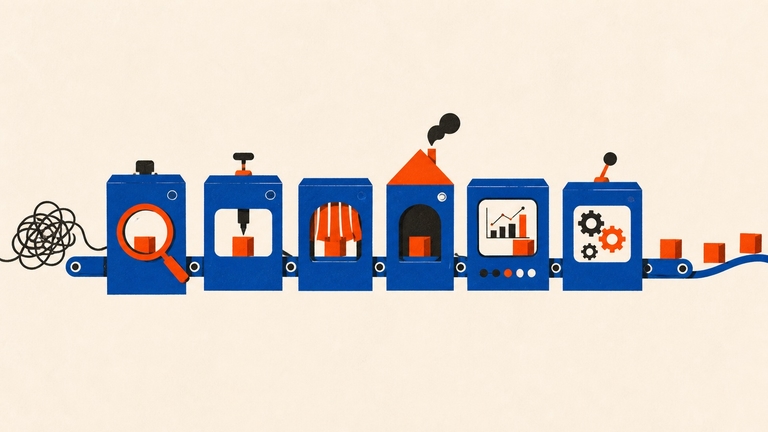
Starting a business, in the order the work actually happens
The order small-business work really happens: testing the idea, building the smallest version, the website, the numbers, and stepping out of the middle.
Read more
The operator-to-owner audit: how to tell you're the bottleneck
A condensed version of the operator-to-owner audit, the warning signs that show you are the bottleneck in your own agency.
Read more
Validating a business idea before you build anything
Three ways to test whether people want what you're planning to build (A/B tests, pilot programs, and smoke tests) with a worked example of each.
Read more