
Getting AI to draft content that still sounds like you
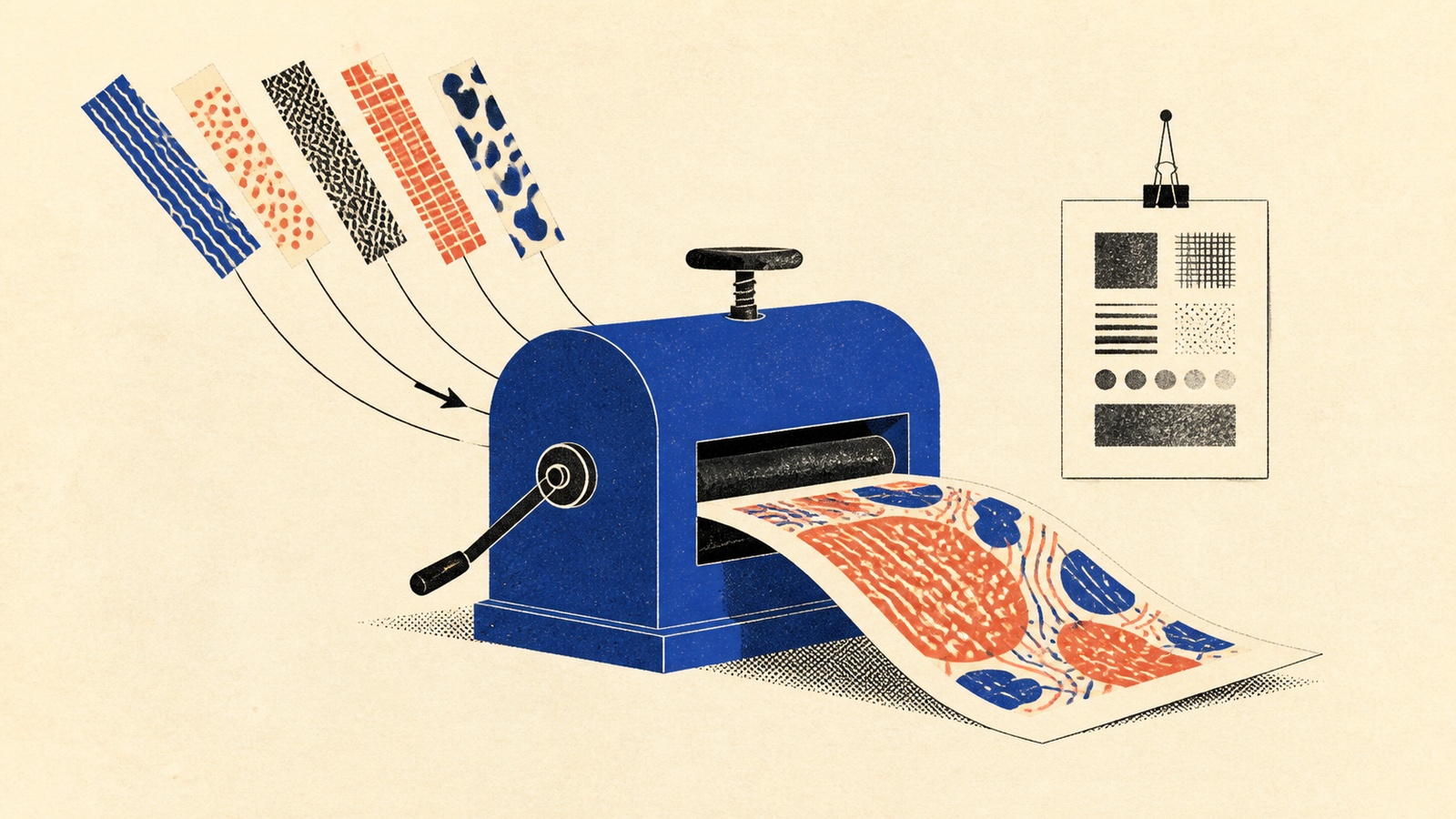
The problem with asking AI for a blog post
Ask a generic AI tool to write your next blog post, and you get back paragraphs that could belong to any brand in your category. The words are correct. The structure holds up. Nothing about it sounds like you, and most readers can tell within a paragraph.
That gap is where AI-assisted content marketing usually breaks down. The tool didn't fail. The prompt did. A one-line request like "write a blog post about email marketing" gives a language model nothing to work with beyond guesswork, so it defaults to the most generic version of every sentence it has ever seen.
Most professionals approach AI tools the way they'd give a quick instruction to a new hire, vague, assuming the gaps will get filled in with common sense. A language model has no common sense about your business. It has statistical patterns from everything it's read, and without direction, it reaches for the most average version of whatever you asked for. That's not a limitation you work around with a better tool. It's a limitation you solve with a better instruction.
The fix isn't a better tool. It's a better instruction.
The five-part prompt that actually works
Content Marketing on Steroids builds its entire drafting process around what it calls the Goldilocks prompt formula: five elements that separate a usable draft from a forgettable one: objective, context, voice, structure, and constraints. Skip any one of them and the gap shows up in the output.
Objective states exactly what you need produced, not just the general topic. Context explains your business situation and who you're writing for. Voice is where a "voice DNA" reference comes in: a short document of tone adjectives, sentence-length preferences, and phrases you'd never use, built from your own best-performing content rather than a generic brand-voice template. Structure tells the model how the output should be organized. Constraints set the boundaries: length, what to avoid, what has to be included.
The book walks through this with a before-and-after. Weak: "Analyze these comments and tell me what people think." Refined: "Analyze these 100 SaaS user comments for subscription billing concerns. Context: we're a B2B fintech serving 50-500-employee companies. Output: top 3 concerns, frequency count, suggested content topics to address each." Same source material, same tool, but the second prompt has an objective (billing concerns), context (company type and size), and a structure for the output. It comes back usable. The first comes back vague.
Once a voice DNA document exists, the same five-part structure applies to nearly every content task: audience research, headline testing, drafting, and SEO review all get more useful once you specify what you want, who it's for, how it should sound, how to organize it, and what's off-limits.
Where people go wrong
Three mistakes show up constantly once teams start using AI for content at scale.
The first is treating the tool like a search engine: a one-line question with no context, then frustration when the output reads like stock copy. The Goldilocks formula exists precisely because vague prompts produce vague content.
The second is skipping the voice documentation entirely. Without a written reference for tone and forbidden phrases, every piece of AI-drafted content sounds slightly different, and a reader following your blog for a month notices nobody's actually editing for consistency. Building that reference is a content-operations problem, not a prompting trick. We cover the full system in the Content & Creator guide.
The third is publishing without a review tier. Routine social posts can reasonably go out with a light check, but anything making a factual claim needs a human verifying it before it's public. AI-generated content that states a statistic with total confidence and no source is a liability, not a shortcut. A tiered approval process (light checks for low-stakes posts, full review for anything customer-facing or fact-heavy) costs a few minutes per piece and prevents the kind of embarrassing correction that undoes months of built-up trust.
A quieter failure mode sits underneath all three: teams that get one good result from a well-built prompt, then never write it down. The prompt that worked disappears into a chat history, and three months later someone reinvents it from scratch. A saved library of prompts that actually produced usable output, tagged by what they were for, turns a lucky result into a repeatable one.
Inside Content Marketing On Steroids
Going deeper
- AudioAI Content Advantage
- BookContent Marketing on Steroids
- ChecklistPrompt Engineering for Content Marketers
- GuideThe Goldilocks Prompt Formula
- Listicle21 Signs Your Content Workflow Is Slowing You Down
- Listicle7 Content Creation Moves to Reclaim Your Time With AI
- Mini-Course8-Day Content Marketing Revolution
- Prompt PackAI-Powered Content Marketing
- ToolstackContent Marketing Growthstack
Content Marketing On Steroids is one of 13 bundles in The Content & Creator Pack, or take the whole pack for $29.
Related reading
Content marketing for a team of one: the complete guide
How one person builds a content practice that lasts: message, production, distribution, search, proof and revenue, in the order they depend on each other.
Read more
SEO content that doesn't read like SEO content
An empathy map with four quadrants decides both the keyword and the angle. How to build one, and the cluster architecture it feeds into.
Read more
The one sentence your content is missing
The magnetic message formula for writing a one-sentence brand statement people can repeat back after hearing it once.
Read more