
Nurture emails written for one specific reader
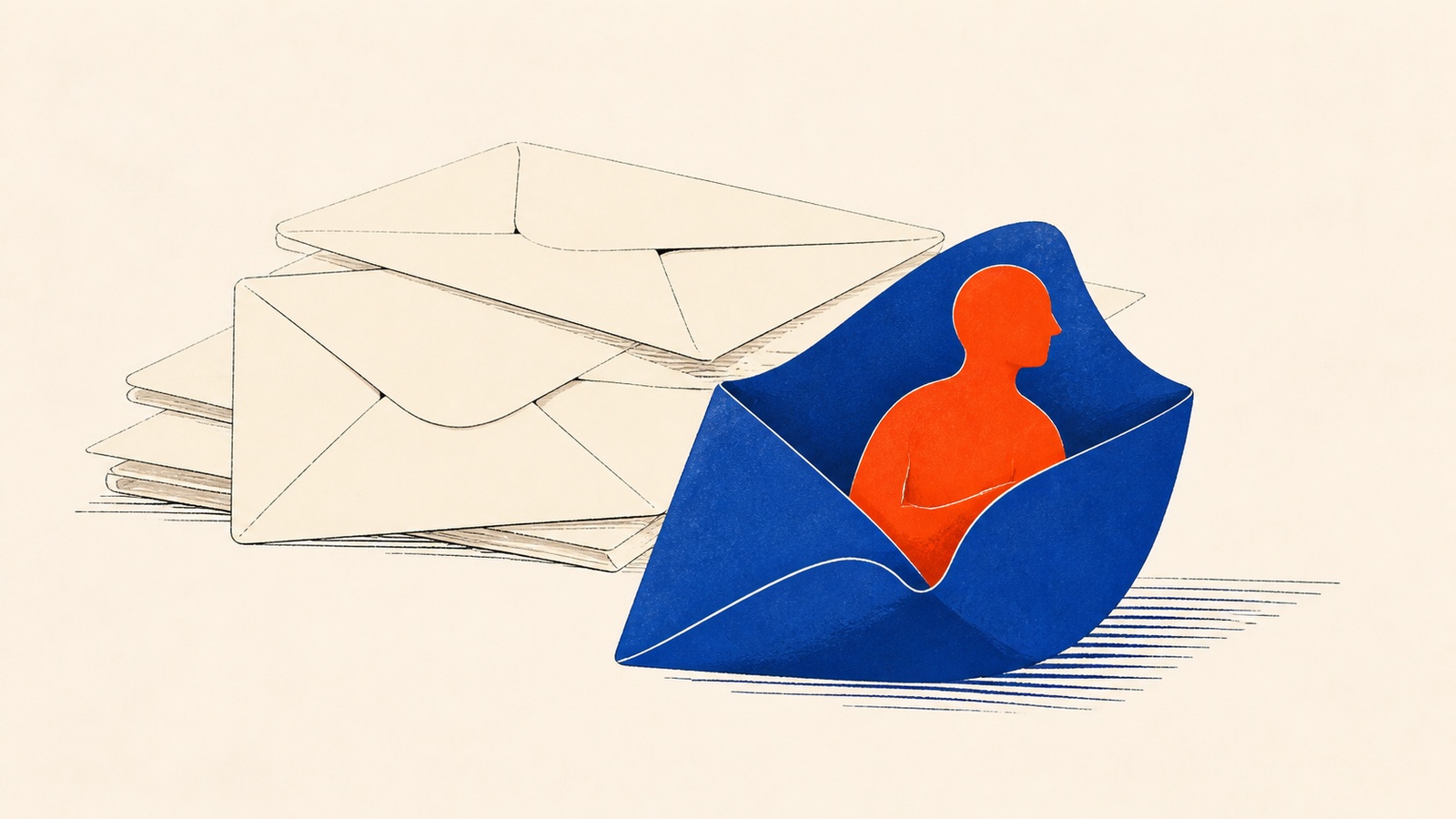
The average professional gets 121 emails a day. Against that volume, a nurture email written for "our subscribers" in general has already lost: it reads like every other broadcast in the inbox, because it was built the same way every other broadcast was: for nobody in particular. The reader doesn't have to think about this consciously to act on it. They scan, judge, and delete in less time than it takes to read this sentence.
The fix isn't a better subject line. It's writing to someone specific enough that the email couldn't have been sent to anyone else on the list. One productivity coach cited in this bundle's ebook watched her open rate move from 12% to 37% in three weeks after doing exactly this: not by improving her writing, but by finally understanding who she was writing to.
That distinction matters because most advice on nurture emails focuses on the wrong layer. Subject-line formulas and send-time optimization are real, but they're polish on top of a message that's either aimed at someone specific or isn't. Get the aim wrong and no amount of formatting fixes it; get it right and a plainly worded email outperforms a clever one sent to the wrong person, because the reader recognizes themselves in it before they've registered a single stylistic choice.
The buyer's roadmap, and the persona that makes it usable
Email Nurture Strategy that Works maps every purchase decision to four stages, and argues that most nurture sequences fail for a structural reason, not a writing one: they send the same message regardless of which stage the reader is actually in.
| Stage | Subscriber's question | Their objection | Email's job |
|---|---|---|---|
| Awareness | "Do I have this problem?" | "This isn't urgent" | Validate the pain point |
| Consideration | "What solutions exist?" | "Too many options" | Demonstrate authority |
| Decision | "Is this worth it?" | "Too risky or expensive" | Remove the obstacle |
| Loyalty | "Did I make the right choice?" | "Was this worth it?" | Expand the relationship |
The table only becomes useful once you can picture who's actually reading it, which is where the book's persona method comes in. A workable persona needs a name, a clear goal, a pain point, an objection to your solution, a trigger event, and the exact phrases the person uses to describe their problem: pulled from customer reviews, support tickets, or sales calls, not invented.
Its worked example is "Double-Duty Sarah": she manages social media for a mid-sized company while building a coaching business nights and weekends. Her goal is financial independence through the side business. Her pain is time: she feels constantly behind and guilty about neglecting either job. Her objection is that another system will just add more to-dos without fixing the underlying chaos. Her triggers are month-end financial stress and Sunday-night anxiety. Her phrases: "I'm spread too thin," "there aren't enough hours."
Cross Sarah against the journey table and the emails write themselves. An awareness-stage subject line becomes "Sunday night dread is real when you're juggling two careers" instead of a generic productivity headline. A decision-stage CTA becomes "see the 10-minute morning routine that replaces three hours of scattered effort" instead of "learn more." Nothing about the underlying offer changed: only the specificity of who it's addressed to.
Where people go wrong
The most common mistake is building a persona once and never checking it against reality. The book's fix is embedding a one-question poll into regular sends ("what's your biggest challenge with topic?"), so the persona stays accurate as the actual audience shifts, rather than becoming a document that describes who subscribers used to be.
The second is sending every subscriber the same sequence regardless of stage. A reader who's still deciding whether they have the problem gets the same "buy now" message as one who's ready to purchase, and the mismatch reads as tone-deaf rather than persuasive: it tells the reader you weren't paying attention to where they actually are.
The third is skipping straight to demographics (age, job title, income) and calling that a persona. A demographic profile tells you who someone is on paper. It doesn't tell you what they say to themselves at 11pm on a Sunday, which is the detail that actually makes an email feel personally written, and it's the detail a spreadsheet full of ages and job titles can't give you no matter how detailed the fields get. How this fits against permission, sequencing, and the rest of the system is covered in the Email & SMS guide.
Inside Email Nurture Strategy That Works
Going deeper
- AudioInbox Influence
- BookEmail Nurture Strategy that Works
- ChecklistEmail Journey Mapping
- ChecklistStoryselling Framework Implementation
- GuideThe Email Split-Testing Workflow
- GuideThe Storyselling Framework
- Mini-CourseDon't Get Ignored in the Inbox
- Prompt PackEffective Email Marketing
- ToolstackNurture Sequence Builder
Email Nurture Strategy That Works is one of 6 bundles in The Email & SMS Pack, or take the whole pack for $29.
Related reading
Email and SMS marketing for a small list: the complete guide
How email and SMS work for a small list: permission, segmentation, sequence, channel choice, and the numbers actually worth tracking.
Read more
SMS segmentation that earned back its opt-outs
A case study on SMS audience segmentation, with the personalization techniques that turned a generic blast into targeted messages.
Read more
Cold email follow-ups that get replies
A four-message follow-up sequence for cold email, plus the break-up email that gets a reply even from prospects who went quiet.
Read more