
An emergency fund with three tiers, not one number
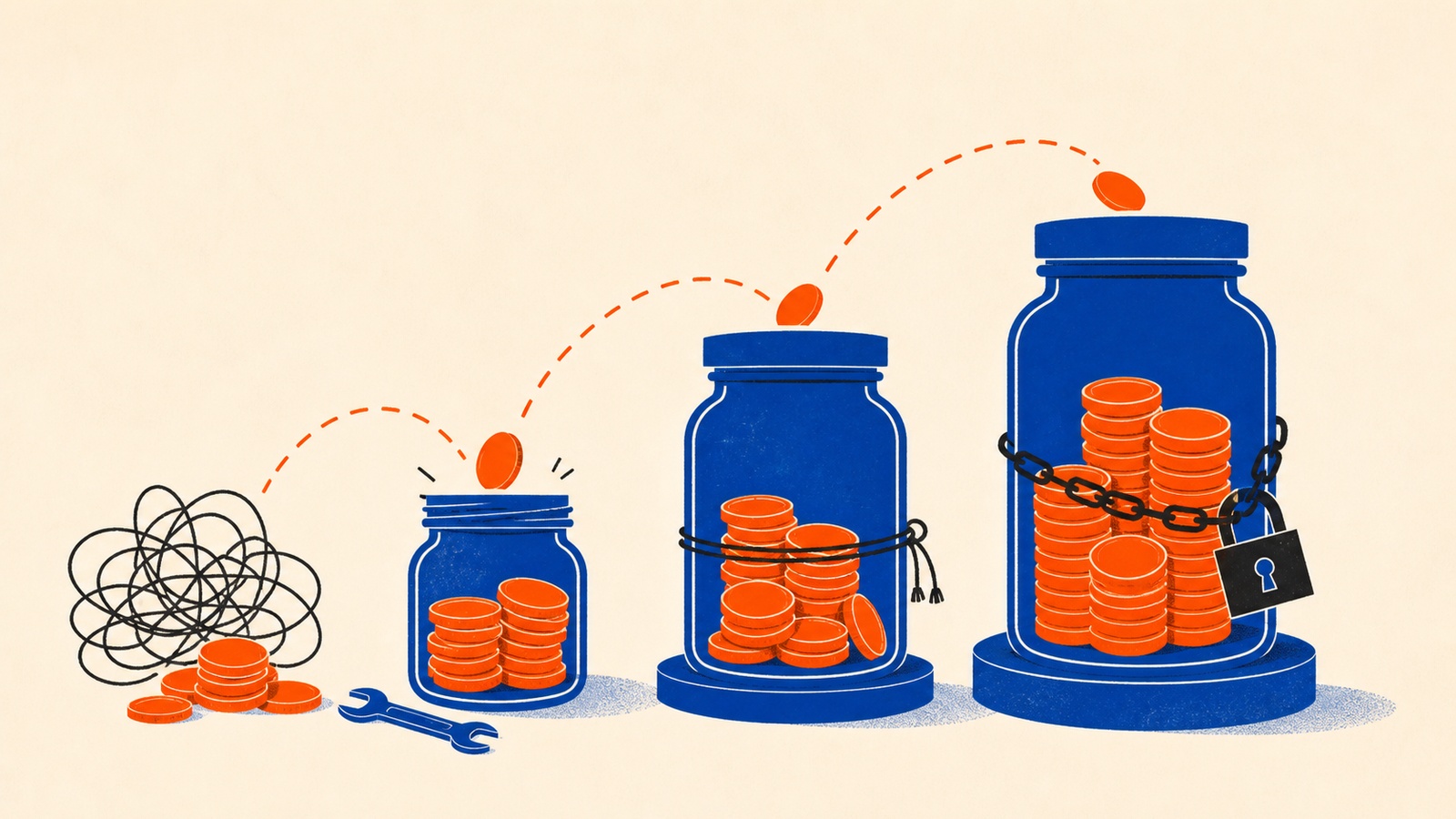
Most people who build a budget for the first time size their emergency fund like a single number: three months of expenses, six months of expenses, whatever the last article they skimmed happened to say. Then they either aim for six months and give up somewhere around month one, or they hit $1,000 and treat the job as finished, with nothing left to draw on if a genuinely large bill lands two years later.
Both mistakes come from the same source: a target that's one number, in one account, with no sense of what each dollar in it is actually for. A $2,000 car repair and a six-month layoff are not the same emergency (they arrive at different odds, cost different amounts, and call for different amounts of patience before the money is needed), and funding both from a single savings goal treats them as if they were identical problems.
The fix isn't a bigger number. It's more accounts.
A three-tier emergency fund, not one savings goal
Budgeting In Everyday Life's checklist for emergency fund building splits the fund into three tiers, each with its own purpose, its own account, and its own amount.
Tier 1 is $1,000 to $2,000, held in a separate high-yield savings account, kept for immediate access. This tier absorbs the ordinary emergencies (a car repair, a broken appliance, a vet bill), the ones that happen most often and cost the least. The checklist's reason for keeping it separate is speed: no transfer delay, and no quiet drift into treating it as general savings.
Tier 2 is three months of essential expenses, in a second high-yield account, reserved for bigger disruptions: reduced income, a larger medical bill, a repair that Tier 1 alone can't cover. It's still liquid, but the separation still matters: dipping into Tier 2 should feel different from dipping into Tier 1, because what each one protects against is different.
Tier 3 is an additional three to six months, held somewhere slightly less liquid and potentially earning more, for extended emergencies: sustained job loss, a health situation that runs for months rather than weeks. The checklist treats this tier as the one built last, once the first two are funded, not the one people try to hit first out of anxiety.
What makes this work better than a single savings goal usually isn't the total saved: it's typically the same total, split three ways. It's that each tier has documented usage criteria, so a $2,000 emergency doesn't turn into an in-the-moment argument with yourself about which account it should come from. The checklist calls for writing down what qualifies as an emergency for each tier before the money is needed, plus account alerts on any withdrawal, so a Tier 1 dip doesn't quietly become a habit.
Sequence matters too. Fund Tier 1 completely before starting Tier 2: the checklist is explicit about this, because a half-funded Tier 1 and a half-funded Tier 2 leave you covered for nothing in particular.
Where people go wrong
The most common failure isn't undersaving. It's building one account, labeling it "emergency fund," and then spending from it on anything that feels urgent in the moment: a sale on something already wanted, a trip that came up. Without tiers and written criteria, "emergency" quietly expands to mean "thing I want now," and the fund never grows past wherever the last withdrawal left it.
The second is skipping straight to the six-month target. People read that three to six months is the standard range, decide that's the whole goal, and spend the first several months feeling like they're failing because the number barely moves. Tier 1 exists specifically to produce a real result in weeks, not a year. Treat it as its own finish line, not a rounding error on the way to Tier 3.
The third is forgetting maintenance. A fund set up once and never revisited loses ground to inflation and to a lifestyle that's grown since it was funded: the $1,500 that covered a car repair two years ago covers less of one now. The checklist calls for quarterly reviews and explicit rules for how fast to replenish a tier after using it, a step people skip because the account, once opened, feels finished rather than ongoing.
Cash gaps aren't unique to households; they're the same failure mode that ends small businesses, at a different scale. The money and pricing guide covers that side of it: what happens when the missing buffer belongs to the business rather than the person running it.
Inside Budgeting In Everyday Life
Going deeper
- AudioThe Resilient Wallet
- BookBudgeting in Everyday Life
- ChecklistEmergency Fund Building
- ChecklistMonthly Budget Framework
- GuideMonthly Budget Maintenance
- GuideThe Emergency Fund Builder
- Mini-CourseTake Control of Your Finances
- Prompt PackPersonal Finance Mastery
Budgeting In Everyday Life is one of 9 bundles in The Money & Pricing Pack, or take the whole pack for $29.
Related reading

Money and pricing for a business of one: the complete guide
Pricing, cash flow and money psychology for a one-person business, what to fix first, why the model comes before the number, and how to start this week.
Read more
The money habits that survive a bad month
The money-script idea and a three-part mindset framework for why financial habits collapse under pressure even when the plan itself is sound.
Read moreTurning followers into revenue without the sleaze
Why a Hook-Story-Monetize structure matched to your follower count converts an audience into income, and why posting more doesn't add a paid step.
Read more