
A content plan a small business can actually keep

You don't need a Fortune 500 budget to tell your business's story. What you need is a goal specific enough that you can tell, in a month, whether it worked, and most small-business content plans never get that specific. "Boost engagement" isn't a goal. It's a placeholder for one.
Content Marketing for Small Businesses, the book in this kit, opens with a bakery owner named Mariana who spent six weeks posting whatever came to mind before switching to a plan: Thursday posts tease the weekend specials, nothing else. Saturday traffic doubled. The shift wasn't better photography. It was picking one destination instead of five.
The bigger version of the same problem is guessing what to post about in the first place. A Portland coffee shop in the book spent $3,000 on produced Instagram videos and still had empty tables, until a barista had one counter conversation and learned the neighborhood wanted vegan pastries, not another craft-coffee pitch. The next post, about the plant-based option, sold out in two hours. The $3,000 didn't fail on production quality. It failed because nobody asked first.
The one-sentence goal, and the metrics that actually track it
The book's template for turning a vague wish into something testable is a fill-in-the-blank sentence: "By specific time frame, we will use chosen content or strategy to achieve measurable goal so that desired outcome or impact." It forces two things at once (a deadline and a number) that most small-business content plans skip entirely.
Its worked example is Ellis Hardware, a fictitious store trying to fill weekend DIY workshops. The vague version of the goal is "get more workshop attendees." The book's version: "Create and share three how-to videos demonstrating basic skills taught in our workshops, with direct sign-up links, to increase workshop registrations by 20% over the next 8 weeks." Same intention, but now there's a number to check against in eight weeks, not a feeling to guess at.
The metric side of this gets its own correction. The book pairs vanity metrics against the action metrics that actually predict revenue: total followers against new customer visits, post likes against coupon redemptions, video views against workshop sign-ups, email open rates against direct message inquiries, website traffic against phone calls from your Google listing. Likes don't pay rent. Redemptions do.
The book's own instruction for using this pairing: write down your baseline before you launch anything. If Tuesday dinner service averages 28 customers, note that number before you post "Tuesday Date Night" content, so the comparison afterward means something. Then check weekly, not daily: daily tracking mostly produces noise, not signal. A thrift store in the book's examples ran one 30-second phone video a week showcasing new arrivals, saw weekend visits climb 18% in four weeks, and only then expanded the format. One tactic, one goal, one review date, before the next decision got made.
Where people go wrong
The most common mistake is running more than one objective at a time: awareness, foot traffic, email growth, all from the same three posts a week. The book is specific that each content campaign needs one primary goal, not five competing ones, because a plan that doesn't exclude anything can't tell you what to cut when something isn't working.
A second is measuring what feels good instead of what pays the bills. Follower counts and video views climb steadily even when a business is losing money, because they're disconnected from any transaction. The book's fix isn't to ignore social metrics entirely: it's to always pair them with the action metric downstream, so a rising view count with flat coupon redemptions tells you the content is being seen and not acted on.
A third is the "forever pilot": a tactic that never gets a review date, so it just continues indefinitely without anyone deciding whether it worked. Set the date before you launch, not after results start looking ambiguous.
A fourth, less obvious than the rest, is skipping the counter conversation because it feels too casual to count as research. The book's fix is a small notebook behind the register and one targeted question per transaction ("what brought you in today," not "how's your day") logged and reviewed weekly. That habit is what turned the Portland coffee shop's guesswork into a sellout.
This is the budget-constrained half of a bigger system (the plan, the psychology, the measurement, and the loop after the sale), covered in full in the Marketing Foundations Pack's guide.
Inside Content Marketing For Small Businesses
Going deeper
- AudioThe Small Business Content Show
- BookContent Marketing for Small Businesses
- ChecklistLocal SEO Landing Page
- GuideDIY Phone-Based Production Toolkit
- Listicle7 Local Marketing Tactics That Actually Work for Busy Business Owners
- Mini-CourseTransform Your Local Business in 8 Days
- Prompt PackLocal Business Content Marketing
Content Marketing For Small Businesses is one of 7 bundles in The Marketing Foundations Pack, or take the whole pack for $29.
Related reading
Marketing for a business of one: the complete guide
How marketing works when nobody is doing it but you: positioning, buyer psychology, content, local search, measurement and retention, in dependency order.
Read more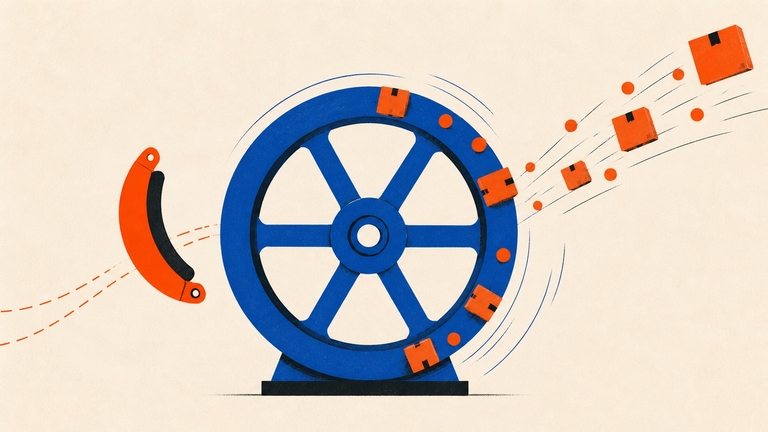
Force, friction, and mass: the flywheel model for repeat customers
Why a sales funnel has no mechanism for customers who already bought, and the force, friction, and mass framework that replaces it.
Read more
How to respond to a bad Google review
A four-step process for answering a negative Google review without getting defensive, plus the scripts the book itself uses.
Read more