
The 20-minute fitness framework
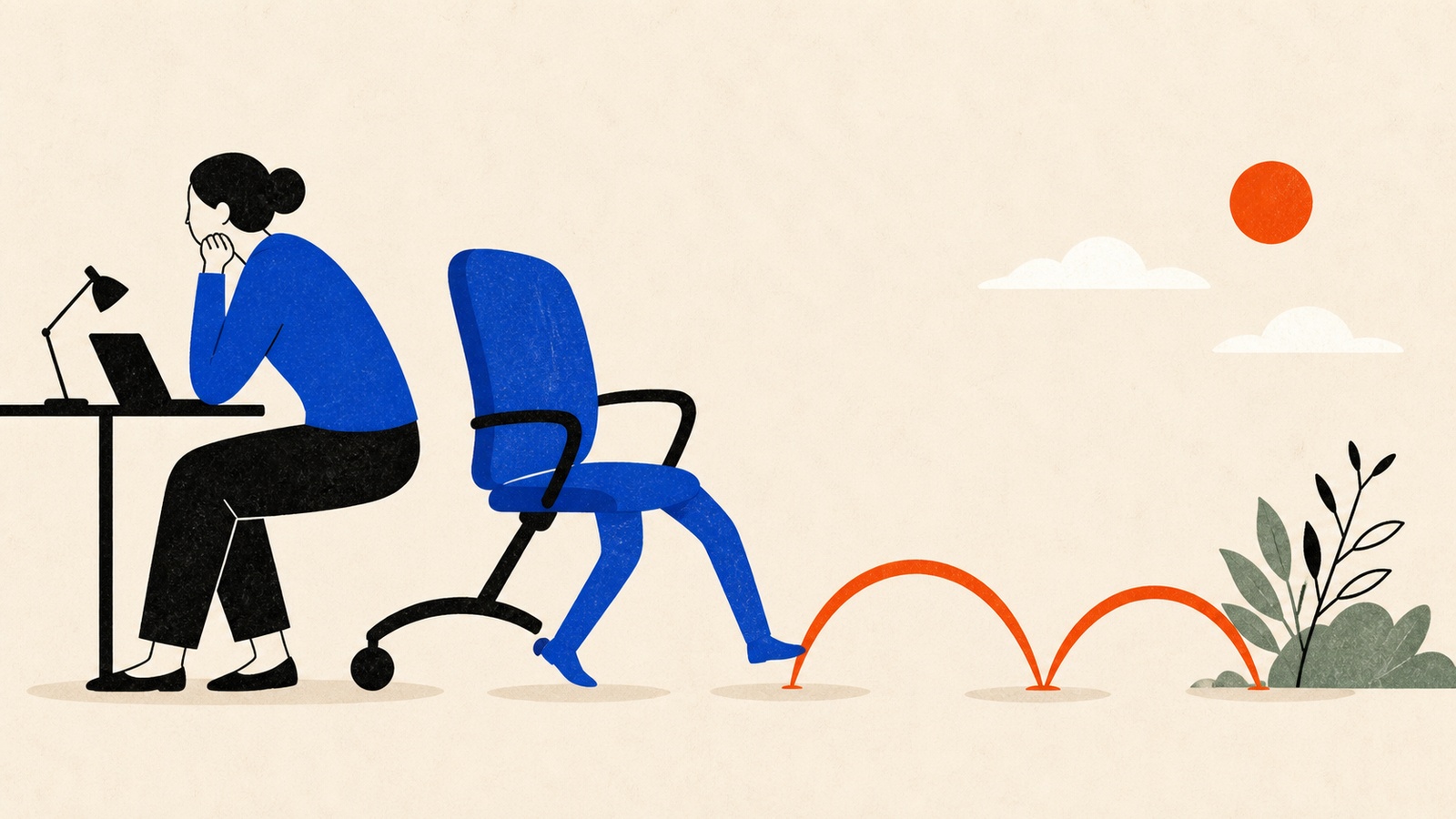
The fitness industry's advice assumes you have an hour, a gym, and the energy left over after a full day to use both well. If you don't (if the workouts you plan mostly don't happen, and the ones that do leave you more drained than when you started), the problem probably isn't your discipline. It's that the whole model was built for someone with a different life than yours.
Fitness Without Hustle opens with a distinction worth sitting with: exercise that energizes you and exercise that depletes you can look identical on paper and have opposite effects, depending on length, intensity, and how much stress you're already carrying. The book calls the good kind eustress (a manageable challenge your body adapts to and recovers from) and the bad kind distress, which happens when a workout is too long, too intense, or badly timed against a day that's already asking a lot of you. Your body, the book argues, doesn't distinguish workout stress from work stress. Stack enough of both and you get the opposite of what exercise is supposed to deliver.
The 20-minute framework
The book's core claim is specific: 20 minutes, done with intent, produces most of the benefit that longer sessions chase, and it structures three session types around when you actually have the energy for them.
| Session | Best time | Focus | Energy needed |
|---|---|---|---|
| Morning energizer | 6-8am | Wake the nervous system, boost metabolism | Medium to high |
| Afternoon reset | 12-2pm | Counter the energy crash, cut stress | Low to medium |
| Evening wind-down | 6-8pm | Release tension, prepare for recovery | Any level |
Morning energizers start with light mobility work and build toward brief intervals: meant to function the way a first coffee does, minus the crash later. Afternoon resets target the 2pm slump directly with moderate movement that clears mental fog without adding to the day's fatigue; the book leans on desk-worker-specific moves here, since hours of sitting produce a predictable set of problems (tight hip flexors, weak glutes, rounded shoulders) that a generic workout doesn't address. Evening wind-downs skip intensity almost entirely in favor of movements that counteract a day of sitting and help the body shift toward recovery.
The framework flexes with how you actually feel that day, not a fixed schedule: feeling drained regardless of the hour, choose the wind-down session; need a lift before an important meeting, a shortened version of the morning energizer works. The book's minimum effective dose argument backs this up: five minutes of movement helps, ten is meaningfully better, twenty is where most people hit diminishing returns on the time they're spending.
The book pairs this with a second framework for the rest of the day: Rest, Reflect, Reset, aimed at the natural 90-minute dips in attention most people push through rather than work with. Rest means a short break before you're actually depleted, not after: the simplest version is what the book calls a power pause, sixty seconds with your eyes closed, focused only on breathing, which gives your visual system a break from screens while shifting your nervous system toward recovery. Reflect is a brief pause for clarity before a decision, aimed at catching the choices you'd otherwise regret by the time you notice you're tired. Reset covers rapid recovery from a specific stressor (a hard meeting, a setback) rather than carrying it for the rest of the day.
The book profiles Marie, an agency owner who started with fifteen-minute morning walks rather than any structured program. Better sleep followed within a week, which she says made food choices easier, which is when she added two short strength sessions a week. The 3R framework handled the rest of her day. The change compounded over months rather than happening in one sitting, and by her own account the biggest shift wasn't a fitness metric: it was having energy left for her family after a full workday, something twelve-hour days hadn't allowed.
Where people go wrong
The first mistake is treating movement as all-or-nothing: skipping the day entirely because a full 20 minutes isn't available, when five minutes of stretching still counts and compounds over weeks the way a skipped day never does.
The second is ignoring your own signal. If a workout consistently leaves you more tired rather than less, that's the eustress-versus-distress line telling you the intensity or timing is wrong for where your stress levels already are, not a sign you need to push harder.
The third is waiting for exhaustion to force a break instead of the proactive "energy banking" the 3R framework is built around: a short walk after two focused hours, rather than nothing until you're depleted enough to need a full afternoon off. Where movement fits against the sleep and stress layers underneath it is covered in the full wellness guide.
Inside Fitness Without Hustle
Going deeper
- AudioThe Energy Advantage
- BookFitness Without Hustle
- GuideThe 3R Daily Reset System
- Listicle7 Fitness Myths Keeping High Performers Burned Out
- Mini-CourseThe Smarter Way to Stay Fit and Focused
Fitness Without Hustle is one of 13 bundles in The Calm & Energy Pack, or take the whole pack for $29.
Related reading
Stress, sleep and energy for people who work too much: the complete guide
How stress, sleep, food, movement, attention and boundaries stack up for busy people, in dependency order, and what to fix before anything else works.
Read moreThe hormone chain behind chronic stress
How the HPA axis actually works, plus the book's six-part sleep reset checklist for interrupting a stress cycle that won't reset on its own.
Read moreThe real reason energy crashes hit around 3pm
The 3pm energy crash is a blood sugar mechanism, not a willpower problem: here is what actually breaks the cycle.
Read more