
Marketing for a business of one: the complete guide
Updated September 2026
Most marketing advice assumes a team. It assumes someone owns the calendar, someone else owns the ad account, and there is a quarterly budget large enough that a wasted month is annoying rather than serious. If that describes you, this guide will read as slow.
It is written for the other case: one person, no marketing hire, a few hours a week that have to come out of billable time. The thing that goes wrong at that size is rarely ignorance of tactics. It is that you have six half-built channels, none of them finished, and no way to tell which one is worth the next hour. If you are still figuring out whether anyone wants what you sell, this is also the wrong guide: that is a product question, and marketing will just help you find out faster that the answer is no.
The map: six pieces, and the order that saves money
Marketing at this size breaks into six things: the plan, the buyer, the content, the search surface, the measurement, and the loop after the sale. They are not equally urgent, and doing them out of order is how the hours get wasted.
The plan comes first, and it is smaller than the word suggests. One page: who you serve, what you claim, in what voice, against which goals. The reason it goes first is mechanical rather than inspirational: every later decision is a filter, and a filter needs a criterion. Choosing channels before you can state your offer in one readable sentence is the most expensive mistake on this list, because the wasted spend is invisible; it just looks like marketing that did not work.
Understanding the buyer comes second, not first. Buyer psychology is genuinely useful, but only once you know which buyer. Applied to a vague audience it produces persuasion techniques floating free of anyone to persuade.
Then two things run in parallel, and which one leads depends on whether you have a geography. If customers could plausibly search for a business like yours near a place, your Google Business Profile outranks your blog for the first fortnight. It is finishable in an afternoon, it is free, and it appears in the results that convert best. Content is the slower compounding asset; it is worth starting, but not worth starting first if you have an unclaimed profile sitting there.
Measurement comes fifth. Not because it is optional, but because instrumenting a channel that has published four things measures noise. Measurement is what you build before you scale something, not before you start it.
The loop comes last in sequence and first in economics. Existing customers refer, repurchase and forgive, and almost nobody at this size has any deliberate mechanism for that.
The plan, on one page
Marketing Plan Simplified is built around a claim worth taking seriously: the useful marketing plan fits on one page, and anything longer is a document you will not reopen.
Its checklist runs in a fixed order: identify your ideal customers, craft the value proposition, define a brand voice, set SMART goals and pick channels, map the customer journey, set a budget, then measure and iterate. Step one asks you to analyse the customers you already have to find the most profitable and most enthusiastic ones, and to build two or three personas out of survey answers, social insights and site analytics rather than imagination.
The part that does the most work is the test it applies to the value proposition. A strong one, the book says, is clear and concise, communicates specific results, explains how you are different, and can be read and understood in about five seconds. That last criterion is the whole exercise. Read yours out to someone and count.
The failure mode here is not skipping the plan. It is writing one that is really a wish list: three audiences, five channels, no ranking. A plan that does not exclude anything cannot filter anything. The second failure mode is treating the personas as permanent; the book is explicit that they need revisiting as the business and the market move.
The one-page plan, the value proposition test and the journey map are covered in the Marketing Plan Simplified post.
Why people actually buy
Behavioral Marketing is the psychology layer, and it is more careful than the genre usually is. Cognitive biases, it explains, are systematic deviations from rational judgment: mental shortcuts the brain uses to decide quickly, helpful in most situations and error-producing in complex ones like a purchase. The practical instruction that follows is to design with them rather than against them.
Its structure tells you something about its intent. Nearly every chapter ends with a section on ethical considerations: biases and triggers, social proof, scarcity, persuasive web design. That is not decoration. Scarcity and urgency are the two techniques in this book most likely to be misused by a small business, and the treatment insists on the distinction between real constraints and manufactured ones.
Applied honestly, the useful half is social proof, which the book sorts by type and by channel and then asks you to measure: the chapter on measuring social proof is the one most readers skip and the one that keeps this from becoming decoration. The web-experience chapter covers the same ground for your site: what persuasive design elements do, how mobile changes them, and why A/B testing is what separates a design opinion from a design decision.
The mistake that costs most is borrowing the technique without the audience. A countdown timer on a page nobody trusts yet reads as pressure, not as scarcity.
Biases, emotional triggers, social proof and the ethics line through all of it are covered in the Behavioral Marketing post.
Content you can keep making
Two kits cover content, and they split cleanly: one is the system, the other is the version for a business with a counter and a phone.
The Beginner's Guide to Content Marketing frames content as a value engine that moves strangers through four phases:
- Awareness. People discover you exist through blog posts, videos and social content.
- Engagement. Readers interact via newsletters, webinars and comments: two-way, not broadcast.
- Trust. Prospects come to believe in your expertise through case studies, testimonials and consistent quality.
- Action. Individuals move toward purchase via trials, consultations and demos.
The value of the model is diagnostic, not aspirational. Most one-person content operations produce awareness material exclusively and then wonder why nothing converts: there is no trust-stage asset anywhere in the library.
Its four pillars of consistent creation are the other transferable piece: clear goals, thematic focus, calendar planning, and a realistic workflow. On goals it is specific: translate business objectives into one to three SMART content goals, on the grounds that vague aspirations like "build awareness" produce scattered content. Consistency itself, it argues, functions as a trust signal.
Content Marketing for Small Businesses takes the same logic and strips the budget out. Its posting routine is designed for one hour a week. Its production chapter is about filming on a phone, and its instruction (be authentic, not amateur) is the right line to hold. Its research chapter is the one to steal: turn counter conversations into customer insight, run very short surveys, and listen digitally, all of which cost nothing but attention.
The mistake that costs most is choosing a cadence for a good week. Pick the one you can hold in your worst month, then let the monthly improvement rhythm both books recommend do the compounding.
The value engine and the consistency pillars are covered in The Beginners Guide To Content Marketing; the one-hour-a-week, phone-first version in Content Marketing For Small Businesses.
The search surface you actually control
Ranking a website takes months. Finishing a Google Business Profile takes an afternoon, and for a local business it sits above the ordinary results, on the map, with your hours and your photos and your reviews in it.
Google Business Profiles is procedural, which is exactly what this task needs. Its checklist starts at the beginning (create the account and choose "To manage my business", add the business through Google Maps, then verify by postcard or phone) and moves on to the fields most profiles leave half-filled: primary and secondary categories, the business description, products and services, attributes, opening hours, service areas, appointment links, and the Questions and Answers section that you are allowed to seed yourself.
Then it spends real length on the two things that keep a profile alive rather than merely accurate. Reviews get a full chapter: setting up a system for collecting them, responding to positive ones as well as negative ones, handling the unfair ones, and reading them as product feedback. Posts get two chapters, on the reasonable grounds that a profile updated this month reads differently from one last touched in 2023.
The common failure is not a bad profile, it is a finished one: set up correctly, verified, and then never posted to again. The second is answering only the one-star reviews, which is visible to everyone and reads as damage control.
Setup, category choice, review responses and the posting cadence are covered in the Google Business Profiles post.
Measurement, before you scale anything
Content Marketing Analytics & ROI is written for someone with a CFO to answer to, which is not you. Read past the boardroom framing and the mechanics still apply.
Its KPI checklist opens by telling you to audit your existing metrics and delete the vanity ones (page views, social shares) that do not connect to a business outcome. What replaces them is a three-tier hierarchy: engagement KPIs for how people interact with the content, conversion KPIs for movement through the funnel, and revenue KPIs for money. Three tiers, not one number, because a single metric always ends up being the one that is easiest to move.
The attribution chapter is the part worth the read. It walks six models and is honest that the choice changes the answer. First-touch gives all credit to the first asset someone saw, which flatters awareness content and ignores everything that nurtured them. Last-touch does the reverse and is the default in most tools, which is why most people's data says their pricing page does all the work. Linear splits credit evenly across every touchpoint. Time-decay weights recent interactions more heavily: a thirty-day model might give the final week fifty percent, the week before thirty, and less to everything earlier.
The mistake that costs most is inheriting last-touch by accident and then cutting the awareness content it was never able to see.
Attribution models, the three-tier hierarchy and the reporting rhythm are covered in the Content Marketing Analytics Roi post.
The loop after the sale
The Flywheel Model argues that the funnel is the wrong shape because it ends. Customers who bought are not gone; they return, refer, and complain usefully. Its unit of analysis is momentum rather than conversion.
Treat its case-study numbers with suspicion: the enterprise example that goes from twenty percent growth to three hundred and forty percent is the sort of figure this genre produces on demand. The framework underneath survives the scepticism. Performance breaks into three dimensions: velocity, how fast customers move from first engagement to advocacy; efficiency, what each rotation costs you; and impact, what it produces. Naming them separately is what makes the diagnosis possible, because a slow flywheel and an expensive one need different fixes.
The kit's most useful component is the least exciting one: a friction point elimination checklist. Friction is the honest word for the things you already know are bad and have not fixed: the form with nine fields, the invoice that goes out four days late, the onboarding email that assumes knowledge nobody has. Removing friction is cheaper than adding force, and it is available this week.
Momentum, friction removal and the advocacy system are covered in the Flywheel Model post.
How to start this week
Two hours, no budget, in this order:
- Write your value proposition and time someone reading it. Who it is for, what result it produces, why you rather than the alternative. If it takes longer than about five seconds to land, it is not finished, and that is the finding, not a failure.
- Claim the surface that is already yours. If you serve a place, finish the Google Business Profile: verify it, set both categories, fill the hours and services, add ten real photos, publish one post. If you do not serve a place, spend the hour instead on picking a single content theme and a cadence you could hold in a bad month.
- Delete the vanity metrics from whatever you currently look at. Replace them with one engagement number, one conversion number and one revenue number. Three tiers, three numbers, one page.
Then do the smallest thing on the list: reply to your last three reviews, including the good ones. It takes ten minutes, it is visible to every future reader, and it is the cheapest trust you will build all month.
Related guides
If the content section is where your gap is, the Content & Creator guide goes further into making the stuff: formats, cadence, and the production side this guide only sketches. And once the organic pieces are working and you want to buy attention rather than earn it, the Paid Ads & Landing Pages guide covers the part where a wrong measurement setup starts costing real money.
Take the whole pack
Related reading

A content plan a small business can actually keep
A SMART-goal template for one-person marketing, and why tracking likes instead of redemptions is the fastest way to waste a week.
Read more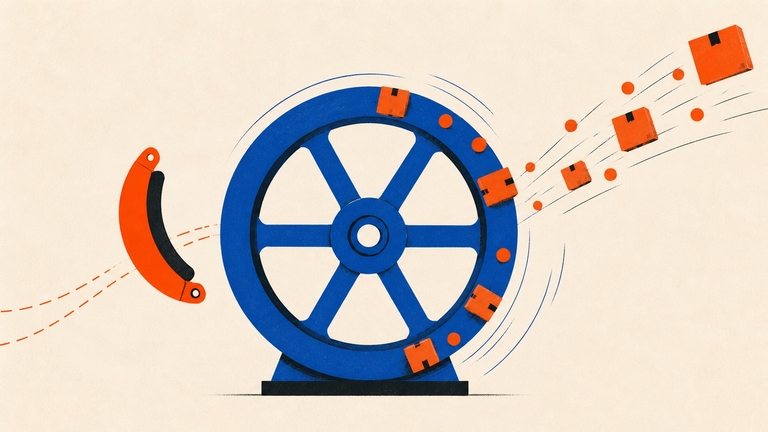
Force, friction, and mass: the flywheel model for repeat customers
Why a sales funnel has no mechanism for customers who already bought, and the force, friction, and mass framework that replaces it.
Read more
How to respond to a bad Google review
A four-step process for answering a negative Google review without getting defensive, plus the scripts the book itself uses.
Read more