
The survival mindset that matters more than your gear
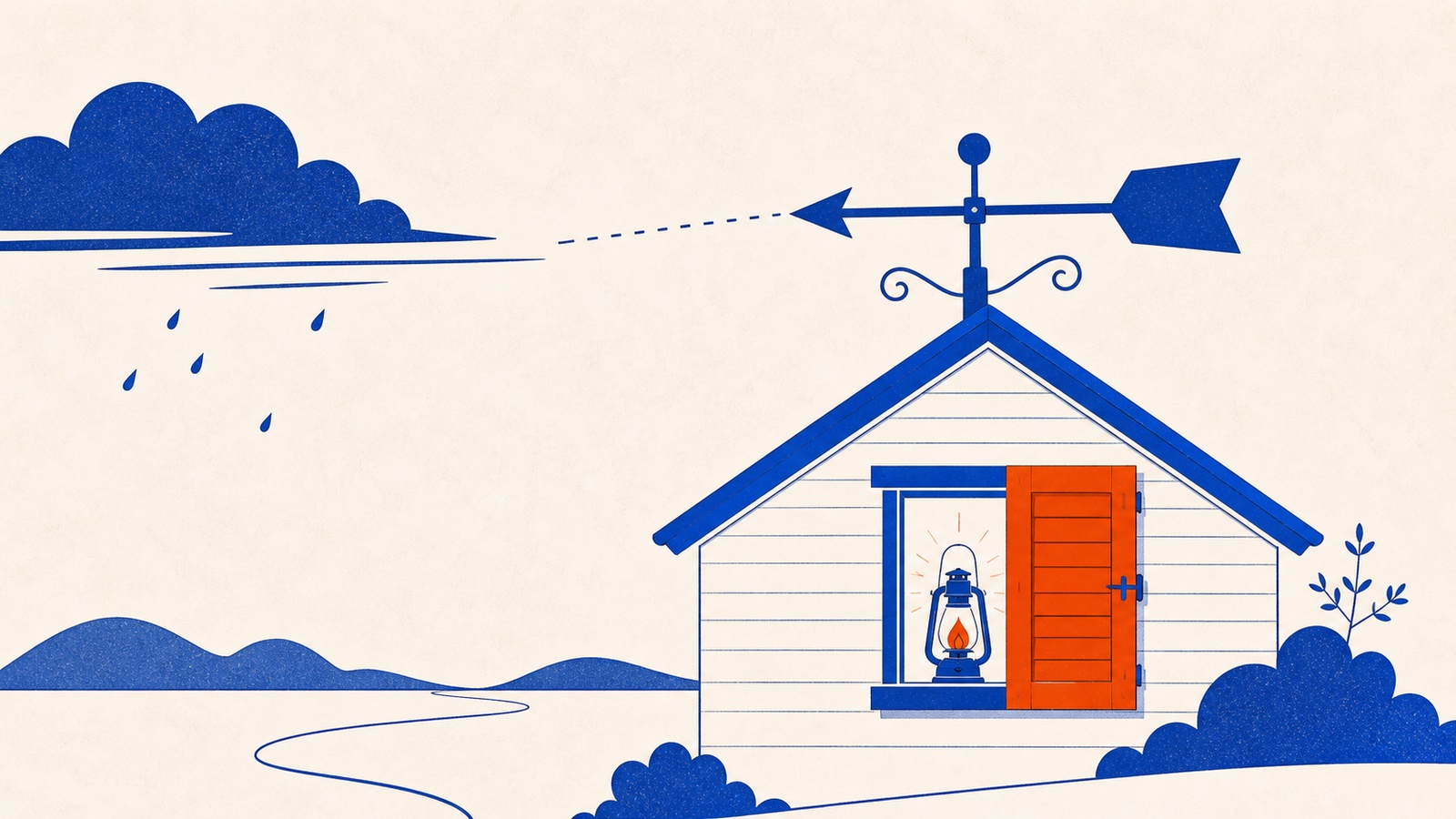
In 2005, as Hurricane Katrina headed for New Orleans, two neighbors watched the same forecast. James had been tracking the storm for days. He filled his tank, withdrew cash, packed essentials, and his family left calmly thirty-six hours before landfall. Michael dismissed the early warnings. He ended up in a six-hour traffic jam as gas stations ran dry and grocery shelves emptied within a day of the evacuation order.
Same storm, same warning, same amount of notice. The difference wasn't gear, money, or luck: James didn't own anything Michael couldn't have bought that same week. The difference was that one of them had already decided, ahead of time, what he'd do if the situation he was watching actually arrived.
That's a harder thing to sell than a checklist, because it doesn't come in a box. But it's the part that determines whether the checklist gets used when it matters, or sits half-finished in a drawer.
The thinking pattern that turns worry into a plan
The Ultimate Survival Prepper opens with a claim worth taking seriously even if the exact ratio is illustrative rather than measured: survival outcomes run roughly 80% psychology, 20% gear. It's why military units invest heavily in psychological screening: the most capable equipment is useless in the hands of someone frozen by indecision.
The book draws a specific line between two ways of relating to risk, and the distinction is more useful than it first sounds:
| Risk-informed | Paranoid | |
|---|---|---|
| Thought pattern | "This could happen; I should prepare reasonably." | "This will definitely happen; nothing I do is enough." |
| Behavior | Focused preparation for likely scenarios | Scattered preparation for unlikely ones |
| Resources | Multi-purpose supplies | Excessive specialized gear |
| Outcome | Reduced anxiety, increased capability | Increased anxiety despite preparing |
The COVID-19 pandemic made the distinction visible at scale. When shortage news first surfaced in February 2020, risk-informed households quietly added a bit extra to their regular grocery runs. By mid-March, when panic buying emptied shelves nationwide, those households already had several weeks of essentials: not because they'd stockpiled dramatically, but because they'd started early and stayed proportionate.
The book's practical tool for getting from vague anxiety to that kind of readiness is a simple reframe it calls the if-then plan. Naming a fear out loud ("I'm concerned about a prolonged power outage leaving us without heat this winter") engages the part of your thinking that can actually solve a problem, instead of the part that just sits with the discomfort. Converting it into a plan is the second step: "If the power goes out for more than two hours in winter, then we set up the kerosene heater in the living room, close off unused rooms, and use sleeping bags for extra warmth." A named, specific plan holds far less power over you than an unnamed worry does, and it turns a three a.m. anxiety spiral into a decision you already made in daylight.
The book pairs this with a scenario-planning exercise: a simple probability-versus-impact matrix, plotting the things that could actually go wrong against how likely and how damaging each one is. For most people, the highest-probability, highest-impact quadrant isn't an exotic disaster: it's a power outage, a severe storm, or a local economic disruption. Planning for the boring, likely version of trouble does more for you than planning for the dramatic, unlikely one.
Where people go wrong
The most common mistake is buying gear before doing any of the thinking above. A fully stocked bug-out bag purchased in a single panicked afternoon after a scary news cycle usually reflects what felt reassuring to buy, not what a real if-then plan for your actual region and household would call for. The book's sequencing (mindset first, home fortress second, supplies third) exists because skipping to supplies produces expensive gear nobody's practiced using.
The second is the "crazy prepper" self-consciousness that keeps otherwise sensible people from doing anything at all. The book's fix is reframing preparedness as ordinary risk management (the same category as insurance or a smoke detector) and bringing family members in with a specific recent example ("what would we have done if that storm last year had lasted a week?") rather than an abstract doomsday scenario.
The third is treating preparedness as a one-time purchase instead of a practiced skill. Skills decay at different, predictable rates (the book notes that CPR proficiency starts dropping within three months of training) and gear that's never tested is a guess, not a plan. A generator that hasn't been run under load, a water filter that's sat in a closet for two years: neither is reliable exactly when you need it to be. The account-security version of this same discipline (testing a backup before you need to restore it, verifying a second factor works before you're locked out) is covered in the full digital safety guide.
Inside The Ultimate Survival Prepper
Going deeper
- AudioThe Survival Signal
- BookThe Ultimate Survival Prepper
- ChecklistBuild Your Bug-Out Bag
- ChecklistHome Fortress Security Audit
- Guide3-Layer Home Preparedness System
- GuidePACE Evacuation Planning Framework
- Listicle21 Survival Tips that Can Get You Killed
- Listicle7 Survival Skills that Matter when Stuff Gets Real
- Mini-Course7 Steps to Survival Confidence
The Ultimate Survival Prepper is one of 5 bundles in The Digital Safety Pack, or take the whole pack for $29.
Related reading
Digital safety when you are the whole IT department: the complete guide
How to secure your accounts, recognise phishing, look after customer data under GDPR, and keep running when things break, in dependency order.
Read moreLocking down your online business in the next 30 days
Three real breach stories and the week-by-week plan that would have stopped each one, from password managers to a tested incident response plan.
Read more
The 7-second check that catches most phishing before you click
A seven-question checklist for the moment before you click, plus why the smartest people you know are still exactly the right target for it.
Read more