
Do you actually need a business plan?
There's a particular kind of stall that happens right at the start of a business: a blank document titled "Business Plan," a cursor blinking in the executive summary field, and a growing suspicion that this document is the thing standing between you and actually starting. Some people respond by producing fifty pages that no investor will ever read past page two. Others skip planning entirely and walk straight into problems a single afternoon of thinking would have caught.
Both mistakes come from treating "do I need a business plan" as a yes-or-no question about discipline, when it's actually a question about your specific situation: what you're funding, how complex the operation is, and how fast the market is moving under you.
The book opens with two contrasting cases that make the point better than a rule would. One founder launched a local meal-prep service by testing with ten customers first, skipped the formal plan entirely, and grew to over 200 weekly subscribers within six months. Another secured $2 million in funding for a tech startup specifically because he had a well-structured plan that showed investors a clear path to profitability. Neither approach was wrong. Each fit what the business actually needed.
The four questions that decide it
The bundle's ebook reduces the decision to four questions, and its instruction is direct: answer yes to any one of them, and a comprehensive plan is worth writing.
- Are you seeking external funding? Investors and lenders require documented strategy, market analysis, and financial projections before they'll consider writing a check. This isn't optional if outside capital is part of the plan.
- Does your industry require significant initial investment? More capital at risk raises the cost of getting the sequencing wrong.
- Will you need to coordinate multiple team members or complex operations? More moving parts means more value in writing down how they're supposed to connect before you're relying on memory to keep them aligned.
- Are you entering a highly competitive or regulated market? Both raise the cost of a mistake you could have anticipated on paper.
Answer no to all four, and the book steers you toward something lighter: the Lean Canvas, a one-page model covering value proposition, customer segments, and revenue streams that you can revise as you learn, or the MVP approach, where you launch a stripped-down version and let real usage tell you what a full plan would have had to guess at. Its own framing is useful here: a plan doesn't need to be perfect, it needs to be actionable, and a document that never leaves the drafting stage has failed regardless of how thorough it is.
For anyone who does need the full version, the book has a specific, almost throwaway piece of advice that's easy to miss: write the executive summary last, even though it appears first in the finished document. Many investors will read only that page, so it has to distill everything else, which is only possible once everything else already exists. And for the planning phase itself, regardless of which path you take, the book recommends a hard deadline (thirty to sixty days) on the grounds that planning has no natural stopping point unless you impose one. Analysis paralysis isn't a personality flaw in this framing. It's what happens to anyone handed a task with no deadline.
Where people go wrong
Analysis paralysis is the pitfall the book names first and calls "the silent progress killer": an endless research-plan-refine loop with no launch date attached to it, sustained by the reasonable-sounding belief that one more round of research will make the decision safer. The thirty-to-sixty-day deadline above is the book's direct answer to it.
The second is building the plan in isolation from any market feedback: writing detailed projections and strategy sections without a single conversation with a prospective customer to check whether any of it holds up. A plan that's internally consistent can still be wrong about the one thing that matters, which is whether anyone wants what it describes.
The third is unrealistic financial projections, usually optimistic ones pulled from what the business needs to be true rather than from comparable numbers. The book's fix is to research industry-standard margins and growth rates first, then build three scenarios (best case, worst case, most likely) instead of a single confident line. We walk through the plan-or-canvas decision as part of deciding what to build at all in the full business foundations guide.
Inside Your Business Plan Playbook Ebook
Going deeper
- BookYour Business Plan Playbook - Ebook
- ChecklistYour Business Plan Playbook - Checklist
- GuideYour Business Plan Playbook - Guide
- Prompt PackYour Business Plan Playbook - Prompts
- ToolstackYour Business Plan Playbook - Toolstack
- WorkbookYour Business Plan Playbook - Workbook
Your Business Plan Playbook Ebook is one of 16 bundles in The Business Foundations Pack, or take the whole pack for $29.
Related reading
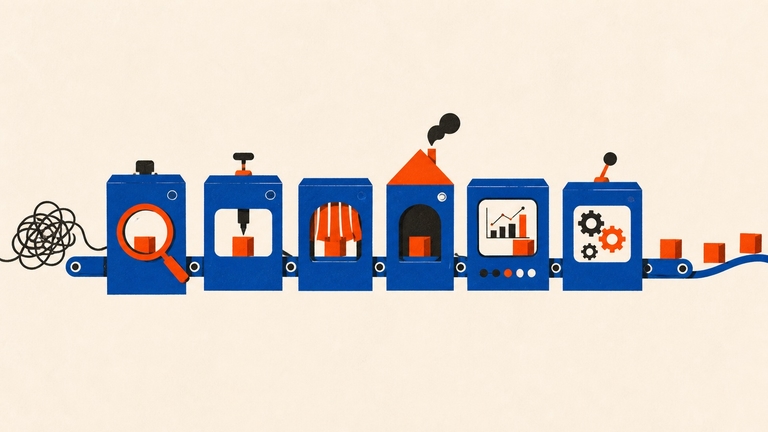
Starting a business, in the order the work actually happens
The order small-business work really happens: testing the idea, building the smallest version, the website, the numbers, and stepping out of the middle.
Read moreHow much of your product you actually need to build first
What a minimum viable product should include, using the LinkedIn, Buffer, and Instagram examples that show essential features from nice-to-have ones.
Read more
How to know a micro product will sell before you build it
A three-filter test and a 7-day checklist for validating a micro product idea before you spend a weekend building it.
Read more