
Email segmentation that goes past a first name
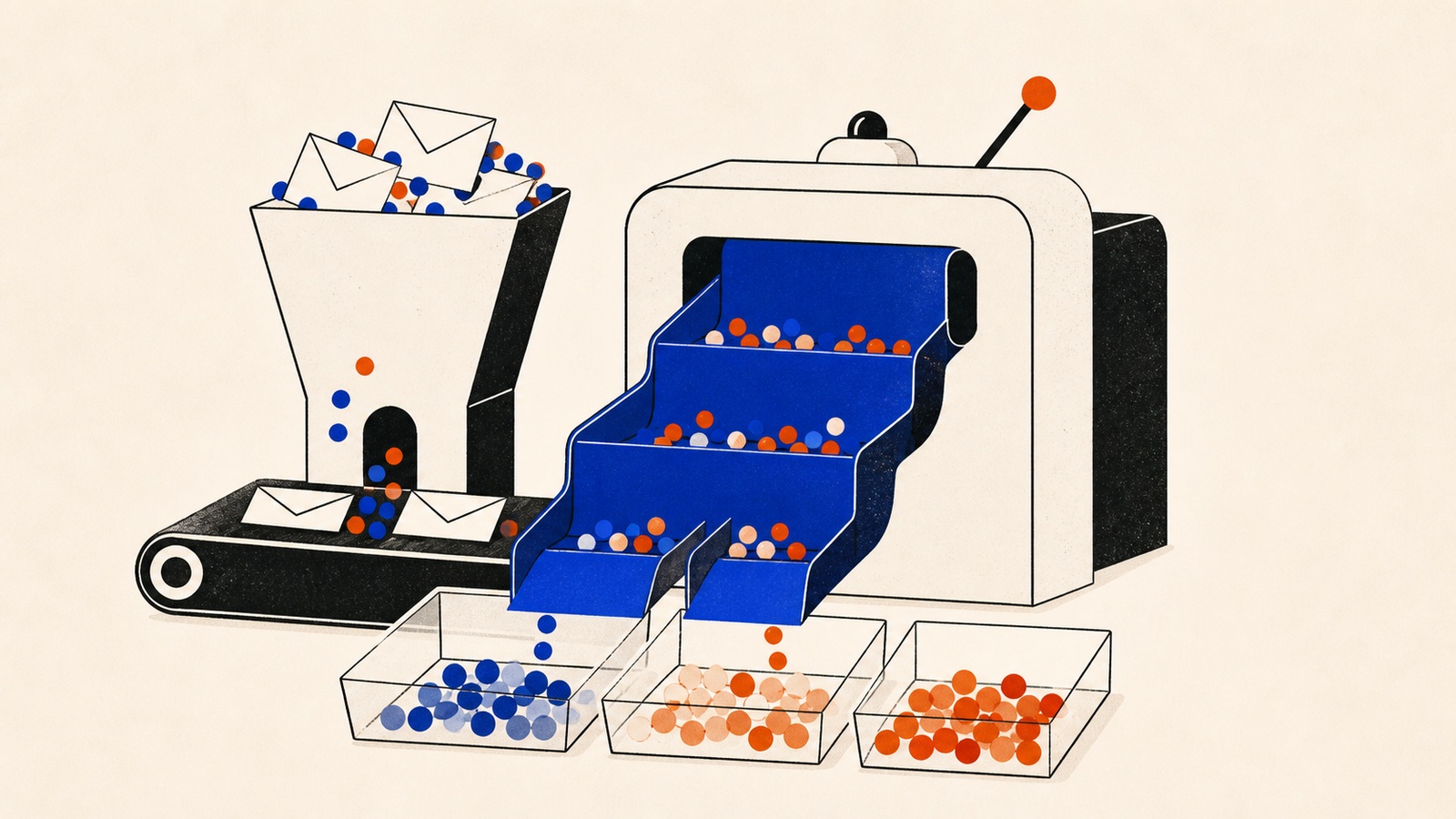
"Segment the list" is advice everyone gives and almost nobody operationalizes past inserting a first name into the greeting. That is not segmentation. It is autofill with a moral high ground attached, and readers can tell the difference within a sentence, because the rest of the email still addresses a crowd even though the first word addressed a person.
The tell is always the same: an email that opens fine and then loses the reader immediately after, because the content clearly wasn't written for them specifically, just for whoever happened to be on the list that week. Fixing that isn't about collecting more demographic fields. It's about knowing what someone already did, and treating that as more informative than who they are on paper: a subscriber's own history is a better predictor of what they want next than anything they filled in on a signup form.
Demographic segmentation is the easiest place to start, which is part of why it's also the shallowest. Knowing a subscriber is 35 and lives in a particular city tells you almost nothing about whether they're ready to buy, whether they've already read your last three emails, or whether they're one click away from unsubscribing out of boredom. Behavioral data answers those questions directly, because it's built from what someone actually did rather than what a signup form assumes about them, and it keeps updating on its own every time the subscriber does anything at all.
The point system that turns activity into a segment
The ebook in this kit, Beyond the Inbox, treats segmentation as a data problem before it's a writing problem, and its most concrete tool for that is a scoring system. Instead of sorting subscribers by age or location, it scores them by behavior: assigning points to actions and letting the total decide how a subscriber gets treated.
The book's version:
| Action | Points |
|---|---|
| Opens an email | 1 |
| Clicks a link in an email | 3 |
| Visits your website | 5 |
| Downloads a resource | 10 |
| Makes a purchase | 50 |
The gap between the numbers matters more than the numbers themselves. A subscriber who has only opened a handful of emails sits near the bottom of the scale; one who has downloaded a resource and clicked through twice is already worth a different kind of message. Run the scoring for a month and the list sorts itself into people worth writing to individually and people who are technically subscribed but not yet engaged: a more useful split than any field in a signup form.
The book pairs scoring with tagging, applying labels like "interested in shoes," "first-time buyer," or "high opener" based on the same behavioral data. Where the score tells you how engaged someone is, the tag tells you what they're engaged with, and combining the two is what lets an automated sequence fire the right message rather than a generic one. Grammarly is the book's example: when a user's activity with the product starts declining, the system sends a re-engagement email built around features that user specifically hasn't tried, rather than a blanket "we miss you" note. Active users get a different weekly note (usage stats) and free-plan users see upgrade prompts tied to their own writing habits, not a generic pitch. None of this requires predicting anything. It requires watching what already happened and routing accordingly.
Where people go wrong
The book names its own failure modes, and the first is the one-size-fits-all trap: writing a single email and sending it to the entire list because building segments feels like extra work up front. It defeats the reason to segment in the first place, and it's usually a sign the list has never been split at all.
The second is the opposite mistake: over-segmentation. Twenty narrow segments sound thorough, but every email now requires twenty small decisions, and most solo operators quietly stop sending rather than make them. Start with two or three groups and only add more once the writing itself starts to feel constrained by a segment that's too broad. That's the actual signal to split further, not a hunch that more granularity would help, and it keeps the whole system small enough that one person can run it without a dedicated tool.
The third is failing to test and optimize once segments exist. A segmentation strategy set up once and never revisited degrades as the list changes underneath it: new subscribers arrive who don't fit the original categories, and old segments stop reflecting who's actually in them. Building the full system, not just the scoring table, is covered in the Email & SMS guide, which walks through where segmentation fits relative to permission, sequencing, and channel choice.
Inside Beyond The Inbox Ebook
Going deeper
- BookBeyond the Inbox - Ebook
- ChecklistBeyond the Inbox - Checklist
- GuideBeyond the Inbox - Guide
- ToolstackBeyond the Inbox - Toolstack
- WorkbookBeyond the Inbox - Workbook
Beyond The Inbox Ebook is one of 6 bundles in The Email & SMS Pack, or take the whole pack for $29.
Related reading
Email and SMS marketing for a small list: the complete guide
How email and SMS work for a small list: permission, segmentation, sequence, channel choice, and the numbers actually worth tracking.
Read more
Four email metrics worth checking weekly
The four core email formulas, and a before-and-after case study showing what changed when a retailer actually tracked them.
Read moreMatching email strategy to the customer lifecycle
A stage-by-stage table for aligning email content with where a subscriber actually is, plus a formula for winning back dormant ones.
Read more