
Why hourly billing punishes you for getting better at your job
There's a version of this that happens to almost everyone who bills by the hour: you get faster. A problem that used to take ten hours now takes two, because you've solved it a hundred times before and stopped needing to think your way through it from scratch. In a logical world, that efficiency would make you more valuable. In an hourly billing model, it makes you poorer.
The book in this bundle calls it the Expert's Curse, and it runs the math on it directly. Two consultants, both hired to fix the same database error. Novice Nick charges $100 an hour, takes ten hours, and bills $1,000. Expert Erica charges $200 an hour (double Nick's rate), recognizes the problem immediately, and fixes it in thirty minutes. She bills $100. The client got a faster, better result from Erica and paid her ninety percent less than the novice. To match Nick's income, Erica would need nine more clients with the identical problem, the same day.
That's not a pricing quirk. It's what happens whenever the thing you're selling is time instead of the result the time produces. The book traces the same math to the calendar, not just the invoice: at $100 an hour, hitting $20,000 a month requires 200 billable hours: roughly 50 hours a week before marketing, admin, and client management eat into what's left. There's no leverage in that structure. Stop working and the income stops with you.
The value equation: transformation, speed, certainty
The book's answer is a formula it calls the Value Equation: Value = Transformation + Speed + Certainty. Notably, effort isn't in it. Research on what's called the "labor illusion" (cited from the Journal of Marketing Research) found that clients value outcomes over visible effort, which is exactly backward from what hourly billing assumes.
Transformation is the size of the gap between the client's problem and the solution. Saving a business $1 million in taxes is worth more than saving it $10,000, even if the work behind both takes identical hours: the value scales with the gap closed, not the labor spent closing it.
Speed is how quickly the result arrives. In an hourly model, working faster costs you money. In a value-based one, speed is a premium feature: solving a painful problem in two weeks instead of six months makes you worth more, not less.
Certainty is the likelihood the outcome actually happens. Clients pay for risk reduction: they hire someone with a track record because they want the outcome guaranteed, not a generalist willing to figure it out live.
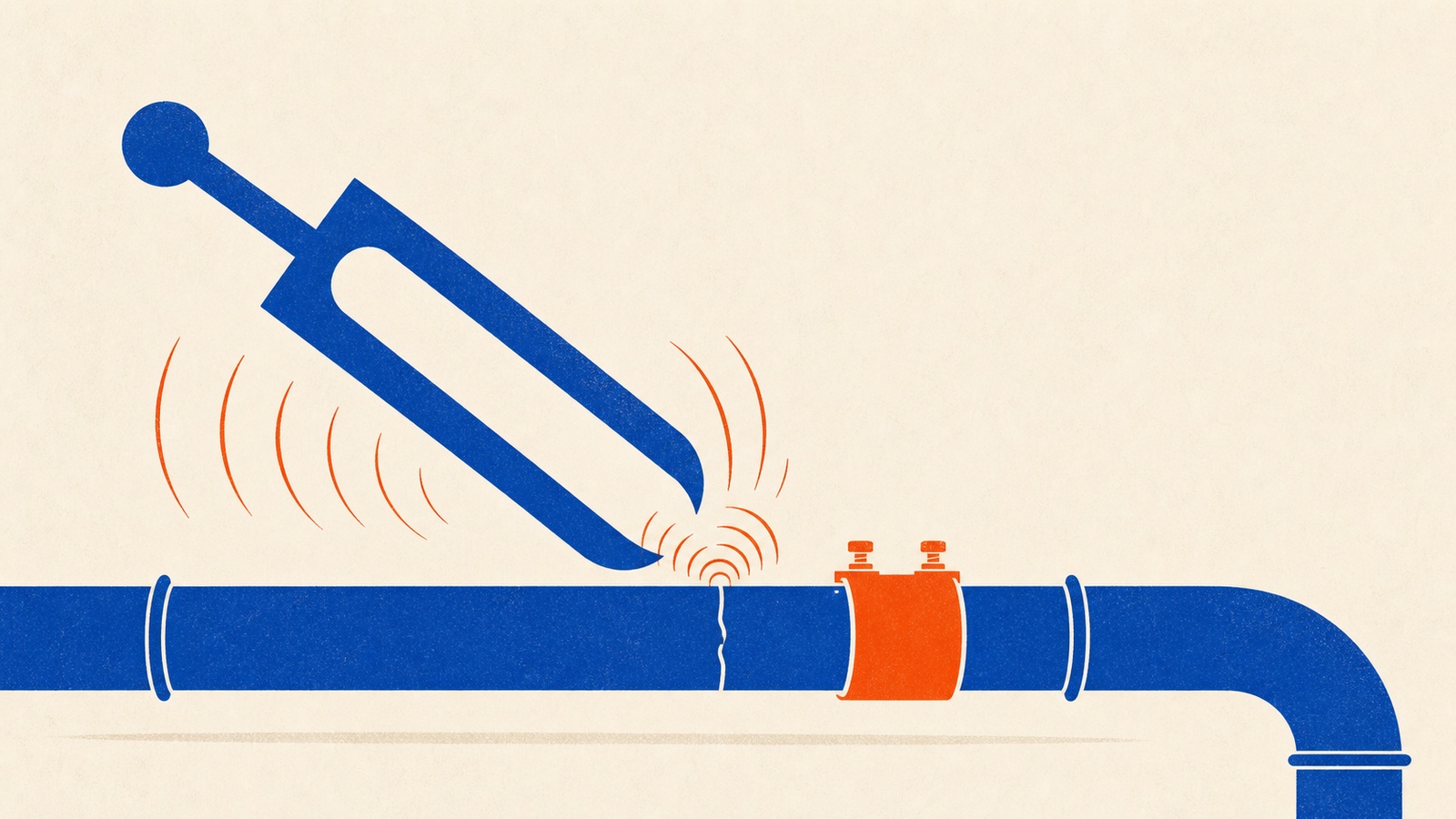
The book grounds this in a story about Charles Steinmetz, an electrical engineer called in when a generator failure shut down one of Henry Ford's assembly lines and Ford's own engineers couldn't fix it. Steinmetz listened to the machine, made a chalk mark on the casing, and told them to replace sixteen windings behind that exact spot. It worked. He billed Ford $10,000: an enormous sum at the time. Ford, known for demanding value for money, asked for an itemized invoice. Steinmetz sent one back: "Making chalk mark on generator: $1. Knowing where to make the mark: $9,999." He wasn't billing for the ten minutes at the factory. He was billing for the years of study that let him know exactly where to look.
Where people go wrong
The first failure mode is clinging to hourly billing because it feels safe (it's easy to explain and protects against scope creep) without running the actual math on what it caps your income at. The book calculates that a typical consultant can only bill around 1,350 hours a year once marketing, admin, and non-billable work are subtracted; hitting a $300,000 goal on that basis means charging over $220 an hour for every single billable hour, with no room for a sick week or a slow month. This is the same math problem underneath every conversation in the Sales & Closing Pack's guide about pricing on value instead of time.
The second is what the book calls the "Imposter Gap": feeling guilty charging a premium for work that now feels easy to you, forgetting that what's effortless for you is often impossible for the client: the same reason a surgeon who can finish a procedure in an hour, after fifteen years of training, still charges a premium rather than discounting for speed.
The third is raising the price without building anything to justify it. A generic offer with a high number attached doesn't become a high-ticket offer; it needs a proprietary mechanism (a named, structured way of solving the problem) behind the price. The book is direct about this: you cannot take a low-value, generic offer, put a $10,000 tag on it, and expect the number alone to change how it sells. The price has to trail the value engineered into the offer, not lead it.
Inside Package What You Know Into A High-Ticket Offer
Going deeper
- AudioThe Scalable Expert Model
- BookPackage What You Know Into a High-Ticket Offer
- ChecklistThe Scalable Service Delivery Setup
- GuideFrom Hourly to Value-Based Pricing
- Mini-Course13 Signs Your Offer Is Ready for Premium Pricing
- Mini-CourseLaunch Your First High-Ticket Offer
- Prompt PackBuild Your High-Ticket Service Business
Package What You Know Into A High-Ticket Offer is one of 14 bundles in The Sales & Closing Pack, or take the whole pack for $29.
Related reading
Selling for people who never wanted to be in sales: the complete guide
How selling actually works for freelancers and consultants: nerve, offer, proof, the conversation, pipeline and retention, in dependency order.
Read more
An objection is information, not a no
The 3R method for handling sales objections, and the small language shift that tells you a prospect is ready to close.
Read moreDirect selling: which model actually pays
A comparison of the three direct-selling business models (single-level, multi-level, and party plan) and their real commission math.
Read more