
The three stages of cortisol burnout
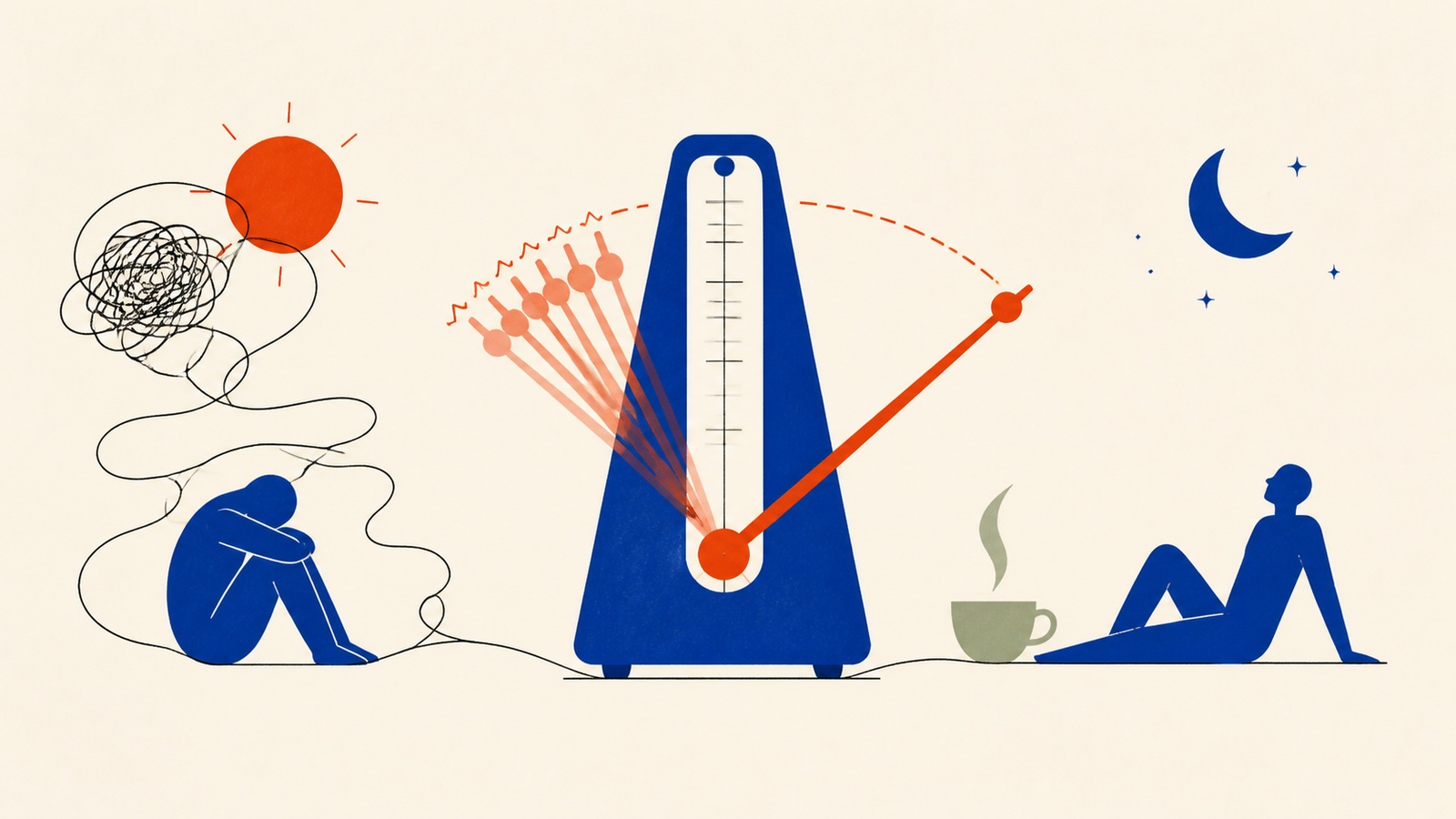
The tight chest before your feet hit the floor. The headache that arrives on schedule by mid-morning, the same time every day. This isn't a bad week: it's the language your body speaks when cortisol has stopped following its normal rhythm, and the fix that works for three days almost never holds for three months, because "manage your stress" isn't specific enough to act on.
Cortisol is not the enemy here. It regulates blood sugar, coordinates your sleep-wake cycle, keeps inflammation in check, and gives you the lift that gets you out of bed. The trouble starts when the mechanism that's supposed to switch it back off after a threat passes stops switching off. According to the book behind this bundle, Break Free from the Cortisol Cycle, that breakdown doesn't happen all at once. It moves through predictable stages, and the fix that works depends on which stage you're actually in.
Most stress advice skips this distinction. It treats "elevated cortisol" as one condition with one prescription (meditate more, cut the coffee, sleep earlier) as if someone two weeks into a hard project and someone two years into chronic overwork need the same thing. They don't. The stage you're in changes what's worth doing first.
The three stages your stress system moves through
Cortisol is managed by the HPA axis (hypothalamus, pituitary, adrenal glands) a feedback loop that's supposed to spike cortisol when your brain flags a threat, then dial it back down once the threat clears. In a healthy system, that loop has a built-in governor: rising cortisol signals the brain to stop producing more. Under sustained stress, the governor stops working, and the book maps what happens next across three stages.
| Stage | Cortisol pattern | DHEA level | Typical symptoms | Timeframe |
|---|---|---|---|---|
| 1. Alarm | Elevated, especially in the evening | High-normal to elevated | Anxiety, insomnia, hypervigilance | Weeks to months |
| 2. Resistance | Flattening curve, high evening levels | Beginning to decline | Afternoon fatigue, weight gain, slower recovery | Months to years |
| 3. Exhaustion | Blunted morning rise, flat all day | Significantly reduced | Profound fatigue, brain fog, frequent illness | Years |
Stage one is the one people mistake for high performance. Cortisol and DHEA are both elevated, you feel wired, sleep gets thinner, and because you're still getting things done, nothing feels broken yet. Stage two is where the flattening starts: the morning peak that's supposed to wake you up properly stops arriving, evening cortisol stays up instead of dropping toward midnight, and the 3pm crash becomes a fixture. By stage three, the morning rise is blunted rather than just flattened, and the symptoms (fatigue that sleep doesn't fix, getting sick more often, trouble concentrating) are what people usually mean when they say "burnout." The book is careful to separate this from what's popularly called "adrenal fatigue," which it argues is really HPA axis dysregulation: not tired glands, but a feedback loop that's lost its rhythm.
The book's own case study, a reader referred to as Jessica, starts in stage two: a flat curve, minimal morning rise, elevated evenings, headaches, and afternoon fatigue that made her nights alert instead of tired. Her intervention wasn't dramatic: consistent light exposure on waking, a fixed wind-down routine before bed, and a few protein-anchored meals instead of skipped ones. The book reports her curve normalizing over roughly a year, tracked through repeat saliva testing rather than how she felt on a given day: a useful discipline, since stage-two cortisol is exactly the kind that can feel worse before a slow fix starts to register.
One piece of the bundle's checklist, Eating Patterns for Hormone Harmony, narrows this down to specific timing rather than general advice:
- Cut off caffeine by noon. Caffeine has a five-to-six-hour half-life and blocks the signal that lets your body relax; a 3pm coffee is still partly active at 8pm.
- Replace afternoon coffee with an adaptogenic tea (holy basil or ashwagandha) rather than a second dose of caffeine.
- Time alcohol earlier in the evening, with dinner rather than as a nightcap, since alcohol produces a delayed cortisol surge four to six hours after drinking.
- Stay hydrated through the day, since dehydration is itself a physical stressor that raises cortisol.
None of these fix a stage-three system on their own. What they do is remove a handful of daily inputs that keep re-triggering the response you're trying to calm.
Where people go wrong
The first mistake is reaching for adaptogens or supplements before touching anything free. Ashwagandha's dosage-response data in the book is genuinely striking (up to 27% reduction in serum cortisol over eight weeks) but light exposure on waking and consistent meal timing work on the same mechanism at no cost, and most people haven't tried them for more than a few days before moving to a bottle.
The second is judging a change too soon. A cortisol rhythm that took months or years to flatten doesn't visibly shift in three days, and testing or self-assessing after a short trial mostly measures noise, not progress.
The third is trying to fix all three stages' worth of habits in the same week (sleep, food, light, screens, alcohol) instead of the one or two that match where you actually are. How this fits against sleep and the rest of the demand on your day is the subject of the full wellness guide, which lays out the order these layers actually respond to.
Inside Break Free From The Cortisol Cycle
Going deeper
- AudioBreak Free From Stress
- BookBreak Free from the Cortisol Cycle
- ChecklistEating Patterns for Hormone Harmony
- GuideEliminating Your Cortisol Triggers
- Listicle13 Cortisol Proof Rituals that Work with Your Body's Rhythms
- Listicle7 Cortisol Triggers Wreaking Havoc on Your Health
- Mini-CourseThe 6-Day Cortisol Reset
Break Free From The Cortisol Cycle is one of 13 bundles in The Calm & Energy Pack, or take the whole pack for $29.
Related reading
Stress, sleep and energy for people who work too much: the complete guide
How stress, sleep, food, movement, attention and boundaries stack up for busy people, in dependency order, and what to fix before anything else works.
Read moreThe three-day attention audit
Before you can fix where your focus is leaking, you need to see it. A three-day tracking method for mapping exactly what pulls your attention, and why.
Read more
What your creative block is signaling
A block isn't a discipline failure. It's information about whether the problem is a thought pattern or an empty energy tank, and the fix depends on which.
Read more