
Brand evolution without losing the audience you already have
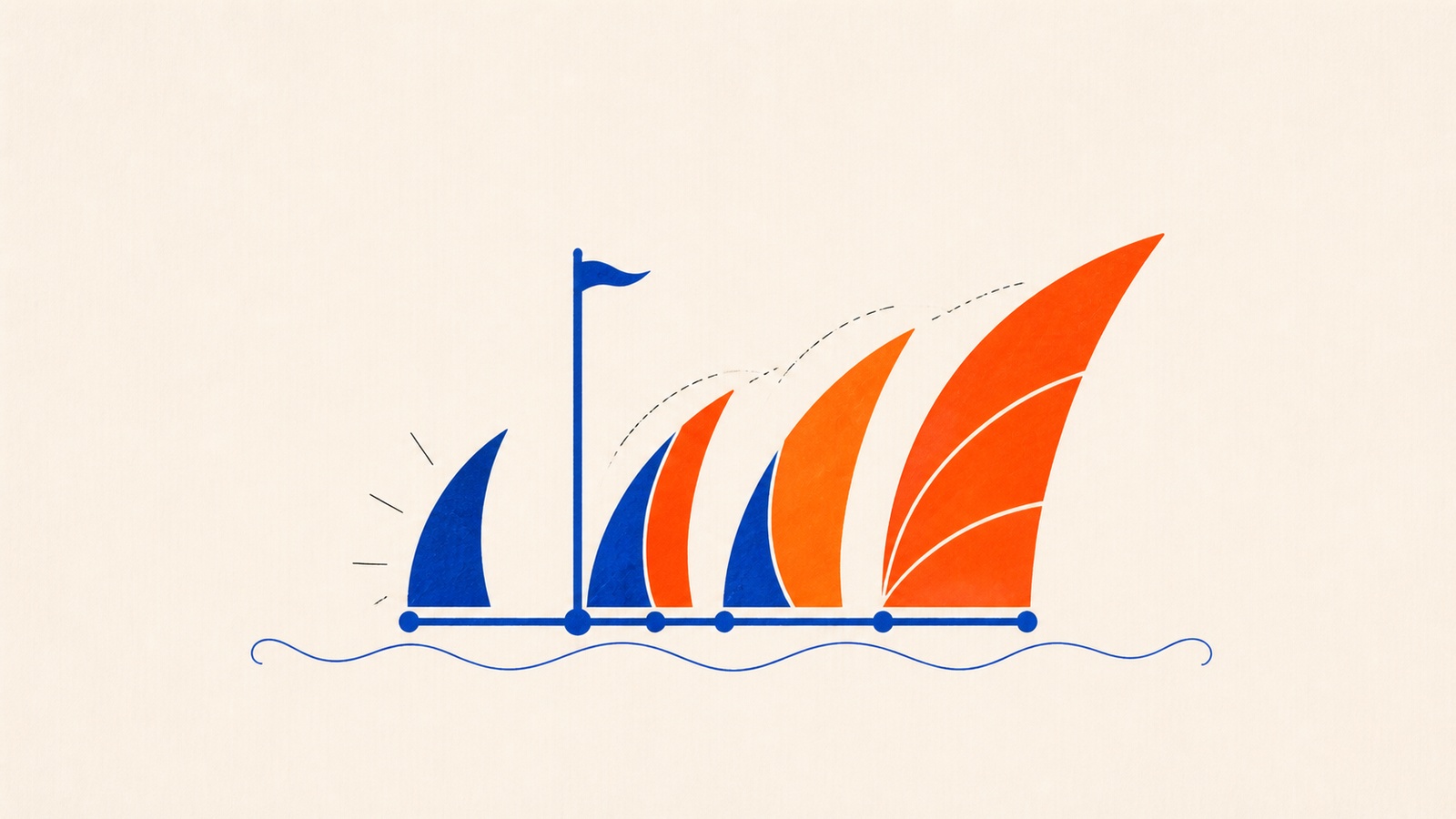
You've been posting the same kind of content for three years. It still gets views. It just doesn't feel like anything anymore. You know you could talk about other things (the topics that actually interest you now) but you're worried the people who followed you for the old thing will leave the moment you stop delivering it.
That worry is reasonable. It's also, according to The Brand Evolution System, backwards. The book's claim is that standing still is what loses an audience, slowly, while thoughtful change is what keeps one. Engagement doesn't usually drop because you changed. It drops first, quietly, and the sameness is the cause, not the cure.
The book calls the trap of an audience that expects you to stay exactly as you are the "success cage": you built something that worked, and the very thing that worked is now what's keeping you from growing past it.
The nine-step framework, and what actually has to stay the same
The book's central metaphor: your brand is a tree. The leaves, branches, and bark change with the seasons. The roots don't. Your core identity (your values, your way of seeing a problem, the reason you make anything at all) is the root system. Everything else is allowed to move.
The full framework runs nine steps across three phases:
Foundation Formula (steps 1-3): clarify your core identity, audit your current brand honestly, and define where you want to go. This phase produces no public changes yet. It's diagnostic: what's actually working, what's stale, and what your evolved direction should look like on paper before anyone sees it.
Expression Makeover (steps 4-6): reframe your message, refine your visual and verbal identity, and reintroduce the brand to your audience. This is where the internal work becomes visible.
Momentum Machine (steps 7-9): re-engage your audience, realign your offers so they match the new direction, and rebuild visibility through content and partnerships. The book is specific that most creators stall here: they update the message and the visuals, then assume the work is done, and wonder why nothing changed.
The worked example the book returns to is Cassie, a creator who built her audience on morning-routine and productivity content and felt trapped by it. Her path through the framework didn't mean abandoning productivity: it meant identifying that her actual root ("helping people build sustainable systems") was broader than the specific format she'd been stuck repeating, then expanding into that fuller territory deliberately, one phase at a time, instead of pivoting overnight.
The book also gives a timeline for pacing this: 30 days on Foundation work with no public changes, 60 more days testing new messaging and gathering feedback from trusted people, and by day 90, launching the full reintroduction. Slow enough that the audience can follow the thread from old to new.
It also draws a line the framework depends on: growth signals expertise, but only when the audience can see the logic connecting where you were to where you're going. The book calls this the "bridge story": a short, explicit sentence that names what you used to focus on, what you learned that changed your view, and what you're expanding into now. "I've been teaching social media tactics for years. But tactics without strategy leave people overwhelmed, so I'm expanding to help you build a complete brand" is the book's own example of the shape. Skip the bridge and the same change reads as abandonment instead of growth, even when the underlying reasoning is sound.
Where people go wrong
The most common mistake is the authenticity trap: the belief that staying exactly the same is what "being authentic" means, so any change feels like betrayal. The book's counter is that people naturally grow, and a brand that refuses to reflect that growth isn't being consistent, it's misrepresenting who you've actually become.
The second is changing for the wrong reason: chasing a trend instead of building on existing expertise. The book draws a sharp line between strategic evolution, which extends what you already know into adjacent territory, and random pivoting driven by panic or what's currently popular. The second kind burns audience trust without building anything durable.
The third is doing it all at once. The book's own relaunch checklist stages the rollout deliberately: profile pictures updated simultaneously for visual consistency, but the announcement, the case studies, and the new offers spread across separate weeks so the audience isn't asked to absorb a total reinvention in a single post. For where brand evolution fits alongside voice, visuals, and story, the brand and story guide covers the full picture.
Inside The Brand Evolution System For Modern Creators
Going deeper
- AudioOutgrowing Your Brand
- BookThe Brand Evolution System for Modern Creators
- ChecklistThe Brand Relaunch Sequence
- GuideReinvent Your Brand Without Losing Momentum
- Listicle13 Signals Your Personal Brand Needs a Strategic Refresh
- Mini-CourseBreak the Brand Plateau
- Prompt PackStrategic Brand Evolution
The Brand Evolution System For Modern Creators is one of 11 bundles in The Brand & Story Pack, or take the whole pack for $29.
Related reading
Brand building when nobody has heard of you: the complete guide
Positioning, story, voice, visual identity and reputation, in the order they actually depend on each other, and what to do first with no budget.
Read moreBrand voice consistency: why your company sounds like three businesses
How to translate your core values into one recognizable brand voice, so your Instagram and your invoices don't sound like different companies.
Read more
Mining your founder story from a life that doesn't feel dramatic
A three-step process for finding the founding moment worth telling, when your business origin feels too ordinary to be a story.
Read more