
Mindfulness for the minutes you already have
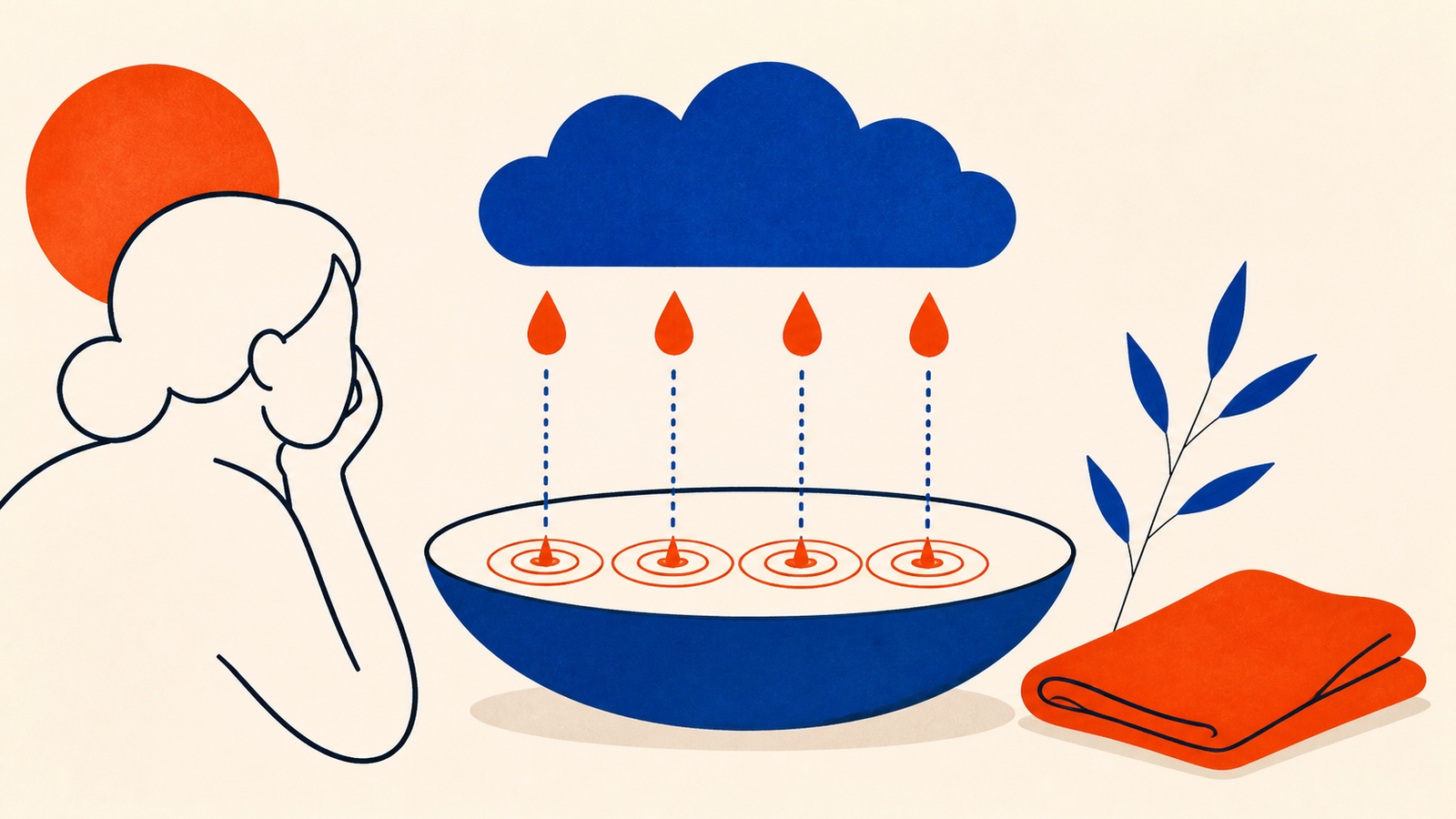
You reach for your phone before you've decided to. Roughly ninety-six times a day, on average: once every ten waking minutes, whether or not anything happened worth checking. Nobody notices this pattern from the inside. It just feels like being busy.
The usual fix is a meditation app and a promise to sit for twenty minutes each morning. Most people manage this for a week or two, miss one morning, feel behind, and quietly stop. The problem isn't discipline. It's that mindfulness got sold as a scheduled appointment, and scheduled appointments are exactly what a full calendar has no room for, so the first busy week cancels the practice meant to help you through busy weeks.
The alternative is smaller than it sounds: mindfulness that happens inside things you're already doing, not instead of them, plus a structure for the moments a feeling shows up and won't move on its own. Neither of those requires clearing space in a calendar that has none to give.
The RAIN framework, for a feeling that won't move
Mindfulness for Everyday Life spends its early chapters on the neuroscience: gray matter density, the brain's attention networks, an eight-week training study reporting a sizeable drop in stress hormones. All of it is plausible and none of it tells you what to do when a difficult feeling shows up at 4pm and stays. For that, the book's resilience chapter gives a four-step sequence it calls RAIN.
Recognition means noticing the reaction as it happens, and noticing what it's connected to, not just "I'm annoyed," but the pattern underneath. The book's example: workplace criticism that triggers present-day insecurity usually does so because it's also echoing an older, unrelated memory of feeling inadequate. Naming that layer is what stops you responding to the memory instead of the meeting.
Allowing is the step most people skip, because it sounds like giving up. It isn't. It means letting the difficulty and your reaction to it exist for a moment without rushing to fix either one: a way of avoiding the extra suffering that comes from fighting a feeling on top of having it.
Investigation is where it gets concrete: where in your body is this sitting? Tight shoulders during a boundary-setting conversation get treated as data, not decoration: a signal about what you actually need, not just proof you're stressed.
Nurturing closes the loop with whatever the previous three steps pointed to: a kind word to yourself, a five-minute break, an actual message to someone who could help. Self-compassion here isn't optional softness: it's the step that determines whether the other three actually change anything.
RAIN takes minutes, not sessions, and it's built for moments you didn't schedule. The book's smaller version (stop, take a breath, observe, proceed) is the same idea compressed to sixty seconds, for the gap between a stressful email and whatever you were about to type back.
The book's separate case for micro-moments makes a related point from a different angle: brief mindfulness practice, as short as sixty seconds, shows up in measurable improvements to focus and stress. Frequency matters more than duration. A commute you actually notice, three conscious breaths before opening your inbox, dishes washed without narrating the day in your head. These count, and none of them need calendar space that RAIN, or anything else, doesn't already have.
Where people go wrong
Three mistakes show up often enough to name.
The first is treating mindfulness as something that requires emptying your mind. It doesn't, and expecting it to makes the whole practice feel like failure by minute two: the target is noticing thoughts, not stopping them.
The second is scheduling presence and then skipping the schedule during exactly the weeks it would help most. A twenty-minute morning block is the first casualty of a bad week, and a bad week is the only kind that makes this worth doing in the first place.
The third is trying RAIN cold, in the middle of an actual crisis, without ever practicing it on something small. Recognition especially gets harder under real pressure if the pattern-matching hasn't been exercised on low-stakes moments first: a delayed train, not a missed deadline.
None of this is a discipline problem. It's a design problem: mindfulness built around free time nobody has, instead of moments nobody's using yet. The wellness guide covers where everyday practice sits alongside sleep, stress and energy, if this angle isn't the whole story for you.
Inside Mindfulness For Everyday Life
Going deeper
- BookMindfulness for Everyday Life
- ChecklistCreate Mindful Workspace
- ChecklistResilience Building Step-by-Step
- GuideCreating Focus Environment
- GuideThe RAIN Mindfulness Framework
Mindfulness For Everyday Life is one of 13 bundles in The Calm & Energy Pack, or take the whole pack for $29.
Related reading
Stress, sleep and energy for people who work too much: the complete guide
How stress, sleep, food, movement, attention and boundaries stack up for busy people, in dependency order, and what to fix before anything else works.
Read moreSaying no at work, with an actual script
The Sandwich Method for declining a request without damaging the relationship, and the boundary checklist it comes from.
Read more
STOP and RAIN, two techniques for a scattered workday
One technique for a task-level interruption, one for something with more emotional weight, and why using either at the wrong moment doesn't work.
Read more