
Selling for people who never wanted to be in sales: the complete guide
Updated September 2026
Most sales advice is written for someone with a quota, a CRM, and a manager who reviews the pipeline every Monday. This guide is not. It is for freelancers, consultants and one-person businesses who sell because nobody else is going to, and who quietly dread the part of the call where money comes up.
If you carry a quota and close forty deals a quarter, skip this. Your own call recordings will teach you more than any of it. And if you sell a $12 product to strangers arriving from ads, most of this is the wrong shape: that is a conversion problem, not a selling problem. What follows assumes a small number of conversations, each worth enough that losing one stings for a week.
The map: six stages, and why the order matters
Selling breaks into six things: nerve, offer, proof, the conversation, pipeline, and what happens after the yes. Almost everyone starts in the middle, at the close, which is exactly why closing feels sleazy when you try it.
Nerve comes first because technique cannot rescue a person who is apologising for existing. A script delivered by someone who is braced for rejection reads as braced for rejection. That is not a scripting problem.
The offer comes before the conversation, and this is the ordering claim most people get backwards. A large share of what sounds like a price objection is really an offer that was never clear enough to price. If you cannot say what you sell in one sentence (the outcome, for whom, by what method, in what timeframe), the call will be spent inventing the offer live, in front of a stranger, while you are nervous.
Proof comes before objection handling, because half of objection handling is work you should have finished before the call. A prospect who has already read a case study about someone like them arrives with fewer doubts to handle. A prospect who landed on a page that looked untrustworthy in three seconds arrives with more.
The conversation (discovery, objections, the close) sits fourth, not first. Closing is the last ten percent of a structure, not a technique you bolt onto a bad one.
Pipeline comes fifth. Systematising a conversation that does not work yet just produces failure at a higher volume. And retention comes last in sequence while sitting first in economics: the cheapest sale you will ever make is the second one to a client you already have.
Nerve, before technique
The thing that stops most independent sellers is not ignorance of tactics. It is the belief that wanting the money makes you a worse person. Selling Without Fear names this directly and lists seven psychological blocks that get in the way before a word is spoken.
Its core structure is the Trust-First Framework, and it is deliberately unglamorous: three ingredients, curiosity, vulnerability and generosity. Curiosity means arriving genuinely wanting to understand their situation rather than rehearsing your pitch while they talk. The book's observation about networking events (everyone rehearsing, nobody listening) is the whole failure mode in one image.
The mistake that costs most here is preparing the pitch and not the first question. You can only deliver the pitch once you have earned the right, and you earn it in the opening exchange.
The concrete version: write the first thirty seconds and stop. Confidently Close Every Call devotes an entire chapter to that window, on the reasonable grounds that nothing after it happens if the opening fails. It also spends a chapter on gatekeepers as people worth building a relationship with rather than obstacles to route around, which is a better instinct than most cold-calling material carries.
Go deeper on the fear itself in the Selling Without Fear post, and on the opening thirty seconds and the mindset work behind it in Confidently Close Every Call.
The offer, before the conversation
An offer is not a price list. It is a claim about a change you can produce, and a price attached to that change.
Package What You Know Into a High-Ticket Offer opens with what it calls the mathematics of the hourly trap: sell hours and your income is capped by a number you cannot raise past the point where clients start doing arithmetic. Its fix is to name a proprietary mechanism (the specific method you use, given an actual name) so that what you sell stops being "my time" and becomes a thing with edges. It then reduces the pitch to an offer statement formula, one sentence you should be able to say without hedging.
The Psychology of Selling works the same ground from the buyer's side: how price is perceived, how to test an offer before committing to it, and a customer research interview protocol for finding out what people actually want rather than what you assume. Its chapter on urgency is unusually careful, insisting that manufactured deadlines cost more trust than they gain sales.
The mistake that costs most is pricing at what feels safe and then discovering, live on the call, that the offer was never defined. Price objections at the high end are almost always clarity objections in disguise.
For premium-priced work specifically, High-Ticket Affiliate Marketing is about earning a $500 commission rather than chasing dozens of $10 ones, and its useful half is the trust-building sequence it maps for buyers at that level: a longer, evidence-heavier path than low-ticket selling needs.
The offer-design work is covered in the Package What You Know Into a High Ticket Offer post; pricing psychology and offer testing in The Psychology of Selling; the premium-buyer trust sequence in High Ticket Affiliate Marketing.
Proof, so you argue less
Proof is the part you can build on a quiet Tuesday that makes every future call shorter.
Deal-Breaking Case Studies Creation is blunt about the selection problem: most people write the case study about whichever client answers the email first. It replaces that with a candidate scorecard, weighted three ways:
- Measurable impact: 40 points. Concrete before-and-after numbers. Revenue growth, cost reduction, conversion lift, time-to-value.
- Strategic relevance: 35 points. How closely the client resembles the buyers you actually want next.
- Emotional resonance: 25 points. Whether the story lands as a story, not a spreadsheet.
Its worked example scores three candidates and picks the one at 82 out of 100 over the one at 72: the point being that the highest-emotion story was not the best investment. Score your last ten clients this way and the writing decision makes itself.
Growth with Social Proof sorts every kind of proof into six pillars (reviews and ratings, user-generated content, borrowed expert authority, and three more) and argues the first three are where a small business should start, because they are the cheapest to collect. It cites Northwestern's Spiegel Research Center finding that verified reviews improve purchase odds by around 15%, which is a modest, believable number of the kind this genre rarely quotes.
Visual Selling handles the proof nobody thinks of as proof: whether your page looks credible before anyone reads it. Its claim is a three-second judgment window, and its trust-elements checklist is a short, practical list of what has to be visible inside it.
Case-study selection and structure are covered in Deal Breaking Case Studies Creation; review and testimonial collection in Growth With Social Proof; the visual credibility layer in Visual Selling.
The conversation: discovery, objections, the close
An objection is information about where someone feels stuck. Treated as a verdict, it ends the call. Treated as information, it usually improves the deal.
The Psychology of Closing gives the cleanest version of this we have seen in the pack: the 3R method: Reassure, Reframe, Redirect. Reassure means acknowledging the concern without agreeing with it. When someone says the price is too high, "I understand that this is a significant investment" validates the thinking without conceding the conclusion. Reframe offers a different angle rather than a rebuttal: cost as investment, or delay as opportunity cost: "what would it cost to wait six months while the problem continues". Redirect moves to something concrete, a payment structure, an ROI calculation, a pilot.
The order is the whole trick. Skip the reassurance and the reframe reads as an argument. The same book catalogues twenty-one objections that, in its reading, signal interest rather than refusal: someone asking how onboarding works is not stalling.
The Art of Negotiation covers the part that follows, once both sides agree in principle and are arranging the terms. Its recurring line is value over victory: a negotiation you win by extracting everything tends to produce a client who resents the arrangement by month three. Its pre-negotiation research framework is the practical half: knowing what they need before you name what you want.
The 3R method and buying-signal reading are covered in The Psychology Of Closing; terms, leverage and de-escalation in The Art Of Negotiation.
Pipeline, once the conversation works
The order matters here more than anywhere. A pipeline is a machine for repeating something, so repeating a conversation that does not convert just produces more losses per week.
Turn Sales Into Predictable Growth is the systems half of the pack: a thirty-day pipeline builder, a SPIN conversation framework for keeping discovery consistent across calls, and a weekly revenue review that is the actual mechanism. Twenty minutes on the same day each week, looking at what moved and what went quiet, is worth more than any CRM feature.
The mistake that costs most is buying software before defining the process. A CRM is a place to record a process you already have. If you cannot draw your pipeline on paper, the tool will just store the confusion more neatly.
Direct Selling Blueprint covers the person-to-person channel, and earns some credit for a chapter on the real challenges alongside the advantages, plus a self-assessment on whether the model suits you at all. Its ninety-day launch roadmap and customer acquisition funnel are the parts to use if you sell through direct relationships rather than inbound.
Pipeline mechanics and the weekly review are covered in Turn Sales Into Predictable Growth; the direct, relationship-led channel in Direct Selling Blueprint.
After the yes
Retention is the last stage and the one with the best economics, which is why it is odd that it usually gets the least attention.
Keep Them Coming Back opens on the arithmetic of that gap, then spends most of its length on prevention: predicting churn from behaviour before the cancellation email arrives, and a loyalty programme playbook for the businesses where that applies. Its proactive service argument is the transferable part: the check-in you make before anything goes wrong costs a fraction of the recovery conversation afterwards.
Creating the Perfect Customer Experience handles the recovery side with the HEART method for difficult situations, and maps five pillars of a good experience: consistency, personalisation, proactivity, transparency, and surprise. It also lists twenty-one touchpoints across a digital business, which is a useful audit even if you only fix three of them.
The mistake that costs most is treating delivery as a separate department from sales. For a one-person business it is the same person, and the client experiences it as one continuous relationship.
Churn prevention and loyalty are covered in Keep Them Coming Back; the experience and recovery side in Creating The Perfect Customer Experience.
How to start this week
Two hours, no budget, in this order:
- Write your offer as one sentence. Outcome, for whom, by what method, in what timeframe. If it takes three sentences, the offer is not finished, and that is the finding, not a failure. Fix that before touching anything else.
- Score your last ten clients on impact, relevance and resonance. Forty, thirty-five, twenty-five points. Write up the winner as a one-page case study, even a rough one. Rough proof beats no proof.
- Rehearse Reassure and Reframe on your three most common objections. Say them out loud. The reassurance sentence is the one people skip, and it is the one that keeps the conversation alive.
Then do the smallest thing on the list: follow up with the last person who went quiet. One sentence, no pressure, no discount. Most stalled deals are stalled because nobody circled back.
Related guides
Once the conversation works, the follow-up sequence is usually the next weak point: the Email & SMS guide covers what to send between the first call and the yes. And if reading the offer section made you suspect your prices are the actual problem, the Money & Pricing guide is the one that deals with it directly.
Take the whole pack
Related reading
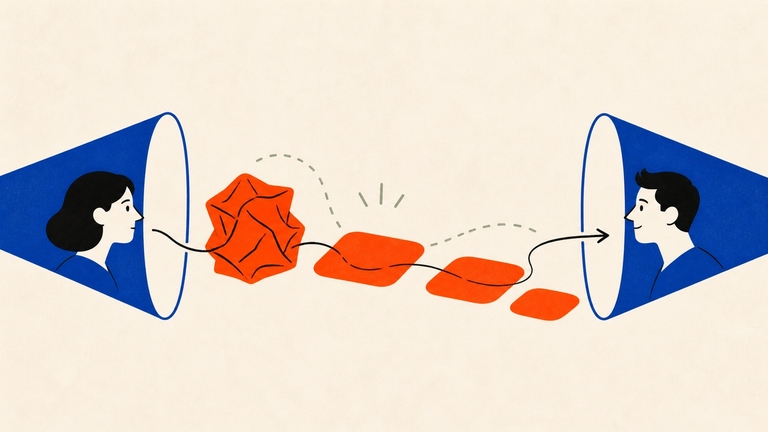
An objection is information, not a no
The 3R method for handling sales objections, and the small language shift that tells you a prospect is ready to close.
Read moreDirect selling: which model actually pays
A comparison of the three direct-selling business models (single-level, multi-level, and party plan) and their real commission math.
Read moreEscaping the feast-or-famine sales cycle
The data on systematic versus sporadic selling, and the weekly review habit that turns one good month into a repeatable one.
Read more