
An objection is information, not a no
Most sales conversations don't die from a bad pitch. They die in the ten seconds after "so, would you like to move forward": the moment the salesperson's heart rate spikes and the question quietly doesn't get asked. The call drifts to a polite ending instead, both sides pretending nothing was left unsaid, and the prospect goes off to decide alone, without the one question that might have moved things forward.
The book in this kit, The Psychology of Closing, treats that hesitation as biology rather than a personality flaw. The brain's alarm system can't tell a stalled sales call from a genuine threat, so it floods the system with the same stress response either way: cortisol rising, the prefrontal cortex that handles clear thinking shutting down right when you need it most. That framing doesn't erase the fear. It does turn it from a character problem you argue yourself out of into a process problem you can manage, one conversation at a time.
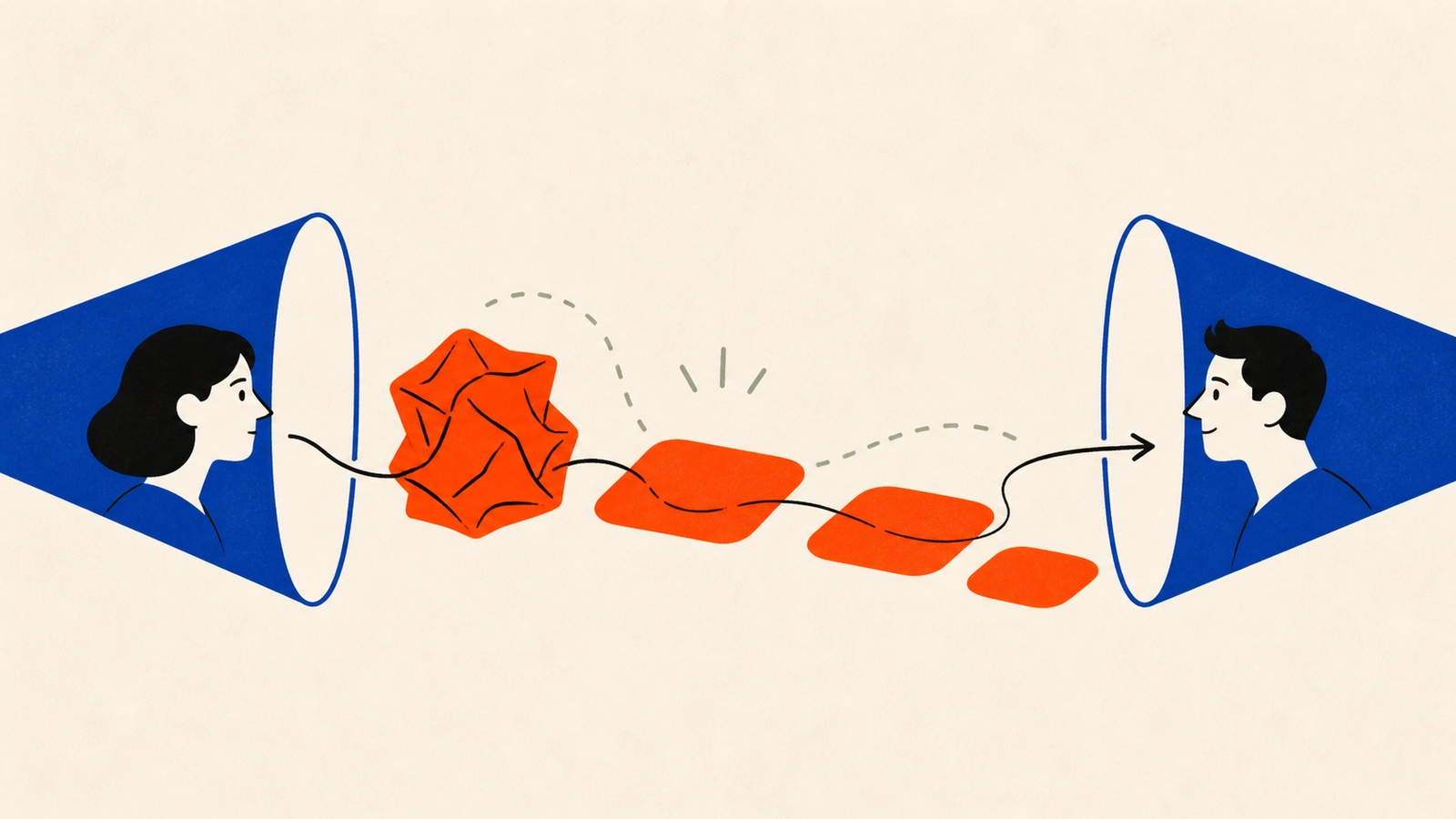
It also reframes what an objection is. Most salespeople hear pushback and treat it as rejection: they get defensive, argue, or quietly give up. The book's counter is that a prospect who's still objecting is still talking to you; they haven't hung up. An objection is a request for help making the decision, not a verdict on the offer.
Two things in the book do the actual work of turning that reframe into a habit: a specific way to handle pushback, and a way to notice, before you ask, that someone is already close to yes.
The 3R method, and the shift from "if" to "when"
The book calls its objection framework the 3R method: Reassure, Reframe, Redirect. Reassure means acknowledging the concern without agreeing it's a problem: "I understand this is a significant investment" validates the prospect's caution without conceding the price is too high. Reframe offers a different lens on the same fact, often by turning cost into investment or turning delay into its own cost: "what would it cost to wait six months while the problem continues?" Redirect closes the loop by pointing at a concrete next step: a payment plan, a pilot program, a specific number tied to ROI.
The book's read on objections is more useful than the technique itself. "It's too expensive" usually doesn't mean the price is wrong. It means "I need help justifying this to myself, or to someone else." "I need to think about it" usually means there's a concern the prospect hasn't said out loud yet. Treating the words literally is how salespeople end up arguing about a number that was never really the issue.
The other half of the book (reading readiness before you ask for the close) comes down to one language shift that's easy to miss if you're focused on your own next line. Prospects who are still evaluating say "if we move forward." Prospects who've mentally committed say "when we implement this." That's not a rhetorical detail. It's the difference between someone comparing options and someone planning a rollout, and it tells you whether to keep building the case or start naming next steps.
The book's own illustration of what changes when you act on this is a technology sales team that dropped a company-first opening line for one built around a specific observation about the prospect's business: engagement rose from 15% to 37% in a month. A separate example follows an insurance agent named Emily, stuck at a 15% close rate for years, who stopped asking "how can I get them to buy" and started asking prospects what worried them most about their family's future. Her close rate reached 32% within six months. Neither change involved a new script. Both involved listening for something specific and asking a different first question because of it.
Where people go wrong
The most common mistake is memorizing the 3R method word for word, which is precisely what the book argues against, treated as a script instead of a flexible frame, Reassure-Reframe-Redirect stops sounding like a real response to a real concern and starts sounding like a monologue the prospect can hear coming. A close second is hearing a first objection and treating it as a final no, instead of asking the one follow-up question that would reveal what's actually going on underneath it. The book's own point is that most objections sort into a handful of categories (budget, authority, need, timeline) and each one is really telling you where the prospect feels stuck, not where they've decided to walk away.
Objection handling done well is one piece of a much bigger structure, which is why we walk through the whole arc (nerve, offer, proof, conversation, pipeline, retention) in the sales and closing guide.
A third, quieter failure happens after the call: no record of what was said, what signal appeared, or which line worked. The book's own closing habit is documenting successful conversations word for word, building a personal playbook of proven sequences over time, tracking how many closing questions get asked each week, and which objection responses actually land. Skip that step and every good call is a one-off you got lucky with, instead of a pattern you can repeat on purpose the next time the same objection comes up.
Inside The Psychology Of Closing
Going deeper
- AudioThe Confident Closer
- BookThe Psychology of Closing
- ChecklistThe Pre-Call Confidence & Preparation
- GuideThe 3R Method for Objection Handling
- Listicle21 Objections That Actually Mean They Want to Buy
- Mini-CourseTransform Your Sales Confidence
- Prompt PackMastering Confident Sales Closing
The Psychology Of Closing is one of 14 bundles in The Sales & Closing Pack, or take the whole pack for $29.
Related reading
Selling for people who never wanted to be in sales: the complete guide
How selling actually works for freelancers and consultants: nerve, offer, proof, the conversation, pipeline and retention, in dependency order.
Read moreDirect selling: which model actually pays
A comparison of the three direct-selling business models (single-level, multi-level, and party plan) and their real commission math.
Read moreEscaping the feast-or-famine sales cycle
The data on systematic versus sporadic selling, and the weekly review habit that turns one good month into a repeatable one.
Read more