
SEO content that doesn't read like SEO content
A page ranks well for a few weeks, then quietly falls out of the results. Another page is technically flawless (fast, well-tagged, keyword-matched) and nobody reads past the first paragraph, so it never ranks at all. Different symptoms, same root cause: content built for one audience, the algorithm or the reader, while ignoring the other.
The book in this bundle argues the split is false. Search engines increasingly reward the same thing readers do: content that holds attention, gets read to the end, and answers the question behind the query rather than just the words in it. The fix isn't an SEO pass layered onto a story after the fact, or a story layered onto keyword research. It's building both from the same map of the reader.
Building the map that decides both the keyword and the angle
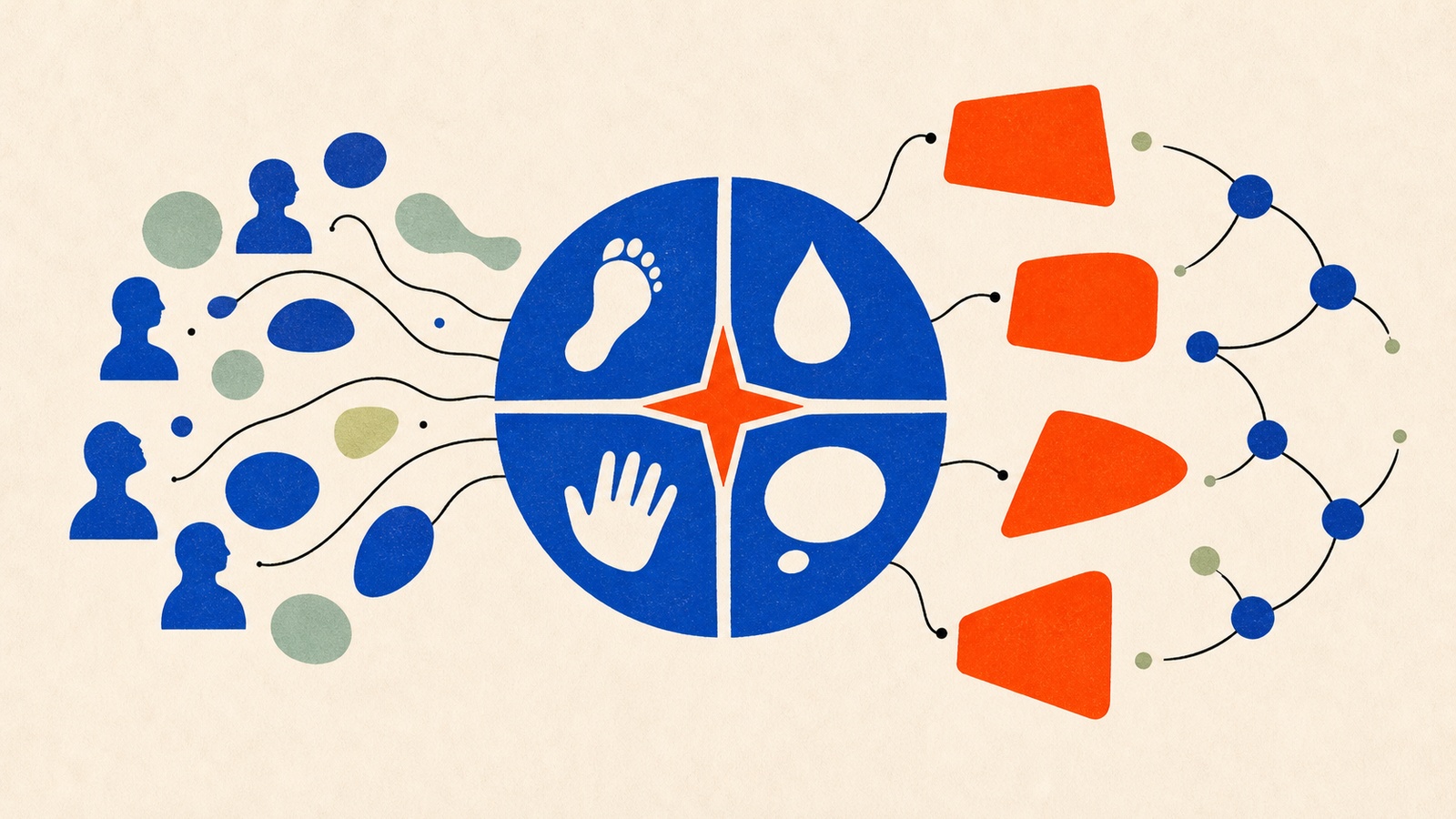
Demographics tell you who buys. They don't tell you why, and why is what a story needs. The book's tool for closing that gap is a one-page empathy map with four quadrants: what the audience thinks (their internal beliefs and considerations), what they feel (the emotions and worries attached to the topic), what they say (the language they use to describe the problem to other people), and what they do (the actions they're already taking to solve it).
The map only works filled in with direct quotes, not guesses. The book has you pull from customer support tickets, sales call transcripts, and the same forums and review sites useful for keyword research: Reddit, Quora, industry-specific communities. A support ticket that keeps repeating "confusion about industry terms" is handing you both a content angle (a glossary, plain-language explainers) and a piece of the vocabulary to write in.
Filled in, the map feeds two decisions at once: which keywords to target, and what angle to take on them. The book's example is a home-goods brand targeting "eco-friendly detergent." A budget-conscious version of the brand pulls its angle from the "thinks" quadrant: cost savings from concentrated formulas. A premium competitor targeting the identical keyword pulls from a different quadrant: rare, sustainable ingredients. Same search term, same volume, two entirely different pieces, each true to a different brand's actual audience.
That's the input. The output structure is what the book calls pillar-and-cluster architecture: one comprehensive page covering a full topic, with narrower cluster pages exploring specific facets and linking back to the pillar. The architecture only holds if the clusters map to genuinely distinct search intent, not just different phrasings of the same query. The book's troubleshooting chapter treats overlapping clusters that compete against each other as something to catch in a content audit, not something to write around after the fact.
Each cluster piece links to the pillar and to other relevant clusters using anchor text that describes what's on the other end, not "click here." It's a small detail, but it's the difference between a page search engines read as isolated and one they read as part of a topic a site has real authority on.
Where people go wrong
The first failure mode is writing content that satisfies the keyword but not the emotional subtext behind it. A search for "buy premium accounting software" carries anxiety about choosing wrong, not just a request for a features list, and content that ignores the anxiety loses to content that addresses it directly.
The second is building flat keyword lists instead of clusters, so multiple pages compete for the same query and split a site's own authority instead of reinforcing it. The book's four-step fix (harvest, clean, categorize, validate) is unglamorous, but skipping the validate step is where most cannibalization actually starts: two clusters look distinct on a spreadsheet and turn out to serve the same search intent once you check the SERP.
The third is treating publication as the finish line. The book insists ranked content decays without a maintenance pass, and most teams only notice the decline after traffic has already dropped 20% or more over three months, well past the point where a quick refresh would have been enough. Its own quick-win playbook argues the fix is often smaller than a rewrite: a title tag revised with an emotional hook from the empathy map, refreshed statistics, a bulleted summary added near the top. Changes measured in minutes, not a content calendar slot.
The full content marketing guide covers how this search work fits against the rest of a one-person content practice, including why it has to start before the content does.
Inside SEO Driven Storytelling Advantage
Going deeper
- AudioBeyond Keywords
- BookSEO-Driven Storytelling Advantage
- ChecklistEvergreen Content Maintenance
- ChecklistThe Complete SEO Storytelling Workflow
- GuideBuilding Your Content Empathy Map
- GuideThe Evergreen Content Flywheel
- Listicle13 SEO Myths That Keep You Invisible Online
- Mini-CourseTransform Your Content Strategy with SEO
- Prompt PackSEO Storytelling Mastery
- ToolstackSEO Storytelling Stack
SEO Driven Storytelling Advantage is one of 13 bundles in The Content & Creator Pack, or take the whole pack for $29.
Related reading

Content marketing for a team of one: the complete guide
How one person builds a content practice that lasts: message, production, distribution, search, proof and revenue, in the order they depend on each other.
Read more
The one sentence your content is missing
The magnetic message formula for writing a one-sentence brand statement people can repeat back after hearing it once.
Read more
The prompt problem: why "share your experience" gets ignored
A vague call for user-generated content gets a handful of replies. Here's the five-part prompt structure that gets customers to actually post.
Read more