
How to respond to a bad Google review
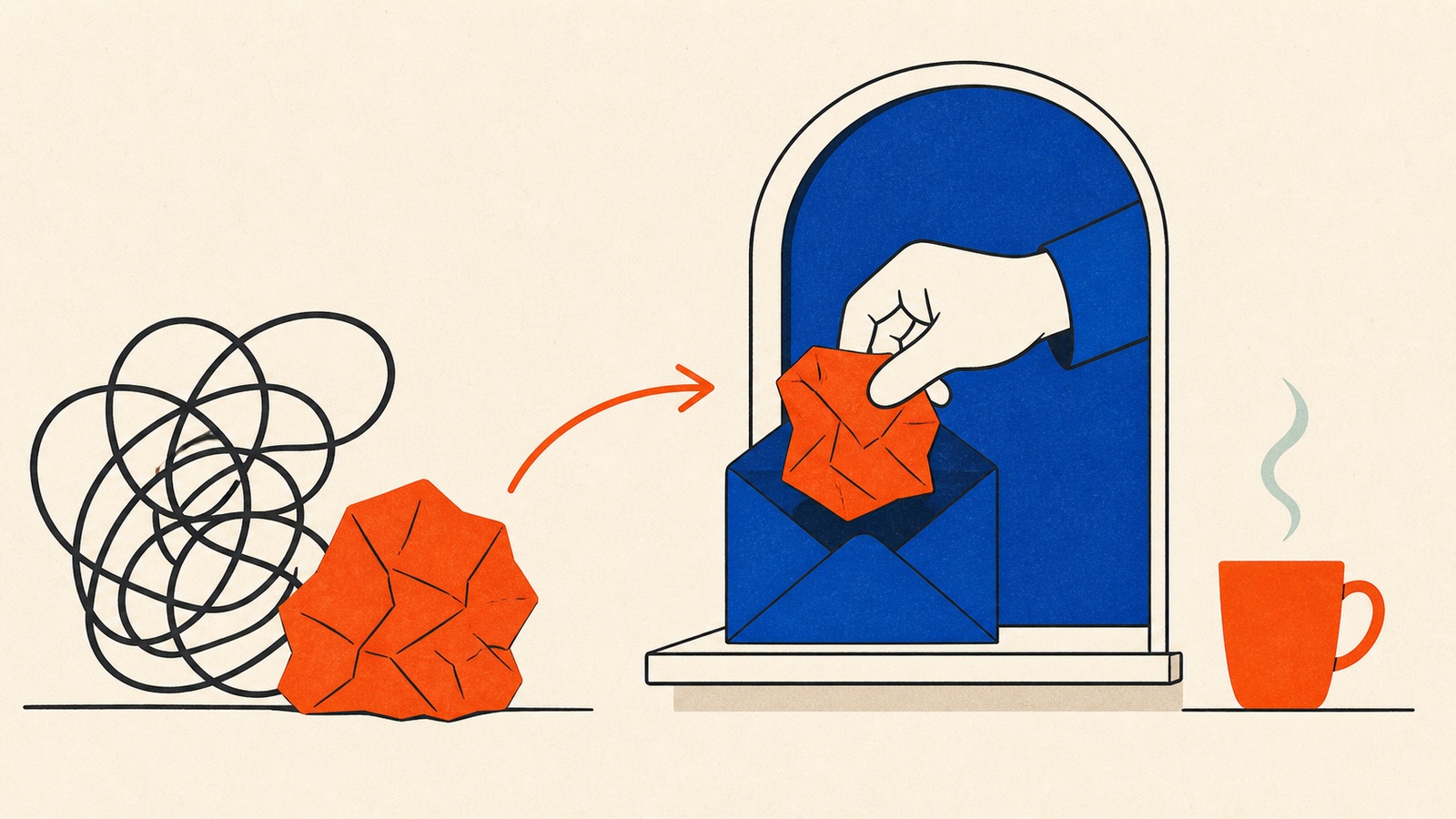
The instinct when a one-star review shows up is to argue, in public, with someone who is already annoyed. That instinct is almost always wrong, and it's also the exact moment a Google Business Profile either builds trust or torches it, because unlike a private complaint, everyone searching for the business afterward reads the response too.
Google Business Profiles, the ebook in this kit, treats review handling as a real skill rather than an afterthought, and its process for negative reviews is specific enough to actually use the next time one lands.
The stakes are higher than a single review suggests. 46% of all Google searches are looking for local information, and 88% of people who search for a local business on their phone visit or call within 24 hours, according to the research the book cites. That review sits in front of nearly every one of those searches. The book's own case is a bakery owner named Sarah, whose profile views rose 157% and website visits grew 35% over three months after she applied its methods, not through a redesign, but through consistently doing the unglamorous parts: complete information, regular posts, and reviews handled the right way.
The four-step process for a review that stings
Take a deep breath first. The book's instruction is blunt: never respond while you're feeling emotional, and wait at least an hour to clear your head. A response written in the first five minutes of frustration is the one most likely to get defensive, argue about facts, or share information that should stay private: all things the book explicitly lists as what not to do.
Acknowledge the issue, sincerely, before anything else. Its own example: "I'm very sorry to hear about your experience with our delivery service. We pride ourselves on punctuality, and we clearly fell short." Notice what it doesn't do: it doesn't qualify the apology with "but," and it doesn't dispute whether the complaint is fair. The acknowledgment comes first and comes clean.
Move the conversation offline. A public review thread is not the place to resolve a billing dispute or a service failure in detail. The book's suggested line hands over a direct channel and takes personal ownership of the fix: "Please email me directly at address so we can make this right. I'm personally committed to resolving this for you." That does two things: it signals the business takes the complaint seriously, and it keeps the messy details out of public view.
Follow up once it's resolved. After the issue is actually fixed, ask whether the customer would consider updating their review. The book notes plenty do, once they've seen the effort, not because they were pressured to, but because the follow-up itself is evidence the apology was real.
The book pairs this with a shorter rule for the reviews that go well, which is easy to skip once you're focused on damage control: thank the reviewer by name, reference something specific from what they wrote, and keep it to two or three sentences. A response that's all appreciation and no specifics reads as automated even when it isn't.
Where people go wrong
The most common mistake is optimizing the business name instead of the response: adding keywords like "Best Downtown Bakery & Cafe" to try to rank for more searches. The book is explicit that this backfires: use your exact legal name, because Google can and does suspend listings that pad the name field.
A second is letting basic details drift out of sync across platforms: a "St." on one listing and a "Street" on another, a phone number that's current on the website but stale on the profile. Small inconsistencies like this confuse Google's ranking signals even when a human reader wouldn't notice the difference.
A third is treating every negative review as an attack instead of information. The book's own framing is that reviews double as free customer feedback: patterns in complaints reveal what to fix in staffing, training, or communication, and businesses that only ever play defense against negative reviews miss that entirely.
A fourth shows up in the response itself: arguing about facts, using an automated-sounding template, or going quiet on a review entirely. The book's own do-and-don't list is short enough to memorize: thank the reviewer, stay solution-focused, keep it concise; don't get defensive, don't share private customer details, don't ignore it. Silence reads worse than an imperfect response, because a review left unanswered looks like it was never seen.
Reviews and reputation are one lever in a bigger local-search system (the profile, the content, the measurement) covered start to finish in the Marketing Foundations Pack's guide.
Inside Google Business Profiles Ebook
Going deeper
- BookGoogle Business Profiles - Ebook
- ChecklistGoogle Business Profiles - Checklist
- GuideGoogle Business Profiles - Guide
- Prompt PackGoogle Business Profiles - Prompts
- WorkbookGoogle Business Profiles - Workbook
Google Business Profiles Ebook is one of 7 bundles in The Marketing Foundations Pack, or take the whole pack for $29.
Related reading
Marketing for a business of one: the complete guide
How marketing works when nobody is doing it but you: positioning, buyer psychology, content, local search, measurement and retention, in dependency order.
Read more
The one-page marketing plan that actually gets reopened
Why most marketing plans get written once and shelved, and the value proposition test and journey map that make a one-page version worth reopening.
Read more
The psychology of why people buy
The four-stage psychology framework behind why someone buys, mapped from first notice to repeat purchase, with a worked example.
Read more