
Paid ads and landing pages: the complete guide for small budgets
Updated September 2026
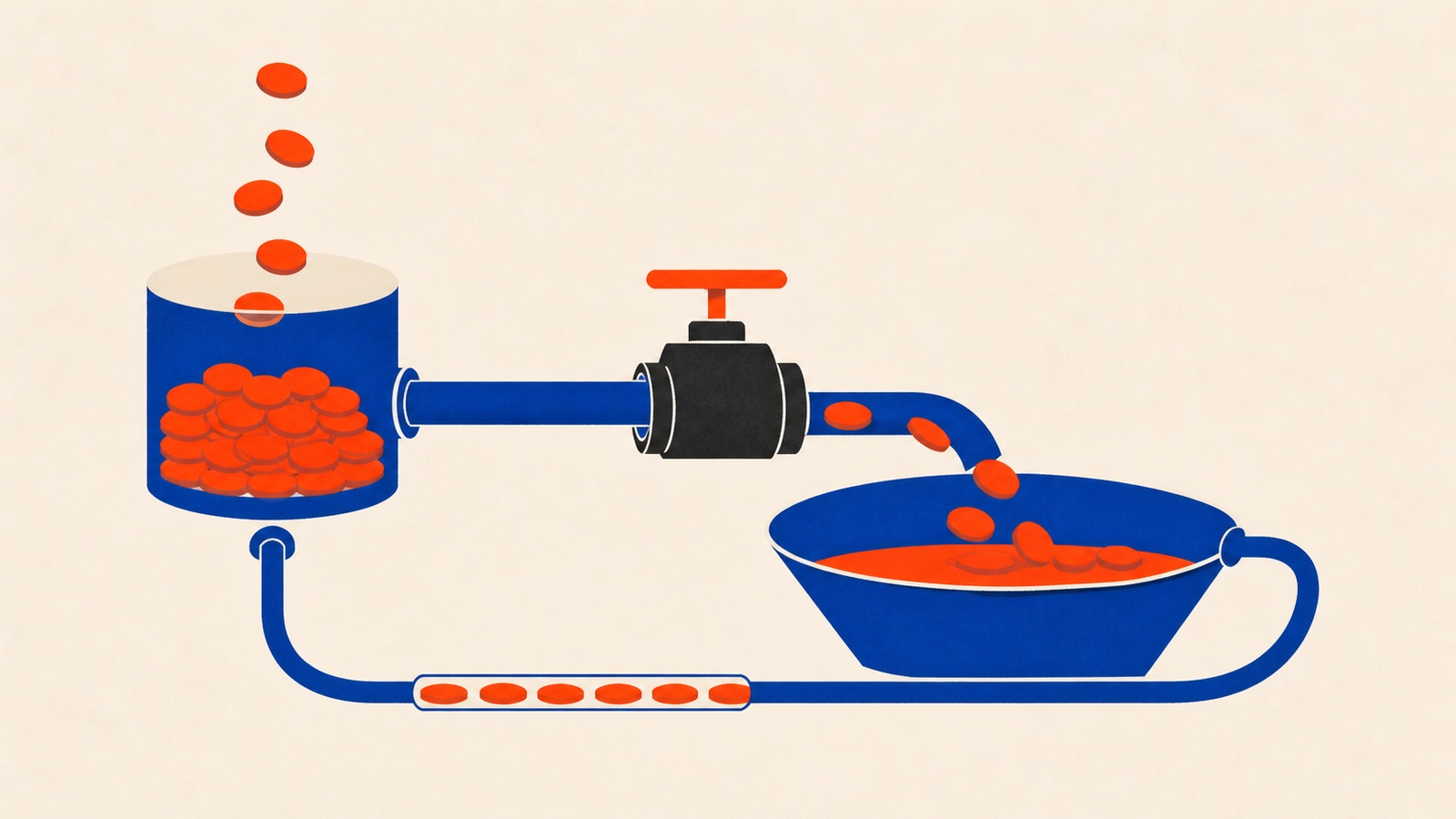
Paid advertising is the only marketing channel that bills you while you are still wrong. A weak blog post costs you an afternoon. A weak ad costs you an afternoon plus whatever the auction decides your mistakes are worth that day, every day, until you notice.
This guide is written for the person spending their own money. A founder with $300 a month. A freelancer testing whether ads can replace referrals. A small team that has run three campaigns and genuinely cannot say whether any of them worked. It assumes one offer, no media buyer, and a low tolerance for dashboards.
It is not for you if you are managing six-figure monthly budgets across a portfolio of accounts, or if your problem is incremental efficiency at scale rather than getting a first campaign to break even. Most of what follows is about sequencing and arithmetic, not tactics, because on a small budget the sequencing is what decides whether the arithmetic ever works.
The map: five things, in a fixed order
Paid advertising fails in a predictable place, and it is almost never the place people go looking. The order below is a dependency chain. Each link is wasted effort until the one above it is solved.
Economics come first, because everything downstream is measured against them. Before any campaign exists you need one number: what a customer is worth to you, and therefore the most you can pay to acquire one. Without it, a $40 cost per lead is neither good nor bad: it is just a number on a screen that you will react to emotionally.
Then the offer and the page it lives on. Traffic amplifies whatever conversion rate the page already has, so a page converting at 1% makes every platform look expensive and every ad look broken. Fixing the ad first is the most common and most costly inversion in this whole discipline.
Then platform choice, which is really a choice about intent. Search platforms sell you people who have already named their problem. Social and video platforms sell you attention from people who have not. These are different products with different economics, and running the same creative and the same expectations across both is how small budgets disappear.
Then the ad itself: the headline and the promise, which is where most people start and where the least leverage sits once the three layers above are wrong.
Then measurement, which sounds like the end but is really the loop that returns you to the top. Mastering Paid Marketing Metrics describes ad spend moving through three phases: exponential growth, where your ads reach the most receptive people first and your return looks spectacular; linear growth, where each additional dollar still brings customers but at a rising cost as you compete in more auctions; and diminishing returns. The trap is that phase one feels like proof. It is only proof that the cheapest customers exist, and you have now bought all of them.
Strategy: deciding what you are buying
The strategy layer answers two questions, and both are unglamorous. What counts as a conversion, and what is one worth.
High-Performing Paid Marketing Strategy runs this through a SMART goals framework and then insists on what it calls a measurement architecture: the tracking has to exist before the spending does, because retrofitting attribution onto a campaign that has already run means guessing. The related move is to translate a business objective into a metric hierarchy: increase revenue becomes improve lead quality becomes lead-to-sale ratio and cost per qualified lead, with form completion rate and time on site as supporting signals rather than headline ones.
The second half of strategy is knowing which stage of the journey a given ad is buying. The Advertising Funnel Blueprint Strategies keeps the old AIDA structure (awareness, interest, desire, action) while arguing the stages no longer run in a tidy line. Someone can meet you through a YouTube video, disappear for three weeks, then arrive via a branded search. The practical consequence is that a cold-audience ad judged on last-click purchases will always look like a failure, and will always get switched off before it has done its job.
Two posts go deeper here: what a paid marketing strategy actually has to decide covers goals and measurement architecture, and mapping the ad funnel to a real buying journey covers stage-appropriate offers and trust signals.
Choosing one platform instead of collecting them
The strongest argument for picking a single platform is not that it is optimal. It is that a $300 monthly budget split three ways gives none of the three enough data to teach you anything.
The Perfect Platform for Advertising frames the choice around where your buyers already behave rather than where the case studies came from, and works through Meta, Google, TikTok and LinkedIn as genuinely different instruments. The selection criterion that matters most on a small budget is not reach but learning speed: which platform will give you a statistically meaningful signal soonest at the spend you can actually sustain.
Once you have chosen, the budget needs slicing rather than pouring. Meta Ads Made Affordable uses a 40/50/10 split of the monthly budget: 40% for testing creative, audiences and placements, 50% for core campaigns that have already proven themselves, and 10% held in reserve for an unexpected opportunity or a competitor move. Its worked example runs a $200 monthly budget as $80 testing, $100 proven, $20 reserve. The point is not the exact percentages. It is that "testing" is a standing line item, not something you do once at the start and then abandon.
For the choice itself, read how to pick an advertising platform and commit to it. For running Meta on a genuinely small budget, Meta ads when the budget is $200 a month has the allocation model in full.
Search: buying intent rather than attention
Search ads are the only format where the customer arrives having already written down their problem. That makes them the most forgiving place to start and the easiest place to waste money, because the same query volume that finds buyers also finds students, competitors and the merely curious.
The mechanism that separates those groups is match types. The Google Search Ads guide describes the three as a spectrum from wide net to pinpoint: broad match, where a keyword like "office furniture" can surface for "workplace desk solutions"; phrase match, which preserves the core meaning while allowing natural variations around it; and exact match at the narrow end. Its companion mechanism is negative keywords, which is where most of the actual saving happens: you are not adding precision so much as subtracting the searches that were never going to buy.
Performance Max sits at the other end of the control spectrum. Google Performance Max Campaigns Unleashed is direct about the trade: you hand over keyword-level control in exchange for reach across every Google surface, and the system needs a learning period during which performance visibly fluctuates. Its own qualifying list is worth taking literally: PMax suits you if you have diverse creative assets, conversion-focused goals, and the temperament to leave an algorithm alone. If any of those is missing, a manual search campaign will teach you more.
Start with match types and negative keywords in Google Search, then read what you give up when you switch to Performance Max before automating anything.
Video and B2B: reaching people who are not searching
Outside search, nobody asked to see your ad, which changes what the first few seconds have to do.
YouTube's skippable in-stream format gives you five seconds before the viewer can leave, and How to Scale with YouTube Ads builds its opening-moments material around exactly that constraint. The format list underneath it matters too: bumper ads are six seconds and non-skippable, in-feed ads appear in search and watch-next, and outstream ads play silently on partner sites unless tapped. Choosing the wrong format for your objective is a more expensive error than any amount of creative polish.
LinkedIn is the other non-search case, and it is expensive per click by design because it sells professional targeting rather than volume. Lead Generation with LinkedIn Ads concentrates its practical value on lead gen forms: the native forms that pre-fill from a profile and remove the landing page from the equation entirely. That is a real advantage and a real risk: forms that are trivially easy to submit produce leads that are correspondingly easy to submit without meaning it.
Making the first five seconds of a YouTube ad work covers formats and openings; LinkedIn ads and the lead form trade-off covers targeting and form design for B2B.
The ad and the page it points at
Treat these as one unit, because the visitor does. Mastering Paid Marketing Metrics uses a fitness-equipment example: an ad for "Professional Home Gym Equipment" pulling a 5% click-through rate, well above the roughly 3.17% search average it cites, and then converting at 0.5% because the page's definition of professional was not the visitor's. High CTR with low conversion is not a landing page problem or an ad problem. It is a promise mismatch, and it is diagnosable in one afternoon.
On the ad side, Click-Worthy Advertising Copywriting structures its headline work around a construction framework and a value-articulation guide rather than swipe files, which is the right instinct: a headline formula you can apply beats a headline you can copy.
On the page side, High-Converting Landing Page Frameworks gives the most reusable artefact in the pack: a four-part fill-in-the-blank hero promise (who it is for, what they get, why trust you, kept clear and brief). Its own comparison makes the case: "We offer marketing automation software" against "Marketers: Generate more leads while working fewer hours." Underneath the promise sits the Four-Layer Trust Framework, which treats credibility as cumulative rather than a single badge:
- Layer one, visual signals: three to seven recognisable logos in monochrome, media mentions, partner badges, placed directly under the promise so they are absorbed without reading. The book reports one tech client lifting trial conversions by nearly 20% from adding a logo row alone.
- Layer two, human stories: story-driven proof that mirrors the visitor's situation, introduced only after the visual handshake has landed.
- Layer three, quantitative and authority proof: hard numbers and third-party validation for the rational brain that is now comparing you to alternatives. The book's own caution is worth keeping: choose figures that impress without triggering disbelief, because a 700% improvement reads as fabricated.
- Layer four, risk reversal: placed next to the call to action, where loss aversion makes the fear of choosing wrongly feel roughly twice as strong as the appeal of choosing well.
Landing Page Persuasion covers the same territory from the copy side, working through headline formulas, CTA anatomy, and pre-empting objections in the body rather than in a FAQ nobody scrolls to.
Read writing ad copy people actually click, then the hero promise and the four layers of on-page trust and the persuasion side of landing page copy.
Reading the numbers before you spend more
Most small accounts are over-measured and under-decided. Twelve metrics on a dashboard, no rule for what any of them changes.
The fix is a decision rule attached to each number, which is what Mastering Paid Marketing Metrics is organised around: benchmarks first, then return on ad spend interpreted against your own break-even rather than someone else's screenshot. Its warning about the average $2.69 cost per click is the useful shape of the argument: the average is context, not a target, and your acceptable CPC is derived from your customer value, not from an industry table.
Testing is the other half. The Beginners Guide to A/B Testing includes an Impact Assessment Matrix that prioritises tests by dividing impact by resource cost. Impact scores five for a direct effect on conversion or revenue, three for meaningful influence on behaviour, one for minor influence. Resource cost scores on the same scale. Priority is impact divided by resources, which produces an order most people would not guess: headlines score 5 impact over 1 resource for a priority of 5, images 5 over 3 for 1.67, audience targeting 5 over 5 for 1, and button colours 1 over 1 for 1. The famous button-colour test is mathematically the worst use of your traffic.
Reading paid metrics without drowning in them and choosing which element to test first both go further than this section can.
How to start this week
Two hours, no budget required for the first two steps.
- Write down one number. What is a customer worth to you over a year, and what fraction of that are you willing to spend acquiring one. That figure is now the only benchmark that matters; every industry average you read is context around it.
- Rewrite your page's opening promise using the four-part formula: who it is for, what they get, why trust you, brief. Then read your best-performing ad next to it. If the ad promises something the first screen of the page does not immediately confirm, you have found your leak, and it costs nothing to fix.
- Slice next month's budget 40/50/10 and spend the testing 40% on the single highest priority-score element you can name. On most accounts that is the headline, not the audience and certainly not the button.
If you only do the first step, you will still be ahead of most people running ads, because you will finally be able to tell a good result from a bad one.
Related guides
Paid traffic sits on top of work that happens elsewhere. The marketing foundations guide covers the positioning and organic groundwork that makes ads cheaper: you are bidding against your own weak message otherwise. And if you are selling products rather than services, the e-commerce guide covers the catalogue, checkout and retention side that decides whether a paid customer is worth acquiring twice.
Take the whole pack
Related reading

A/B testing for ads: deciding what to test first
A scoring method for ranking which ad element to test first, so testing time goes to headlines and targeting instead of button colors.
Read more
Ad copy that gets read past the headline
The AIDA structure and a headline test for writing ad copy that earns a click instead of getting scrolled past on the way to something else.
Read moreGoogle Search ads: what actually earns the click
A keyword worked example and a match-type framework for spending a Google Search Ads budget on searches that convert, not just searches that appear.
Read more