
How to write an SOP people actually use
Every growing business has the same conversation eventually: someone asks how a task is done, gets a different answer depending on who they ask, and the person who actually knows leaves for two weeks and nothing that depended on them gets done right. That's not a training problem. It's the absence of a document that should have existed already.
Most owners who try to fix this write one procedure, watch it gather dust because nobody reads it, and conclude that documentation doesn't work for their business. The more common explanation is that the document itself was missing pieces a reader needed, not that the concept failed.
The six pieces every SOP needs, and a bakery that proved it
The book behind this kit sets out a fixed structure for a usable SOP, and the case it makes is that skipping any one piece is usually why a procedure gets ignored rather than followed.
Start with a Purpose Statement: not the task name, but why it exists. The book's example: instead of "Customer Service Protocol," write "this procedure ensures consistent, high-quality customer interactions that maintain our 98% satisfaction rating." A reader who understands why a step matters is far less likely to skip it under pressure.
Next comes Scope Definition: what this procedure covers, and just as importantly, what it doesn't, which prevents someone applying it to a situation it was never meant for. Role Assignments name who performs each step and who's accountable for checking it, closing the "I thought that was someone else's job" gap that quietly kills more procedures than bad writing does.
Required Resources lists every tool, login, or material needed, with specific versions where it matters, so a new hire isn't hunting for access mid-task. Then the Step-by-Step Instructions themselves, which the book insists be action-oriented and specific rather than descriptive: its example contrasts "process the order" with "enter the customer's shipping information into the order management system using the standard format: street address, city, state, zip code." The second version leaves no room for guessing. Finally, Quality Control Measures: checkpoints built into the procedure itself, not added afterward, so a user can confirm they're on track before moving forward rather than discovering a mistake three steps later.
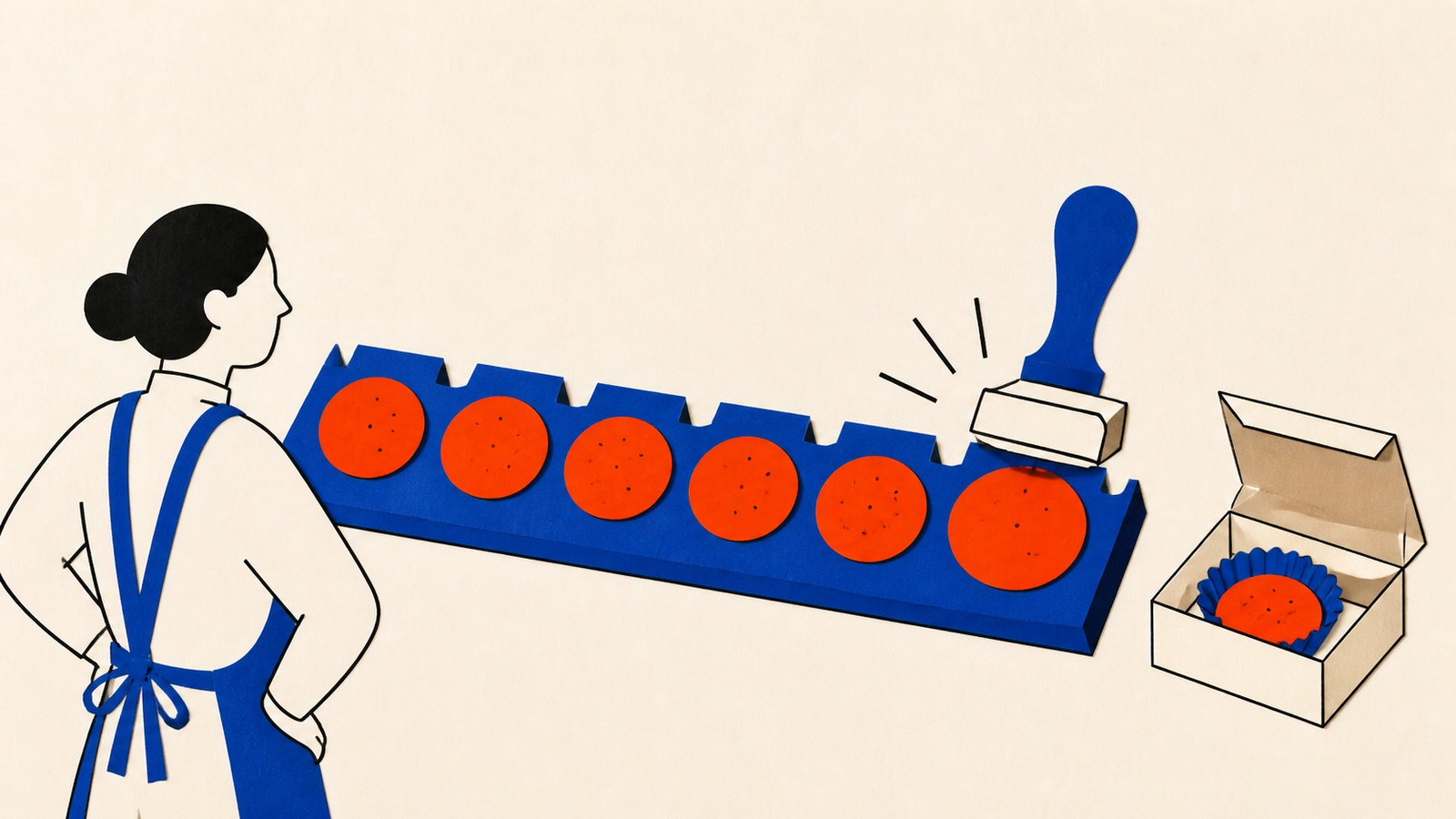
The book backs this with a case study worth repeating: a bakery owner documenting her first SOP for custom order processing, a frequent task with a high error rate, saw order mistakes drop 85% within weeks, from writing the six pieces down properly the first time. Nothing about the underlying task changed. What changed was that the procedure stopped depending on memory.
The kit's own quality-control checklist turns this into a review pass: does the document state its purpose, define its boundaries, name its owner, list its resources, sequence its steps in plain action language, and build in a check before moving on. A procedure missing even one of those six is the kind that gets written once and never opened again.
Where people go wrong
The most common mistake is writing the SOP once and treating it as finished. The book is explicit that a first draft is a draft. It has to be tested by someone who wasn't involved in writing it, watched as they follow it, and revised based on where they hesitate or ask questions. Skipping that step means the gaps only show up once they've already caused a mistake in production.
A second failure is trying to document everything in one sitting. The book's own advice is to start with the highest-frequency, highest-error task first, the same logic behind the bakery example above, rather than attempting a company-wide manual before a single procedure has proven itself.
The third is treating an SOP as a one-time exercise instead of a living document with an owner and a review date. Procedures that don't get revisited drift out of date quietly, and by the time someone notices, the team has usually already stopped trusting the document. Where SOPs fit into a bigger automation plan (which processes are ready to hand to software, and which still need a person's judgment) is something we cover across the whole stack in the AI & Automation guide.
Inside Scale Smarter With SOPs
Going deeper
- BookScale Smarter with SOPs
- ChecklistNew SOP Documentation Quality Control
- ChecklistPerfect SOP Readiness Assessment
- ChecklistPreparing SOPs for Automation
- GuideCreate Your First SOP
- GuideSOP Training Implementation Framework
- Mini-CourseThe Perfect Process
- Prompt PackDeveloping and Optimizing SOPs
Scale Smarter With SOPs is one of 12 bundles in The AI & Automation Pack, or take the whole pack for $29.
Related reading
AI and automation for one-person businesses: the complete guide
What a small business should automate first, how to write prompts that hold up, when a chatbot helps, and how to stay findable when machines answer.
Read more
Making AI copy sound less like a robot
Why AI drafts default to bland prose, and the rhythm, sensory-detail, and opinion edits that make them sound human.
Read morePrompt engineering, for people whose AI tool works until it doesn't
A framework for writing AI prompts that hold up in production, built around a real case where a chatbot's confident answer cost a company in court.
Read more