
The three questions that find what to cut from your week
Most advice about reclaiming time starts with a tool: an automation platform, a virtual assistant, a new app. That's backwards. Before you can decide what to hand off, you have to know where the hours are actually going, and most people's estimate of that is wrong in a direction that flatters them.
The instinct to work more hours when a business gets busier feels responsible. It usually isn't. Only around a third of a typical work week drives results that actually matter, according to survey data the book cites, which means the other two-thirds is either genuinely necessary support work or a habit dressed up as effort. Telling those two apart is the actual skill.
The book's own case study is a marketing agency owner working 70 hours a week, and it's worth stating plainly what those hours bought her: not more revenue, but a business a buyer valued $2 million lower than comparable agencies, because it couldn't run without her personally reviewing everything. Working harder had produced an expensive job, not a valuable company. That's the trap this bundle is built to name: busyness and progress are different things, and most owners have never separated them long enough to notice.
The 24-Hour Time Track and the three-question bottleneck test
Buy Back Your Time starts with an audit, not a system, and the order matters. The 24-Hour Time Track asks you to record a full week of what you actually do, without changing anything yet: observation before judgment. Most owners discover they're spending two hours a day on email switching, sitting through three hours of meetings that would work as a 30-minute call, or losing an hour hunting for a file that isn't where it should be. None of that shows up on a mental estimate. It shows up on paper.
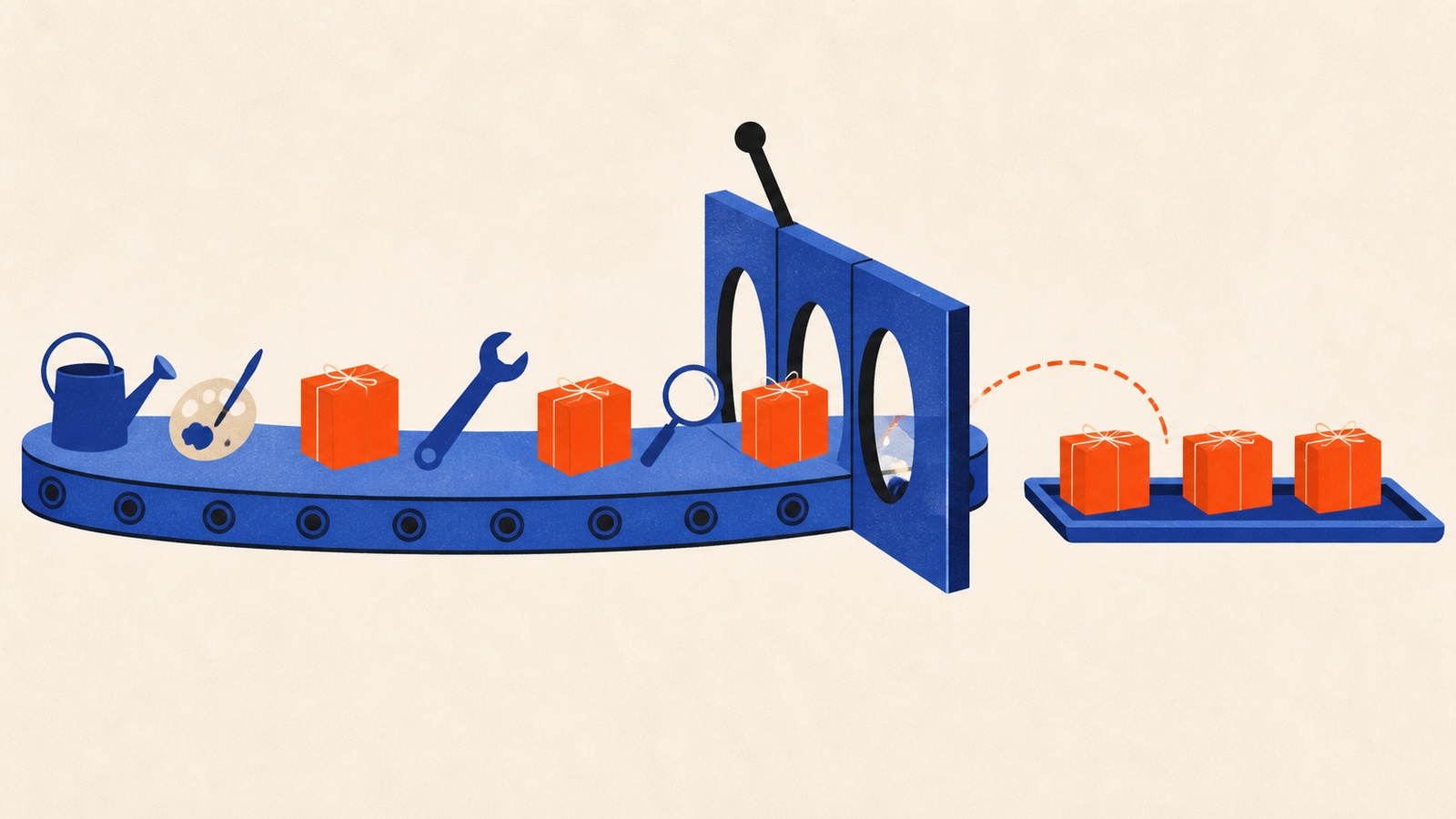
Once the week is logged, every task over fifteen minutes gets run through three questions: Did I do this same thing last week? Will I do it again next week? Could someone else do it just as well? A yes to all three marks a bottleneck: a task that's recurring, predictable, and not actually dependent on you. Those are the only tasks worth automating or delegating. Everything else is either a genuine one-off or work that needs your judgment, and trying to systematize it just adds overhead without removing effort.
The book's framing for the underlying math is return on time invested: its version of ROI, applied to hours instead of dollars. Twelve hours producing a mediocre result is a worse trade than six focused hours producing a good one, because the hours are the actual budget being spent, whatever the output looks like on the surface. A bottleneck identified by the three-question test is where that ratio is worst: recurring effort for output any competent process could match.
The owner from the case study above spent roughly a year running her own tasks through a version of this filter: delegating what passed all three questions, keeping what didn't. Her work week dropped from 70 hours to 45, revenue grew rather than shrank, and her next buyout offer came in at full market value. The three questions didn't ask her to work less on everything. They asked her to stop personally doing the specific 30 percent of her week that a bottleneck test would have flagged from day one.
Where people go wrong
The most common mistake is automating five things in the same week. The book's own automation checklist is explicit about sequencing: pick the single task that annoys you most, get it running cleanly, live with it for two weeks, then move to the next one. A half-finished automation running alongside four other half-finished ones costs more attention than the manual task it was supposed to replace, because now there's a system to babysit on top of the original work.
The second is confusing delegation with what the book calls task dumping: handing someone a task with no instructions, no deadline, and no decision-making authority, then being disappointed when it comes back wrong. Delegation that actually works costs time upfront: clear instructions, a deadline, and a defined boundary for what the person can decide without checking back. Skipping that step doesn't save time, it just moves the cost to later, usually with interest.
The third is treating every urgent request as important by default. A ringing phone and an unread email both feel urgent regardless of what's on the other end of them, and most owners spend the bulk of a day reacting to that feeling rather than to an actual priority list. Sorting urgent from important before automating anything is a separate skill, and it's the one the Focus & Productivity guide covers in full.
A quieter version of the same mistake is running the three-question test once and never again. Bottlenecks aren't fixed, they accumulate: a task that was a one-off six months ago can quietly become weekly, and a role that used to require your judgment can stop requiring it once someone else on the team has done it a dozen times. A short monthly rerun of the test catches the ones that changed status without anyone noticing.
Inside Buy Back Your Time
Going deeper
- AudioThe Freedom Code
- BookBuy Back Your Time
- ChecklistAutomate Your First 5 Systems
- ChecklistCEO Hour Protection Plan
- GuideReclaim 15 Hours of Your Time Each Week
- Listicle12 Proven Tactics to Reclaim 10+ Hours Every Week
- Listicle7 Deadly Time Thieves Stealing Hours From Your Business
- Mini-CourseThe Entrepreneur's Path to Freedom
Buy Back Your Time is one of 7 bundles in The Focus & Productivity Pack, or take the whole pack for $29.
Related reading
Productivity for people who have already tried the systems: the complete guide
How focus actually works when you already own a task manager: priorities, task size, attention, environment and subtraction, in dependency order.
Read more
Turning a vague sense of priorities into a goal system that connects
The four-level goal hierarchy that stops a 20-year vision and a Tuesday to-do list from operating as two unrelated documents.
Read more
Breaking a stalled project into tasks you'll actually start
The four-level breakdown and the four-part test that turn "write book" into a task you can finish in five minutes tonight.
Read more