
Voice doesn't change. Tone does.
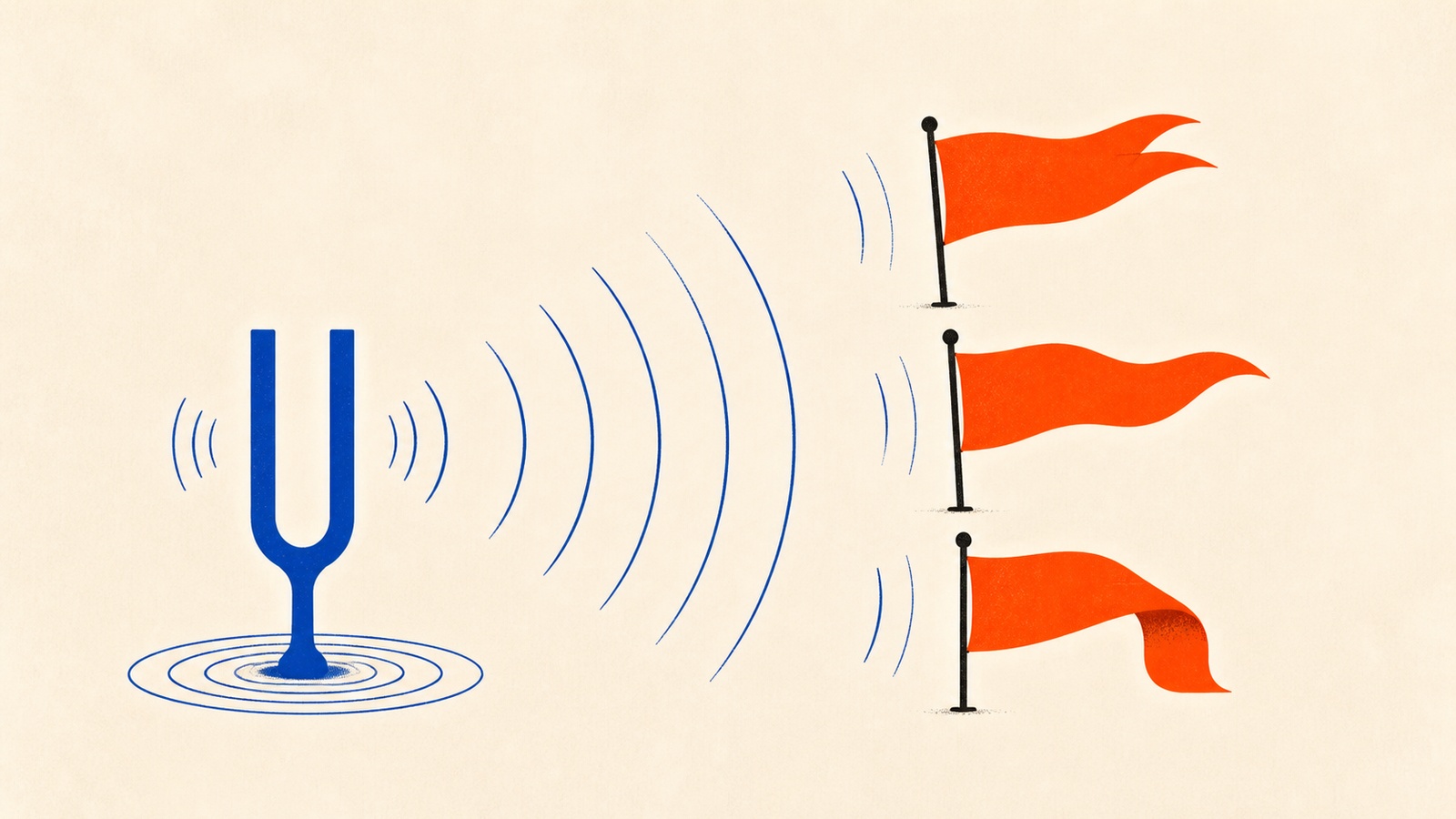
Somebody on the team writes a customer email that sounds nothing like the last one, and nobody notices until a customer does. It's rarely a comma splice or the wrong sign-off. It's a difference of register, energy and warmth. Multiply that across a website, three social feeds and a support inbox, and a brand stops feeling like one thing.
The usual fix (a page of adjectives, "friendly, professional, approachable") makes the meeting feel resolved without changing anything downstream. Nobody drafts an apology email by consulting adjectives. People write from feel, and feel drifts, especially under deadline.
Brand Voice Breakthrough draws a sharper line than most style guides bother with: voice is the personality that never moves; tone is the register that has to, situation by situation. Confusing the two produces the frozen brand (funny everywhere, including the outage notice) or the useless one, a document so hedged it never decides anything.
The tone playbook, not a page of adjectives
The book traces voice back to four sources before it ever reaches a playbook: mission (what you're for), values (what's non-negotiable), personality (the human traits that follow from both), and language pillars (the actual word and sentence choices that express them). Skip straight to language without the first two and you get a voice that sounds fine but answers to nothing: there's no way to tell whether a given sentence is on-brand or just pleasant.
The book's fix is what it calls a tone playbook, and the mechanism survives an actual Tuesday because it's built from real scenarios instead of hypothetical ones.
- Map two or three tone dimensions that matter for your brand: formal to informal, enthusiastic to reassuring, detailed to concise.
- Plot the situations you actually face against them: a product announcement, a customer complaint, a crisis update.
- Draft the phrases your voice would use in each one.
- Gather feedback from whoever else writes customer-facing copy, before it's needed rather than during a live crisis.
- Revisit the map on a schedule, not only after something goes wrong.
The tone moves. The voice doesn't. A financial services firm in the book's own example keeps a voice that's always knowledgeable and straightforward, and the playbook is what lets that voice survive a bad-news day without either panicking or pretending nothing happened. Its market-downturn message reads: "We're closely monitoring today's market volatility. While short-term fluctuations are normal, we understand they can be concerning. Your dedicated advisor is available to discuss your specific situation." Nothing in that message is upbeat, and nothing in it panics: the tone shifted toward reassurance while the voice stayed exactly where it always sits.
The book cites the same pattern at Intercom during a service outage: "We're experiencing issues with message delivery and are working to restore functionality. We understand how critical our service is to your business." The sentence is still conversational and direct: that's the voice holding. It isn't cheerful, because this isn't a cheerful moment: that's the tone doing its job.
For a faster gut check than the full playbook, the book offers a three-question version anyone on the team can run before hitting publish: does this use our priority pronouns (we/you), does it follow our signature sentence structures, and does it express our core values. It won't catch a tone mismatch, but it catches the more common failure: copy that quietly stops sounding like anyone in particular.
Where people go wrong
Retailer missteps on social media have turned this into a familiar genre. A retailer once sent an upbeat "conquering mountains" tweet on the same day a real climbing accident made news, and trust took a visible hit even though nothing else about the brand had changed: only the tone had failed to notice what day it was.
A second failure is subtler: collapsing voice and tone into one undifferentiated mood, so every message gets written in the same emotional register regardless of what's actually happening. A launch announcement and an apology written in the same upbeat key make the apology sound careless and the launch sound routine. This is a symptom of skipping the layer underneath voice, positioning and story, which the full brand-building guide covers before it gets anywhere near tone.
The third is treating the tone map as something you build once. Audiences change, seasons change, one bad news cycle changes what's appropriate for a month. A playbook drafted in year one and never revisited is a snapshot, not a working system.
Inside Brand Voice Breakthrough
Going deeper
- AudioBrand Voice Unlocked
- BookBrand Voice Breakthrough
- ChecklistCross-Platform Brand Voice Consistency
- ChecklistThe Brand Voice Discovery
- GuideThe 7-Step Brand Voice System
- GuideThe Cross-Channel Voice Adaptation System
- Mini-CourseBuild a Voice that Connects
- Prompt PackBrand Voice Architect
Brand Voice Breakthrough is one of 11 bundles in The Brand & Story Pack, or take the whole pack for $29.
Related reading
Brand building when nobody has heard of you: the complete guide
Positioning, story, voice, visual identity and reputation, in the order they actually depend on each other, and what to do first with no budget.
Read more
What makes you different, in one sentence
Most personal bios list credentials instead of making a claim. A formula for the sentence that actually says why someone should hire you over anyone else.
Read moreWhy customers actually leave 5-star Google reviews
The psychological principle behind memorable service, and why asking for reviews right after checkout misses the moment that made someone loyal.
Read more