
The PAUSE method for when a negotiation turns tense
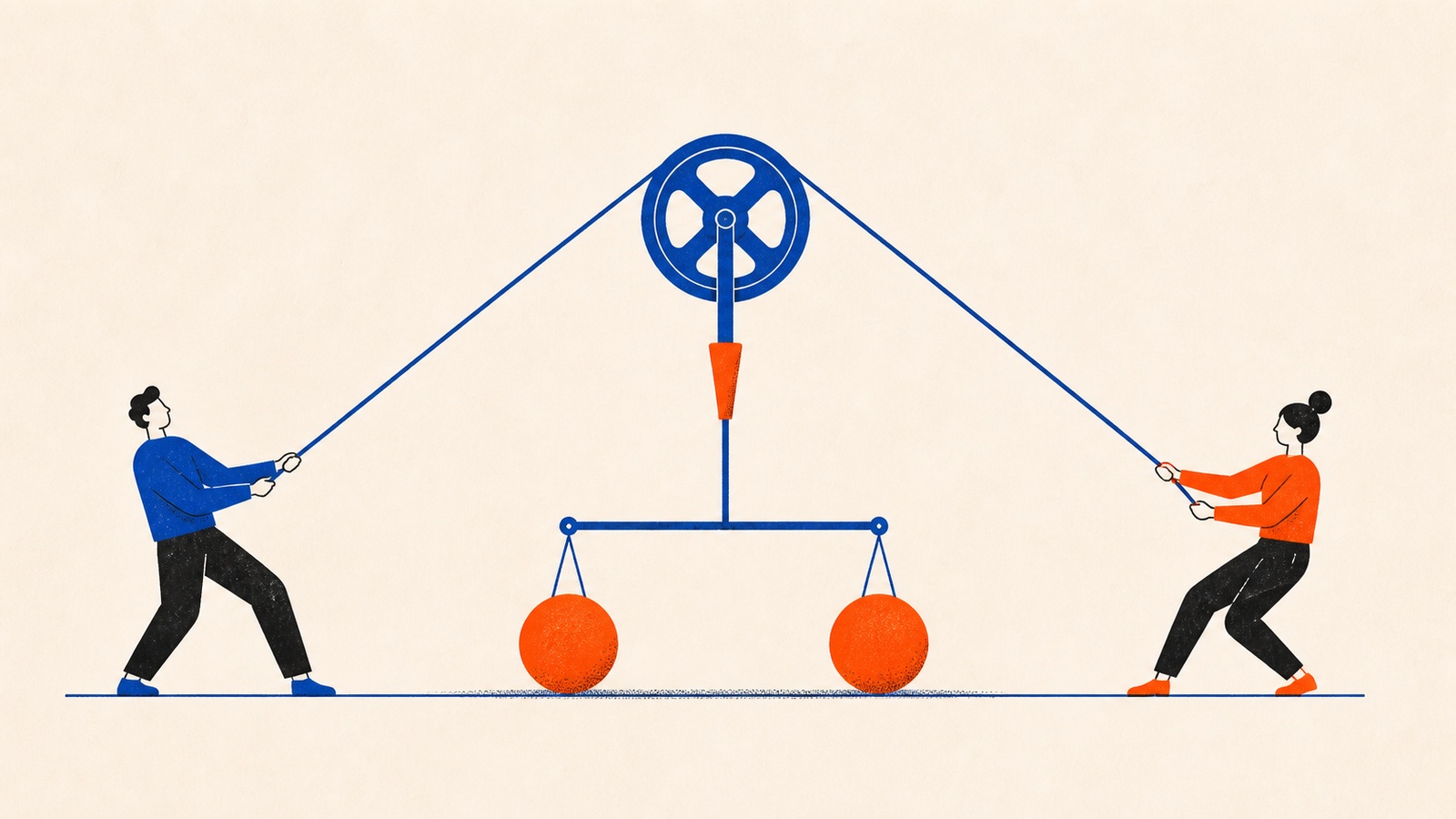
Most negotiation advice is about the parts that go smoothly: opening positions, research, the offer itself. It rarely addresses the moment that actually decides most deals: when the other side gets defensive, starts talking fast, or digs into a position that wasn't there five minutes earlier. Most people respond by either pushing harder, which escalates it, or backing off entirely, which gives away leverage they didn't need to.
The book in this bundle argues that moment isn't a sign the negotiation has failed. It's information, if you know what to do with it, and it gives a specific five-step sequence for exactly that situation. The book is also blunt about where negotiations actually go wrong: not in the tactics people study, but in psychological barriers most never examine. Conflict avoidance, rejection anxiety, and the instinct to either dominate the room or fold under pressure derail more deals than a weak opening offer ever does.
The PAUSE method
The framework spells out as its name suggests: Pause, Acknowledge, Understand, Suggest, Engage.
Pause means stopping before responding to visible stress: the book cites defensive posture and rapid speech as the two clearest signals that someone has moved from negotiating to protecting a position. Don't answer in that moment. Call a break if the setting allows it.
Acknowledge comes next, and it's the step people skip most often because the instinct is to explain or defend instead. The move is to name the difficulty the other side is facing without qualifying it: acknowledging that a demand is hard to meet, not arguing about whether it should be.
Understand means asking into the specific pressure behind the position, rather than assuming you already know it. A rigid stance almost always masks a more flexible interest underneath: a demand for a price cut might really be about covering rising costs, not about the number itself.
Suggest is where you propose something collaborative (joint analysis, a third-party evaluation, a pilot) instead of a counter-position. The shift is from trading offers to jointly investigating the problem.
Engage closes the sequence by inviting the other side to help shape the solution rather than simply react to yours, which the book frames as the difference between an adversarial negotiation and a partnership one.
This differs from generic advice to "stay calm," because it names what calm actually consists of in the moment: a specific order of operations, not a mood you're supposed to summon on demand. Skipping a step (jumping from Pause straight to Suggest, say) tends to produce the same defensiveness the sequence is designed to defuse, because a solution offered before the other side feels understood reads as dismissal rather than help.
The book's worked example is Janet, a procurement director in the middle of a supplier negotiation where quality issues threatened to derail the partnership. She noticed her counterpart's posture stiffen and his responses speed up, the stress signals the framework is built to catch. Instead of pressing her position, she called a short break (Pause), acknowledged how difficult it is to maintain quality inside a stressed supply chain (Acknowledge), asked specifically what production challenges were driving the issue (Understand), proposed a joint quality review process (Suggest), and invited the supplier to help design the new protocols himself (Engage). The immediate conflict resolved, and the review process they built together became the standing framework for handling the next one.
Where people go wrong
The most common mistake is doing the opposite of Pause the moment stress shows up: pushing the point harder because it feels like an advantage, when the counterpart's defensiveness is usually a sign that pressing further will just entrench the position instead of moving it. The Sales & Closing Pack's guide covers this same instinct across every stage of a sale, not only formal negotiations: the urge to press when someone hesitates is rarely the move that actually closes anything.
A second failure mode is skipping straight to Suggest without Acknowledge or Understand: offering a fix before the other person feels the difficulty has actually registered, which reads as dismissive even when the fix itself is reasonable.
A third is treating the tense moment as something to survive rather than data to use. The book's framing throughout is that a rigid position almost always sits on top of a more specific, more solvable interest: the work is finding it, not outlasting the tension until someone concedes.
A fourth, related mistake is preparing for a negotiation's content (numbers, terms, positions) while doing nothing to prepare for its psychology. The book pairs research and objective-setting with deliberate practice of the emotional side: role-playing tense moments beforehand, so the first time you notice a counterpart's voice speed up isn't also the first time you've had to decide how to respond to it.
Inside The Art Of Negotiation
Going deeper
- AudioStrategic Dealmakers
- BookThe Art of Negotiation
- ChecklistPre-Negotiation Research
- ChecklistValue Creation Opportunity Assessment
- GuideThe High-Value Deals Creation Matrix
- GuideThe Strategic Pre-Negotiation Research Framework
- Mini-CourseClose Deals with Confidence
- Prompt PackClose Deals Assistant
The Art Of Negotiation is one of 14 bundles in The Sales & Closing Pack, or take the whole pack for $29.
Related reading
Selling for people who never wanted to be in sales: the complete guide
How selling actually works for freelancers and consultants: nerve, offer, proof, the conversation, pipeline and retention, in dependency order.
Read more
The star rating that converts best
Why a 4.2 to 4.5 star average converts better than a perfect five, and the six types of proof that build online trust.
Read more
What happens in the first three seconds
The trust triangle a visitor checks before reading a word, and the 60-30-10 color rule behind a real 6.3% conversion lift.
Read more