
Force, friction, and mass: the flywheel model for repeat customers
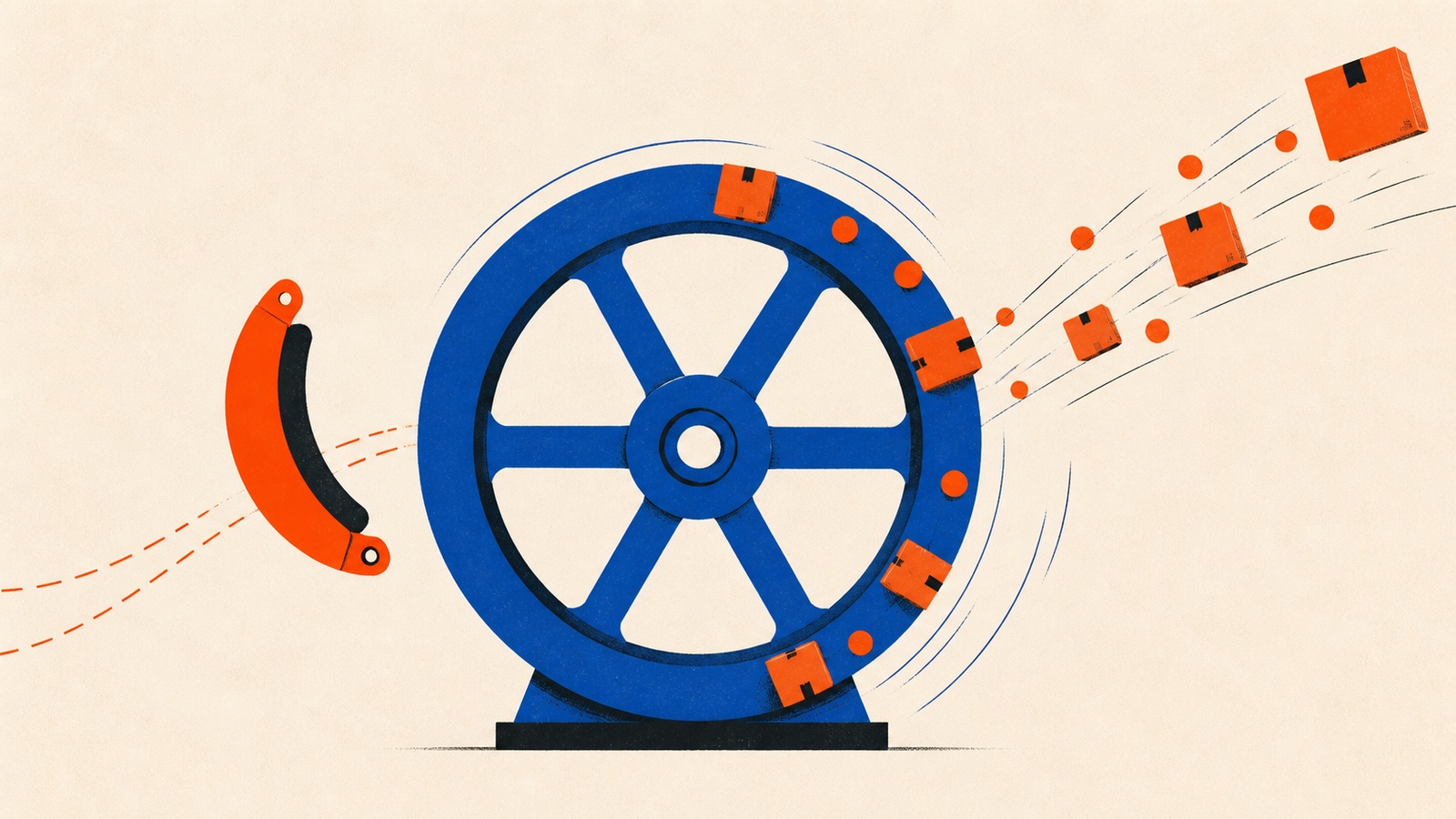
A sales funnel ends. Somebody buys, and the diagram is finished: nothing in it accounts for what happens after, so nothing in most marketing plans does either. The bulk of the effort keeps going toward the top of that funnel, acquiring a stranger, while the customers who already bought get an occasional email and not much else.
The Flywheel Model puts a number on what that gap costs. Research it cites from Bain & Company found that a 5% increase in customer retention can raise profit by 25% to 95%, while acquiring a new customer typically runs about five times more than keeping one you already have. The funnel itself, the book points out, was invented by E. St. Elmo Lewis in 1898 for a buying process that no longer resembles how anyone actually shops. It was never built to notice a returning customer, let alone reward one.
That gap matters most for a business too small to have a dedicated retention function. Without one, "keep customers happy" tends to mean nothing more specific than answering support emails promptly, which isn't a plan, it's a reflex. The flywheel model's contribution is giving that reflex a shape: something you can point marketing time at deliberately, the same way you'd point it at an ad campaign.
Attract, engage, delight, and the physics underneath it
The model, built on an idea Jim Collins first described in Good to Great and later adopted by companies including Amazon, replaces the funnel's straight line with a wheel: attract, engage, delight, and repeat. Attract draws people in through content, presence, and existing customer networks. Engage builds the relationship through two-way interaction rather than pitching. Delight turns a satisfied customer into someone who brings the next one in for free. The wheel's defining property is that each turn makes the next turn easier: momentum, not another cold start.
The book explains that momentum through three physical quantities. Force is every action that pushes the wheel: a software company redirected its marketing budget away from scattered channels and into customer education (onboarding sequences, training webinars) and grew 200% by treating support and success as growth activities, not cost centers. A B2B software provider found its biggest force multiplier in an unlikely place: turning routine support calls into product-education and upgrade conversations lifted customer lifetime value 75% while cutting support tickets 40%, because the same interaction was doing two jobs at once. Friction is what slows the wheel down: an e-commerce business found its return policy was quietly driving people away, simplified it, and cut returns by 35% while satisfaction scores rose 40%. Mass is the size and stability of the customer base already spinning the wheel: a subscription meal-delivery company chose personalization and flexible plans over aggressive acquisition and reached a 92% retention rate, which then generated its own referrals without any added spend.
None of the three works alone. An outdoor adventure company that used to restart its marketing every spring shifted instead toward year-round engagement: indoor training sessions, equipment workshops, a community around the sport rather than the season. Within two years, off-season revenue rose 300% and acquisition costs dropped 60%, not because they added force, but because they'd built mass and removed the friction of a business that went quiet for half the year.
Where people go wrong
The mistake that costs most is applying force to a wheel still full of friction: building a referral program or an advocacy tier on top of a checkout process nobody's fixed. One B2B technology company in the book found its real bottleneck wasn't marketing at all; its sales approval process was so slow it was bleeding deals, and streamlining it cut the sales cycle by 60% without touching a single acquisition channel. We look at where this loop fits against everything that has to happen before it in the full marketing guide.
The second is chasing new customers while friction quietly erodes the base you already have. Mass takes patience to build and very little to lose: a slow support queue or a confusing onboarding email can undo months of retention work before anyone notices the pattern.
The third is letting departments create friction for each other without seeing it. The book's clearest example is an e-commerce company that cut its average response time by 75% simply by breaking down the wall between sales, support, and fulfillment: three teams each doing their job well, and still producing a customer experience nobody had actually designed.
Inside The Flywheel Model
Going deeper
- AudioFrom Funnel to Flywheel
- BookThe Flywheel Model
- ChecklistCustomer Experience Optimization
- ChecklistFriction Point Elimination
- GuideAchieve Operational Excellence
- GuideCustomer Advocacy Activation System
- Mini-CourseBuild Your Business Flywheel
- Prompt PackMomentum Architecture Builder
The Flywheel Model is one of 7 bundles in The Marketing Foundations Pack, or take the whole pack for $29.
Related reading
Marketing for a business of one: the complete guide
How marketing works when nobody is doing it but you: positioning, buyer psychology, content, local search, measurement and retention, in dependency order.
Read more
How to respond to a bad Google review
A four-step process for answering a negative Google review without getting defensive, plus the scripts the book itself uses.
Read more
The one-page marketing plan that actually gets reopened
Why most marketing plans get written once and shelved, and the value proposition test and journey map that make a one-page version worth reopening.
Read more