
The 3pm crash is a fuel and rhythm problem, not a willpower one
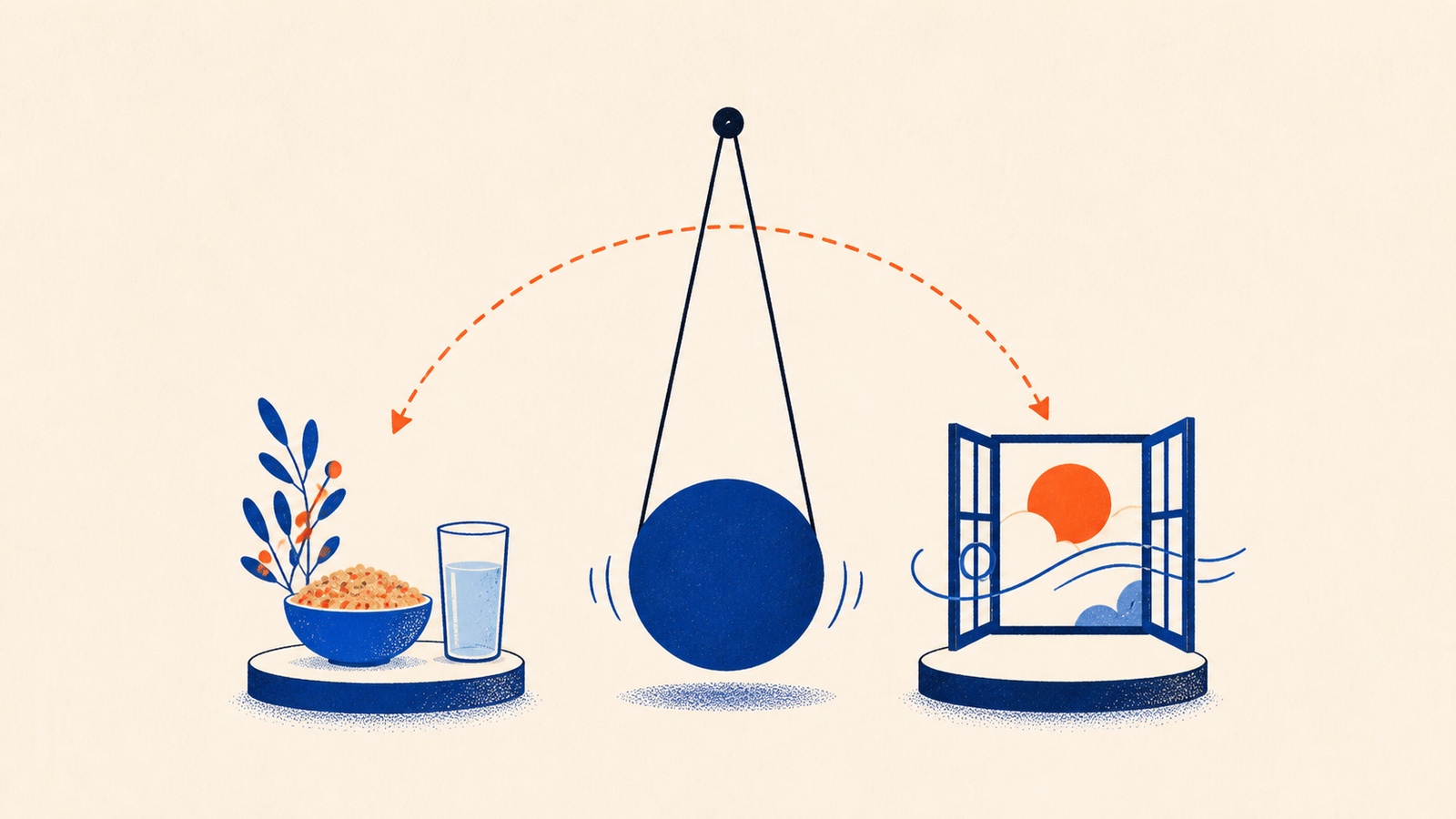
By two in the afternoon your thinking is fine. By three it isn't, and the usual explanation is that you didn't sleep enough or you need another coffee. Neither is quite right. Your brain runs on a fuel and recovery cycle as literal as any other organ's, and most people manage that cycle by accident: eating whenever, caffeinating until the crash, working straight through the exact break windows that would have prevented it.
The kit built around Maximize Your Brain's Potential starts from a number worth sitting with: your brain burns through roughly 20% of your daily energy while accounting for about 2% of your body weight. Treat that ratio like an afterthought and no amount of discipline fixes the afternoon fog. Treat it like the constraint it is, and the fix stops being about trying harder.
The 90-minute cycle, and what to eat before it starts
The book's central claim is that your brain doesn't run flat through a workday: it moves through roughly 90-minute cycles of rising and falling capacity, the same ultradian rhythm that governs sleep. Fighting that rhythm with sheer effort is what produces the crash; working with it is what the book calls the 90-minute rule: alternate 90 minutes of focused work with a genuine 15-minute break, rather than pushing until you're empty and calling the break a reward.
Timing your food matters as much as timing your work. The book's specific claim is that a balanced meal (complex carbohydrates, protein, a source of healthy fat) eaten 60 to 90 minutes before a demanding task gives your body enough time to convert it into usable brain fuel. Its own example: if you have a 10am presentation, eat a real breakfast by 8:30. Skip that window and caffeine alone is doing the work that food should have done an hour earlier.
Hydration gets the same specificity. Losing just 2% of your body water measurably impairs focus and memory, and that's less water than a typical morning of concentrated work costs you. The book's fix is a glass of water with a pinch of salt before demanding sessions, since plain water without electrolytes doesn't hold as well, plus one extra glass for every cup of coffee, since caffeine is a mild diuretic.
Sleep gets the same 90-minute logic applied backward. Because sleep runs in roughly 90-minute cycles of light, deep, and REM phases, waking mid-cycle produces grogginess regardless of total hours, while waking at the end of a cycle doesn't. The book's worked example: a 7am wake time means a 10:30pm bedtime gives you five complete cycles, while an 11pm bedtime lands your alarm in the middle of one: the difference between refreshed and exhausted on six versus eight hours of sleep.
The same logic extends to the flow states people chase without engineering. The book's position is that flow responds to specific, repeatable triggers rather than showing up on its own: a consistent environment (the same lighting, the same sound, phone face-down), a short pre-work ritual that signals the brain it's time to focus, and a task pitched at the edge of your current skill rather than comfortably below it. Flow endurance builds the same way strength does: most people can hold it for 20 to 30 minutes at first, and with the 90-minute-block habit in place, that stretches toward two or three hours.
Where people go wrong
The most common mistake is treating recovery as optional: something you get to if the schedule allows it, which for most people means never. The book's reframe is blunt: schedule the break first and build the work around it, the same way you'd protect a meeting with an important client, because a 10-minute walk at 2:30 isn't a luxury, it's what makes the rest of the afternoon usable.
A second failure mode is fueling on the wrong schedule rather than the wrong food. Eating a technically healthy breakfast at 7am for a 10am task wastes the timing even if the meal is right, because the 60-to-90-minute digestion window has already closed by the time it matters. Simple sugars make this worse by adding a spike-and-crash on top of a mistimed meal.
A third is chasing flow as an event instead of building the conditions for it. Waiting for inspiration to strike treats flow as luck; the book treats it as a trigger you rehearse until your brain associates the ritual with the state, which is a discipline problem more than a mystery: the kind covered at the level of a whole system, not one bundle, in the full guide to career confidence.
Inside Maximize Your Brain's Potential
Going deeper
- AudioMindstate Mechanics
- BookMaximize Your Brain's Potential
- ChecklistBrain-Friendly Nutrition Plan
- GuideEngineer Your Flow State Trigger System
- GuideThe 90-Minute Focus Cycle
- Listicle13 Psychological Traps that Keep You Stuck
- Listicle7 Brain Boosters for Exceptional Everyday Results
- Mini-CourseUnlock Your Mental Potential
Maximize Your Brain's Potential is one of 10 bundles in The Confidence & Career Pack, or take the whole pack for $29.
Related reading
Career confidence for people who hate self-help
A working map of career confidence (attention, self-coaching, skill choice, presence, and spotting manipulation) and the order to fix them in.
Read more
The ad-testing discipline that works just as well on your own decisions
A hypothesis-writing framework built for ad campaigns, and why the same discipline catches bad decisions long before advertising ever comes up.
Read more
The five seconds before you react
The PAUSE method for regulating a reaction before it happens, plus the three failure modes that make emotional intelligence advice useless.
Read more