
Performance Max, without losing track of what it's spending
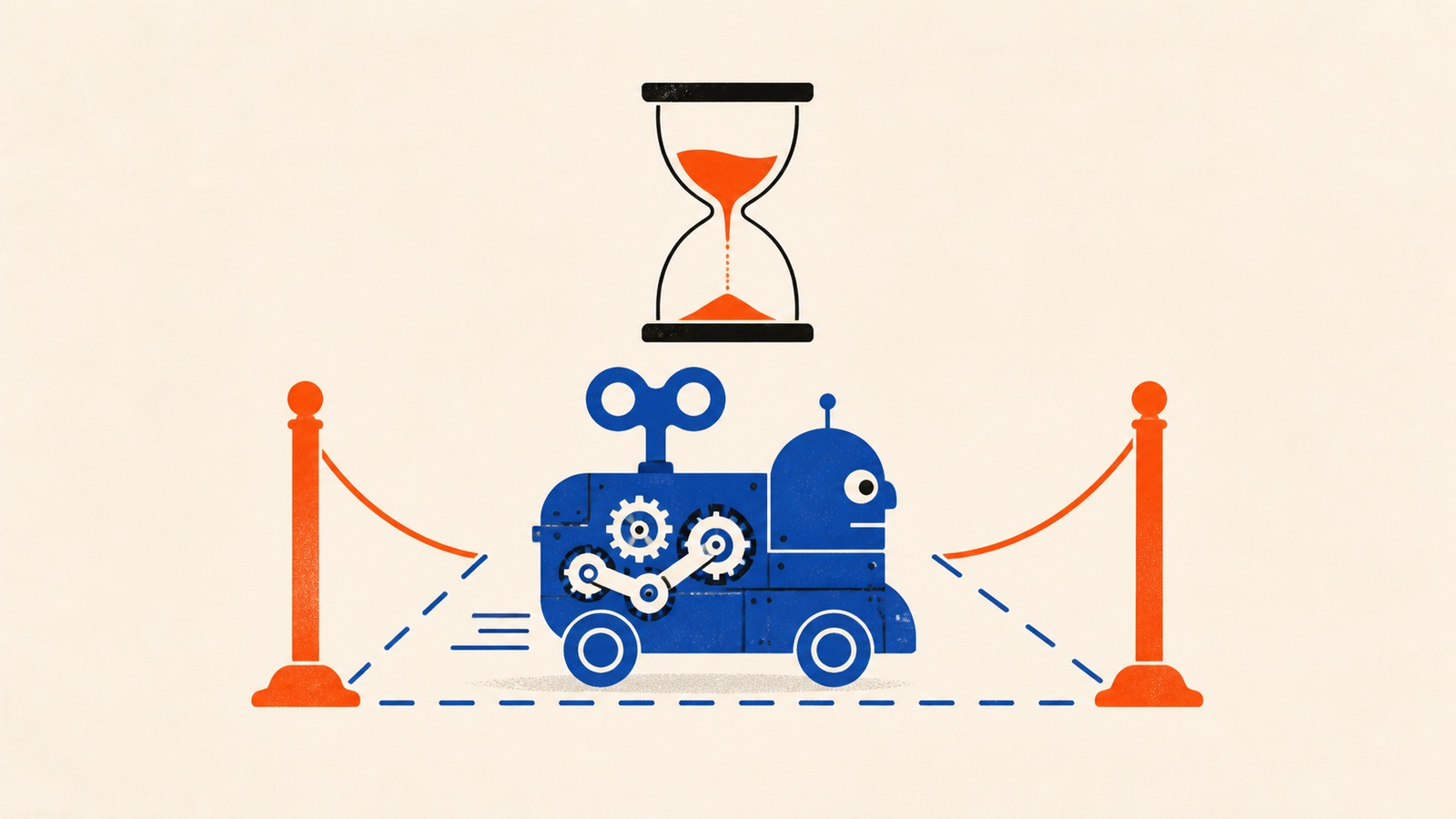
Performance Max looks simple from the outside: one campaign, every Google channel, an algorithm that handles the rest. Then week two arrives, spend is climbing, results are wobbling, and it's not obvious whether the campaign is broken or just doing what it's supposed to do at this stage.
That distinction is the entire skill. Performance Max needs a learning period before it means anything, and most advertisers either pull the plug during that window or let it run unsupervised past it, which are opposite mistakes with the same root cause: nobody set a timeline or a boundary before launch.
Unlike a Search campaign, where you can see which keyword is spending and adjust it directly, Performance Max hands most of that visibility to Google's system in exchange for reach across Search, Display, YouTube, Gmail, Maps, and the Discover feed all at once. That tradeoff is the whole appeal for a small team without time to manage six separate campaigns, and it's also exactly why launching one without a budget plan or a patience plan goes wrong fast.
The budget formula and the six-week window
Google Performance Max Campaigns Unleashed gives a specific starting formula rather than a vague "spend enough." Set your daily budget at roughly ten times your target cost per acquisition, then add a 20% buffer on top for the testing the algorithm needs to do while it learns. A campaign targeting a $50 CPA, for instance, wants something in the neighborhood of $500 a day before the buffer, not $50.
That budget needs to survive at least six weeks, because the book breaks the learning curve into distinct phases and each one looks different from the last. The first two weeks show variable, sometimes disappointing results while the system is still gathering signal. Weeks three and four bring more stable performance as patterns settle. Weeks five and six typically show the first real improvements. Only after week seven does it make sense to shift from watching to refining and scaling.
Reading that timeline backwards is the useful part: a campaign that looks shaky in week one is on schedule, not failing. A campaign still shaky in week six is a different story.
The book also sets specific guardrails for staying in control without micromanaging the algorithm day to day: a maximum CPA threshold, a minimum ROAS target, and a daily budget cap, checked against actual performance rather than adjusted on instinct. Watch for a drop of more than 20% in conversion rate, a sudden spending spike, or an uneven daily budget pace. Those are the signals worth acting on, as opposed to normal week-to-week noise.
One honest caveat: the book leans hard on specific percentage lifts from individual case studies (a 47% conversion increase here, a 28% cost reduction there), the kind of number that reads as a guarantee but is really one business's outcome. The budget formula and the six-week timeline are structural and worth using regardless. The percentages are illustrations, not a promise about your account.
Where people go wrong
The most common mistake is judging the campaign during the first two weeks and pulling the budget before the algorithm has had time to learn. A dip in week one inside a six-week learning curve isn't a signal: it's the cost of the process working. Reacting to it usually means restarting the learning period from zero on a smaller budget, which produces worse data, not better decisions. We cover pacing decisions like this across the whole account, not one campaign type, in the paid ads and landing pages guide.
A second mistake is scaling too fast once results do improve. The book's own scaling rule is a 20% budget increase at a time, held for seven to ten days before checking results and deciding on the next increase, and if performance drops after a jump, returning to the previous budget level rather than pushing forward. A bigger increase all at once resets the learning period the same way an early panic-cut does, because the algorithm is effectively relearning against a new spend level.
A third is setting no performance boundaries at all and letting automation run without a maximum CPA or minimum ROAS in place. Automation optimizes toward whatever signal it's given; without a boundary, "optimized" and "on-budget" can quietly stop meaning the same thing. The book's fix is automation layering: custom rules and alerts sitting on top of Google's own system, not replacing your judgment but catching the moment a metric crosses a line you set in advance.
Inside Google Performance Max Campaigns Unleashed
Going deeper
- BookGoogle Performance Max Campaigns Unleashed
- ChecklistPerformance Max Campaign Monitoring
- ChecklistPerformance Max Campaign Scaling
- ChecklistPerformance Max Campaign Setup
- GuidePerformance Max Asset Creation
- GuidePerformance Max Campaign Launch
- GuidePerformance Max Troubleshooting Protocol
- Mini-Course8 Days to Dominate Performance Max Campaigns
- Prompt PackPerformance Max Campaign Optimization
Google Performance Max Campaigns Unleashed is one of 13 bundles in The Paid Ads & Landing Pages Pack, or take the whole pack for $29.
Related reading
Paid ads and landing pages: the complete guide for small budgets
How to run paid ads on a small budget: pick one platform, write the ad, fix the landing page, and read the numbers before you spend more.
Read more
Picking one ad platform instead of testing all four at once
A framework for choosing between Meta, Google, TikTok, and LinkedIn based on your actual resources, then splitting budget once you commit.
Read more
Running Meta ads on $200 a month, without guessing
How to split a small Meta Ads budget across testing, proven campaigns, and reserve, with the worked numbers behind the split.
Read more