
Turning a vague sense of priorities into a goal system that connects
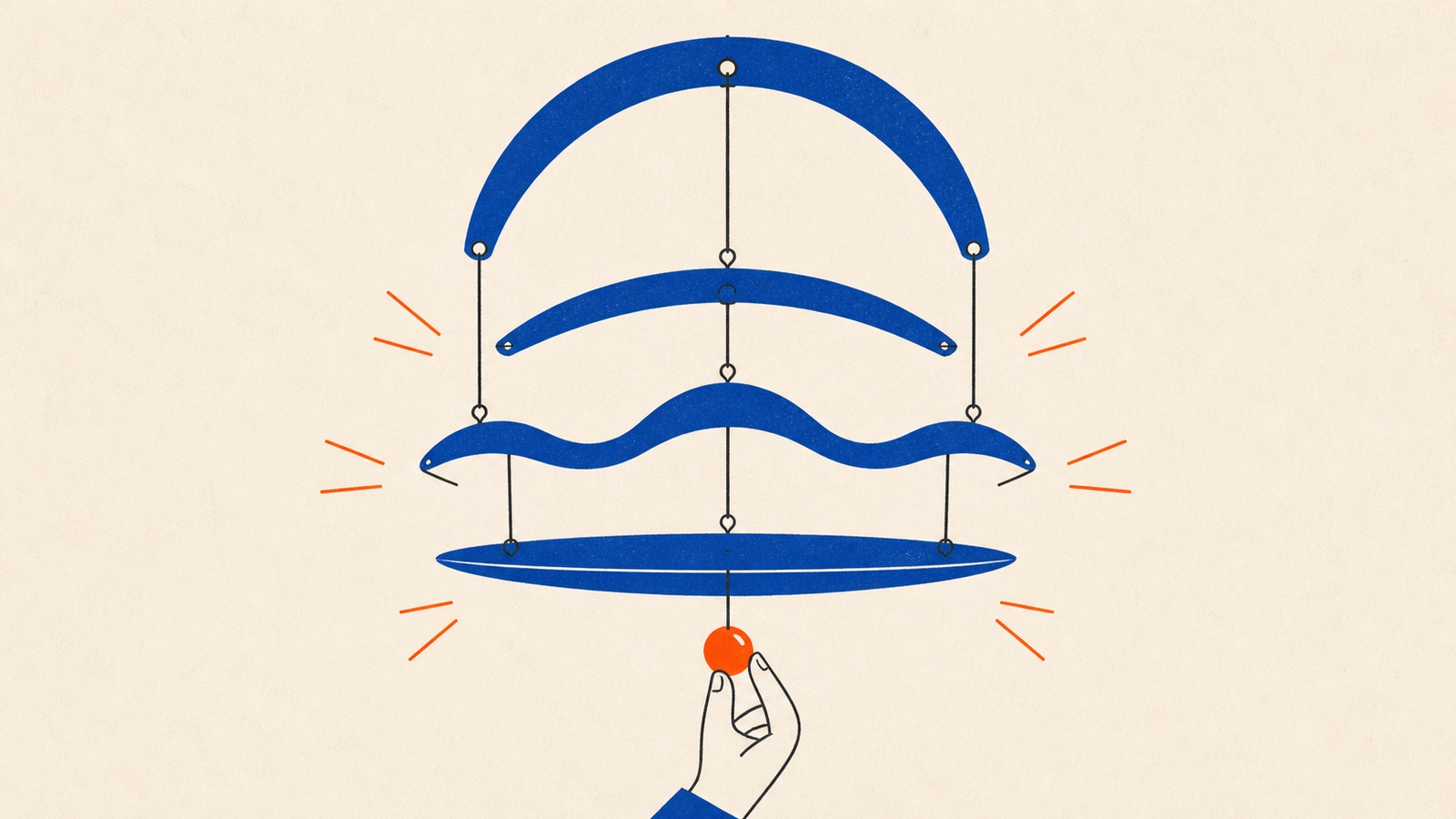
Most people's goals exist as a list, not a system. A 20-year vision sits in a journal somewhere, a project deadline sits in a work document, and a Tuesday to-do list sits wherever tasks land, and none of the three has any structural relationship to the others. When that happens, the daily list wins by default, because it's the only one with a due date attached.
The usual response to feeling scattered is to write more goals. That makes it worse. A list of everything you want, in no particular order and with no stated connection between the items, produces exactly the paralysis it was meant to solve: you can't tell which of twelve things to protect when something has to give, because nothing on the list says how it relates to anything else.
Most people also can't answer a much simpler diagnostic question, which the book poses early: if someone followed you around for a week and watched only your choices, what would they say you value? The gap between that answer and the one you'd give out loud is usually where the disconnect starts. A goal list built on the stated answer, rather than the one your calendar and bank statement actually support, was never going to hold together for long: it isn't lack of discipline, it's a structure built on the wrong foundation from the first level down.
The four-level goal architecture, and why the order runs top-down
Prioritize Your Life calls this the goal ecosystem method, and its actual contribution is forcing every goal to sit at one of four levels, each one answering to the level above it:
| Level | Time frame | What it answers |
|---|---|---|
| Legacy | 20 years | What do I want my life to represent |
| Milestone | 3 years | The stepping stone toward the legacy vision |
| Project | 12 months | A concrete, measurable outcome with a deadline |
| Action | Daily | The habit or task that makes the rest possible |
The book's own worked chain runs from a legacy goal of being known for helping others discover their potential, down to a milestone of running a coaching practice that reaches 100 people a year, down to a project goal of finishing a coaching certification and working with 20 practice clients this year, down to a daily action of 30 minutes of study and one outreach message. Each level is specific enough to act on and loose enough to survive contact with a bad week: the daily action doesn't have to be perfect, it just has to point the same direction as everything above it.
The book's example is a woman named Maya, who assumed her top value was career achievement until she looked back at her actual happiest moments and noticed all of them involved solving problems for other people, not winning at her job. Her project and action goals had been quietly pointed at the wrong legacy the entire time, which is a more common failure than picking the wrong daily habits: it's usually the top of the structure that's misaligned, not the bottom.
Building your own version starts with a brain dump of everything currently competing for attention, sorted afterward into the four levels. Items that don't fit anywhere are the diagnostic, not the failure: a task with no connection to any milestone or legacy goal is either not actually important, or it's revealing a value you haven't named yet.
Where people go wrong
The most common mistake is building project and action goals with no legacy or milestone behind them: a full calendar of tasks that are individually reasonable and collectively pointed nowhere in particular. The book calls this a gap, and it's the more common failure mode than having too few goals; most people have plenty of goals, just not ones that ladder to anything.
The second is running goals that actively conflict, usually because they were set at different times without checking them against each other: a project goal that requires travel every month sitting next to a milestone goal about being home for dinner. Sorting existing goals into the four-level table surfaces these conflicts immediately, because two items competing for the same hours become visible once they're written down side by side.
The third is treating the annual review as optional. Legacy goals don't move much, but the milestone and project goals underneath them go stale without checking: a certification finished, a client roster changed, a year's worth of drift that nobody caught because nobody looked. Deciding what to sort and how to hold the whole structure together over time is covered in full in the Focus & Productivity guide.
A subtler version of the same problem is having too many values driving the goal levels in the first place. The book's elimination method pushes toward three to five core values on purpose, on the reasoning that twelve values create the same paralysis as no values: everything qualifies as important, so nothing does. Writing a one-sentence statement for each of the final few, rather than leaving them as single words, is what makes them usable as an actual filter instead of a list that sounds good and decides nothing.
Inside Prioritize Your Life
Going deeper
- AudioThe Values-Driven Life
- BookPrioritize Your Life
- ChecklistBuilding Your Personal Goal Architecture
- ChecklistDiscover Your True Values
- GuideBuilding Your Goal Architecture System
- GuideThe CORE Values Discovery Workbook
- Listicle13 Time-Bandits That Steal Your Future
- Listicle21 Decision Frameworks That Drive Success
- Mini-Course6 Days to Value-Driven Living
Prioritize Your Life is one of 7 bundles in The Focus & Productivity Pack, or take the whole pack for $29.
Related reading
Productivity for people who have already tried the systems: the complete guide
How focus actually works when you already own a task manager: priorities, task size, attention, environment and subtraction, in dependency order.
Read more
Breaking a stalled project into tasks you'll actually start
The four-level breakdown and the four-part test that turn "write book" into a task you can finish in five minutes tonight.
Read moreBuilding a schedule that survives a brain that doesn't run on rigid time blocks
Anchor points and three-tier habit scaffolding, for when an hour-by-hour schedule breaks the first time something goes off-plan.
Read more