
Falling asleep starts with light, not the mattress
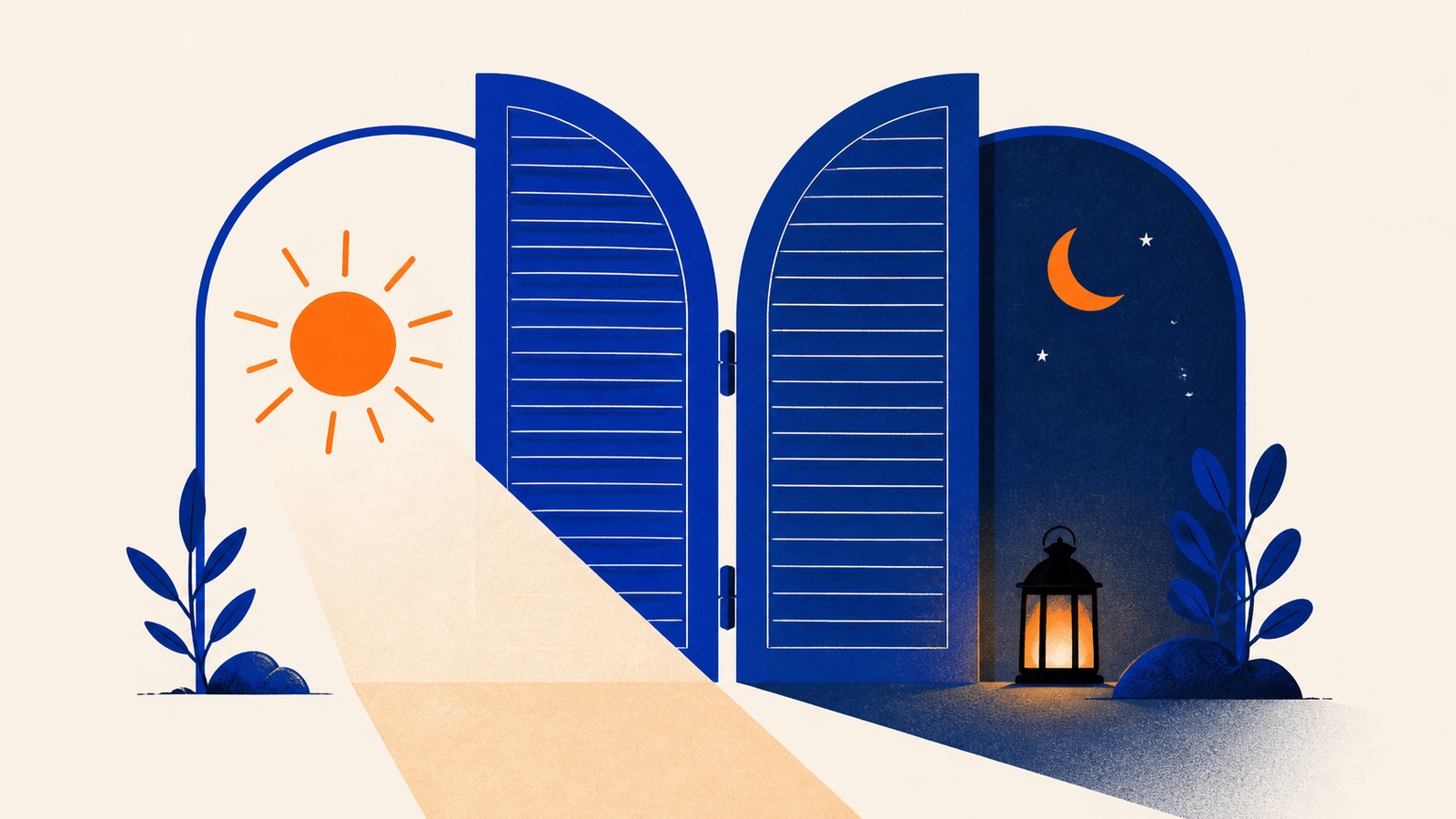
Most sleep advice starts in the bedroom: a better mattress, blackout curtains, a white noise machine. All three help, eventually. None of them touch the thing that's actually setting your bedtime hours before you get near the room, which is why a fresh mattress and the same three fitful nights a week can coexist for months.
Your circadian clock resets primarily on light, and it resets every day whether or not you're paying attention to it. Skip the reset, then stack a bright phone screen on top of it at 11pm, and the mattress upgrade from last month won't move the needle much. You'll fall asleep at the same hour you always do, just on nicer fabric.
Sleep Smarter for a Better Life puts its chapters in a specific, deliberate order: clock first, room second, routine third. That order is the actual argument, and it's usually the reverse of where people start: most people buy the room upgrade first, because it's the one you can order online tonight, and the clock is the one that takes a week of unglamorous mornings to reset. That week is where most people quietly give up.
The circadian light commandments
Light is the strongest signal your body has for setting the clock, stronger than caffeine timing, meal timing, or anything else the book covers. Morning light exposure tells the suprachiasmatic nucleus, the brain's master clock, that the day has started, which cascades into when cortisol rises, when melatonin starts building later, and eventually when you actually get sleepy that night. The book names its version of this the circadian light commandments:
- See sunrise, or use a therapy lamp, within an hour of waking.
- Work near a bright window mid-morning.
- Take a daylight "booster shot" outside at lunch.
- Dim household lights after sunset.
- Switch to amber glasses or a screen filter after 8pm.
For the lamp specifically, the book gets concrete rather than vague: 10,000 lux, positioned 16 to 24 inches from your face at roughly a 45-degree angle, for 20 to 30 minutes within an hour of waking. It claims correctly timed light exposure can advance sleep onset by up to 45 minutes, a modest, plausible number, not the kind of claim this genre usually settles for.
The evening half gets a name too: the pre-sleep buffer zone, a defined stretch before bed that isn't for work, arguments or screens, treated as part of the night rather than the tail end of the day. The book pairs this with a bedroom temperature target of 60 to 67°F (16 to 19°C), because core body temperature has to drop by roughly 1°C to initiate sleep, and a warm room works directly against that drop no matter how disciplined your light habits are.
None of this is about buying more hours. It's about getting the timing right, which the book treats as the harder and more valuable problem. You can protect eight hours in bed and still sleep badly if the clock underneath it is off by ninety minutes, and no amount of extra time in bed corrects for a clock that's pointed at the wrong hour.
Where people go wrong
Three mistakes are common enough to name.
The first is buying the mattress before touching the light. It's the expensive fix and the one that helps least when circadian timing is off. A great mattress under a mistimed clock still produces a mediocre night, and it's easy to conclude the mattress "didn't work" when the actual problem was never in the bedroom.
The second is keeping the bedroom too warm. Most people sleep somewhere in the low-to-mid 70s, warm enough to measurably reduce deep sleep according to the research the book cites, and the fix costs nothing beyond a thermostat setting: no purchase, no new routine, just a few degrees.
The third is treating the phone as the pre-sleep buffer instead of protecting one from it. Scrolling in bed isn't rest, however restful it feels, and blue-enriched light in the hour before bed works directly against the melatonin rise the whole chapter is built around. A buffer zone spent on a screen isn't a smaller version of the habit. It's the opposite of it.
Sleep is one layer in a larger picture: how it interacts with stress, energy and attention gets the fuller treatment in the wellness guide, including where each of those layers depends on the others.
Inside Sleep Smarter For A Better Life
Going deeper
- AudioThe Sleep Transformation
- BookSleep Smarter for a Better Life
- ChecklistReset Your Circadian Rhythm
- Guide7-Day Bedroom Transformation
- GuideCircadian Rhythm Reset
- Listicle13 Proven Sleep Hacks for High Achievers
- Listicle7 Sleep Saboteurs That Steal Your Rest
- Mini-CourseLive Better with Calmer Sleep
Sleep Smarter For A Better Life is one of 13 bundles in The Calm & Energy Pack, or take the whole pack for $29.
Related reading
Stress, sleep and energy for people who work too much: the complete guide
How stress, sleep, food, movement, attention and boundaries stack up for busy people, in dependency order, and what to fix before anything else works.
Read moreMindful mornings without the 5am club
A six-stage checklist for the first 90 minutes after waking, built from the book's own routine: no 4am alarm required.
Read more
Mindfulness for the minutes you already have
Mindfulness that works inside a full day, using the book's RAIN framework for the moment a difficult feeling won't move.
Read more